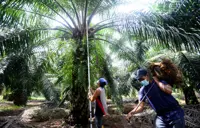
KOTA KINABALU: The Sabah Wildlife Department and the Borneo Rhino Alliance (BORA) have partnered to plant elephant-favored grasses inside the Kinabatangan Wildlife Sanctuary.
The project aimed to curb human-elephant conflict and keep pygmy elephants out of nearby oil palm plantations and villages.
Building on an initiative launched in 2024 by the Responsible Elephant Conservation Trust (RESPECT), the project expands planting onto sanctuary lands.
The focus was on planting Napier grass and native barau grass.
Priority expansion areas include land along the Kinabatangan River to prepare for potential El Niño dry spells.
Sabah Wildlife Department Director Mohd Soffian Abu Bakar said that grasses and palms form the core of an elephant’s diet.
Malaysian elephants now spend more than half their time in oil palm plantations and villages, where there is more food for them than in the forest," he said.
BORA Chief Executive Officer Datuk Dr John Payne said that traditional tree-planting drives in open areas have unintentionally depleted elephant grazing grounds.
"I see no merit in planting more tree seedlings in open areas. Instead, such treeless areas must be planted with elephant food," he said.
With roughly 100 million natural tree seedlings already growing across the region, Payne emphasized that open spaces should instead be converted into productive grasslands to secure sustainable natural food sources for the elephants.