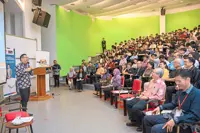
KUALA LUMPUR: Asean nations must establish common standards and deepen regional cooperation to safely manage the fast-growing space sector, particularly cross-border space-launch activities, says Science, Technology and Innovation Minister Datuk Chang Lih Kang.
Speaking after opening the 4th Asean Space Policy Expert Exchange Seminar on Monday (Sept 28), Chang emphasized that governments must keep pace with the sector's rapid expansion by strengthening regulatory frameworks alongside technical capabilities.
"Space activities might not have been as active as today, but now they are very active, and more industries require space technology," Chang said, noting its critical role in daily life, food security, climate change response, disaster management, and national development.
Chang highlighted the necessity for governments to strike a delicate balance between encouraging innovation and safeguarding public safety.
"The government plays a role as a regulator, and we also want to see the development of technology in the space sector. Like any technology out there, we need to strike a balance between innovation and safety," he said.
Because space missions involve infrastructure, companies, and technologies spanning multiple jurisdictions, Chang urged Asean members to align their regulatory standards with international best practices. He noted that shared risks—such as space debris, atmospheric re-entry of space objects, and space weather—demand unified cross-border coordination.
"Regional cooperation is no longer merely an option, but a necessity," Chang said in his keynote address. "For neighboring countries like those in Asean, we need guidelines and standards that are aligned so we can collectively regulate the region's space ecosystem."
Malaysia aims to position itself as a regional leader in the sector by expanding Asean partnerships, building robust regulatory principles, and growing its domestic space ecosystem.
Beyond remote sensing applications for environmental monitoring and resource management, Chang noted that developing local space-launch facilities could yield significant economic spillovers, including high-value sectors like specialized insurance, satellite assembly, and rocket component manufacturing.
Complementing the minister's remarks, Malaysian Space Agency (MYSA) Director-General Datuk Azlikamil Napiah highlighted targets under the National Space Policy 2030.
The policy aims for space-related activities to contribute 1% to the national economy by 2030—equivalent to approximately RM10bil—while creating around 5,000 high-skilled job opportunities for young Malaysians.