
Experts urge better food quality, variety to tackle child malnutrition
PETALING JAYA: Child malnutrition in Malaysia is attributed to multiple factors such as dietary intake and quality, food security, feeding practices, socioeconomic circumstances and child, maternal and early-life issues.
Dr Nor Baizura Md. Yusop of Universiti Putra Malaysia said the first 1,000 days of an infant, which is from conception to 24 months, represents a critical period for physical growth, brain development and lifelong health.
“However, nutritional vulnerability continues beyond this period, and adequate dietary intake, appropriate feeding practices and a supportive food environment remain important throughout early childhood and the school years,” said the senior lecturer and clinical dietitian at UPM’s Department of Nutrition and Dietetics.
Nor Baizura said inadequate dietary quantity, limited dietary diversity and low nutrient density may result in insufficient energy, protein and micronutrient intake among children aged between one and six years old.
“Limited consumption of nutrient-rich foods, inadequate meal frequency and feeding difficulties such as food refusal and restricted food choices may further compromise dietary adequacy,” she said.
As for school-going children aged between seven and 12, nutritional concerns include poor dietary diversity, inadequate consumption of fruits, vegetables and other nutrient-rich foods, irregular meal patterns and frequent intake of energy-dense, nutrient-poor foods.
She said the MyBreakfast Study, which covered 5,332 primary schoolchildren aged between six and 12 years, found that 11.7% skipped breakfast and 12.7% consumed breakfast irregularly.
Skipping breakfast was associated with lower nutrient intake and, in some groups, a higher prevalence of overweight kids.
“For schoolchildren, a balanced and nutrient-dense school breakfast programme integrated with nutrition education and a supportive school food environment could provide a practical strategy to improve dietary adequacy and promote healthier eating behaviour,” she said.
Last month, Health Minister Datuk Seri Dr Dzulkefly Ahmad said malnutrition among children under five years old in Kuala Lumpur was worrying, with the National Health and Morbidity Survey data showing 23.4% were stunted, 12.4% underweight, 8.1% wasted and 7.5% overweight.
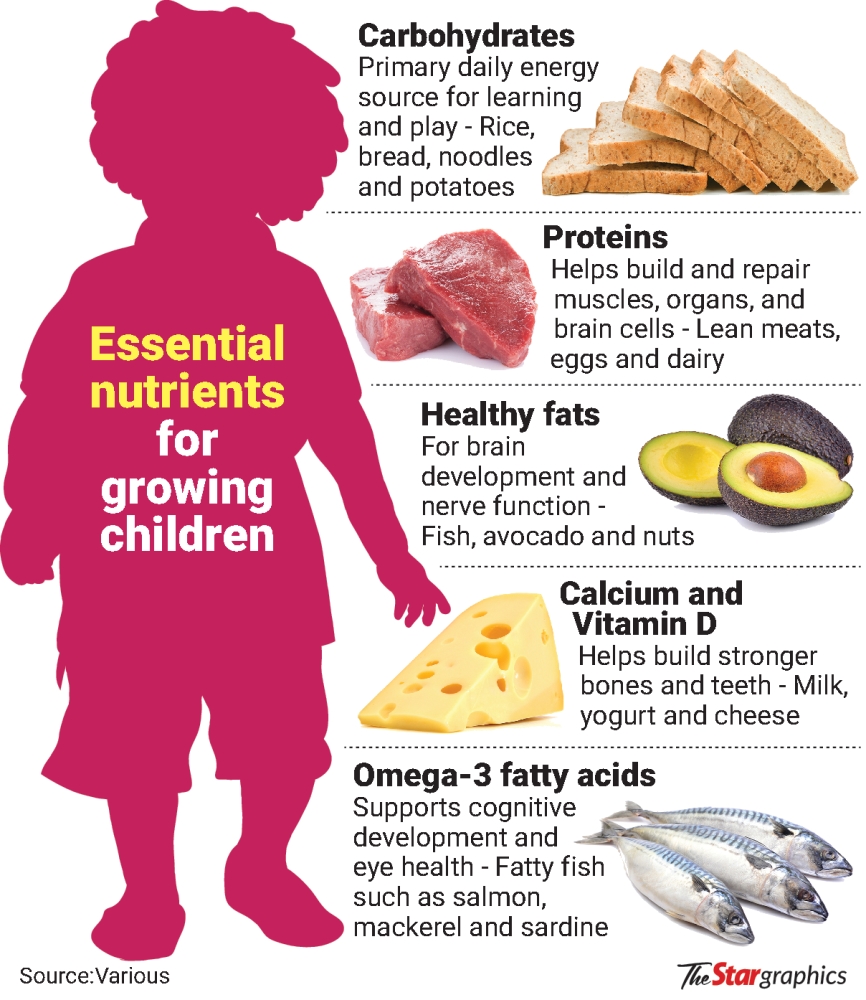
Pantai Hospital clinical dietitian Kamar Alfathima said children need a daily balance of macronutrients and micronutrients to support growth, energy, brain development and immunity.
“Macronutrients include carbohydrates, protein and healthy fats, while important micronutrients include calcium, vitamin D and omega-3 fatty acids,” she said.
Carbohydrates from foods such as rice, bread, oats, pasta, noodles and potatoes provide energy for learning and play, and protein from lean meat, eggs, dairy, beans and tofu helps build and repair muscles, organs and brain cells.
Kamar said children should regularly eat various whole foods from all major food groups to ensure they receive adequate protein, vitamins and minerals.
“Iron, calcium, vitamin D and zinc are particularly important during childhood because of rapid physical growth and development.
“Iron supports the production of haemoglobin and healthy brain function while calcium helps build and maintain strong bones and teeth,” she said.
Good sources of iron include meat, poultry, seafood, beans, lentils, spinach and iron-fortified cereals, while calcium can be obtained from milk, yoghurt, cheese and dark green vegetables.
“A simple balanced meal should combine a source of protein with whole grains or other fibre-rich carbohydrates alongside fruits and vegetables.
“School canteens should prioritise fresh, nutrient-dense food while limiting highly processed options such as nuggets, hot dogs, potato chips, chocolates, sugar-coated foods and instant noodles,” she said.