KINABATANGAN: More than 980,000 trees have been planted at the Sungai Pin Conservation Area in Sabah’s east coast district of Kinabatangan since 2003, bringing its long-running restoration effort close to the one-million mark.
The plantings at the 2,632ha conservation area were carried out through various restoration programmes and collaborations with strategic partners, covering degraded areas, riparian zones and sites of ecological importance.
The effort forms part of Sawit Kinabalu Group’s work to restore habitats and maintain ecological connectivity for wildlife in the Kinabatangan landscape.
Sawit Kinabalu is a Sabah government investment entity in the palm oil industry.
More than 600 types of plants, 28 types of mammals, 122 bird species and 22 fish species have been recorded in the conservation area.
Among the wildlife recorded were orangutans, proboscis monkeys and pangolins, while the orangutan population within the area is estimated at 55.
Three orangutan bridges have also been built to help the animals move across fragmented forest areas.
Sawit Kinabalu Group chairman Datuk Hazem Mubarak Tun Dr Musa said conservation required long-term commitment, with monitoring and maintenance continuing even after trees were planted.
“Conservation does not produce change overnight. It requires time, patience, resources and continuity,” he said in a speech delivered by group board member Datuk Zakaria Mohd Edris.
The Sungai Pin Conservation Area was selected as one of Malaysia’s pilot sites for Other Effective Area-Based Conservation Measures (OECM) and is also a pilot site for the Orangutan Diplomacy initiative.
Beyond habitat restoration, the group is exploring environmental education, responsible ecotourism and agroforestry as part of its longer-term sustainability efforts.
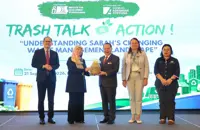
At the World Environment Day 2026 celebration there, students and local communities took part in activities including a recycled-material innovation competition, traditional cooking contest and a 6km fun run.
Sawit Kinabalu Group chief human resource officer Philipa Mojilis said involving young people was important in developing environmental awareness from an early age.
“For me, what is important is the involvement of the communities here and also the students because we want them, from when they are young until they grow up, to realise that we must take care of our environment,” she said.
Philipa represented group managing director Datuk Victor Ationg at the programme.