Sabahan theatre practitioner Tedd Louis found a renewed sense of purpose in Kuala Lumpur through his recent performance in Revolusi Teater Indie’s Racun (July 2026), as he continues to find his footing in the city.
He previously directed Promise (2024), a short theatre work presented as part of EJKLSeni’s The Young Blood Experiment, exploring metamodern theatre, cultural identity and collective memory.
His practice also extends into visual art. At the Seasonality Of The Anthropocene at the A.Pop space in KL, Louis exhibited Kami Angkat – The Flood Gauge, a 2.4m, four-sided column charting Sabah’s flood seasonality across seven decades.
Through art and performance, he continues to bring the stories of his hometown, Penampang, into new spaces.
“My focus is really on what Borneans face today: the loss of language, and how culture must adapt or risk disappearing in a modern context. Watching theatre here in the Klang Valley made me realise how little I knew about my own home,” says Louis, 34, in a recent interview.
“That question stayed with me and pushed me to research and write about our history and contemporary realities through conversations with friends and interviews with people back home,” he adds.
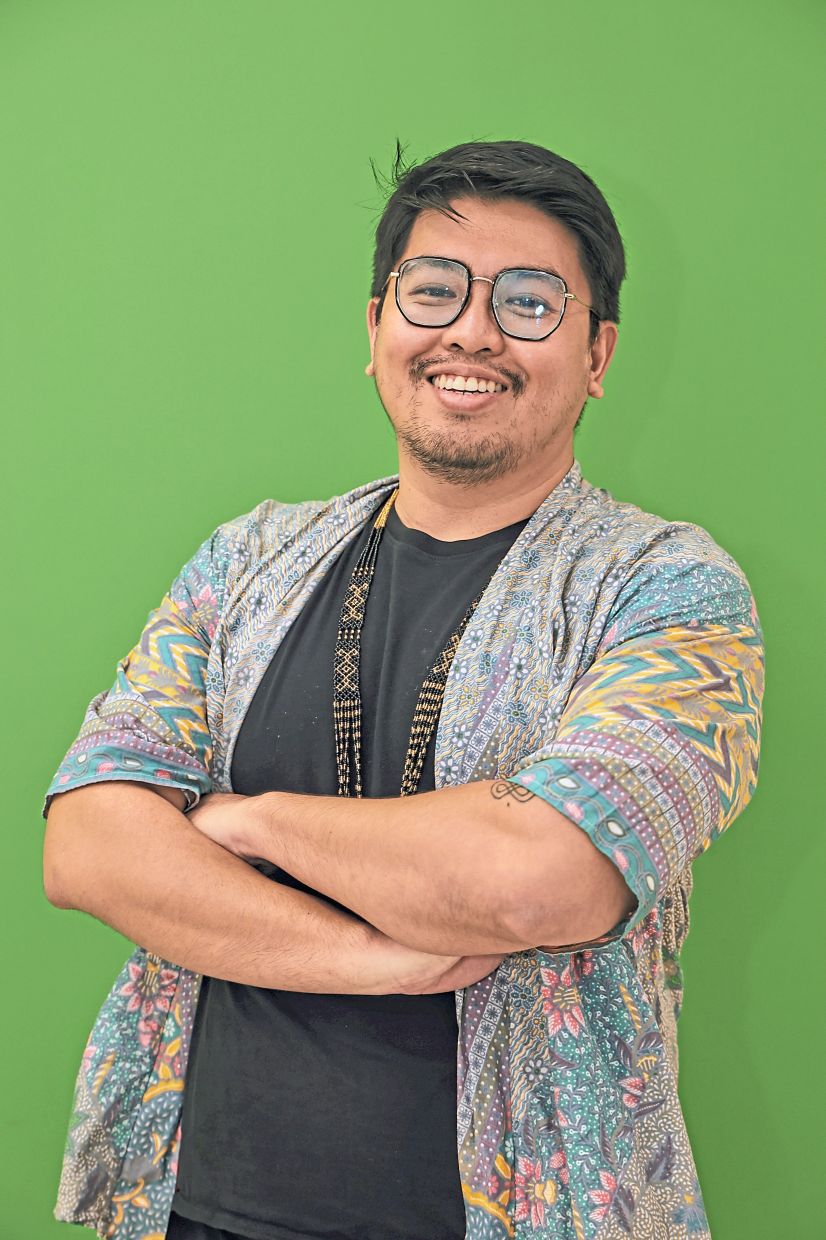
Language is a subject close to Louis’ heart, reflecting the identity tensions faced by a younger generation that may understand Dusun when they hear it, but struggle to speak it.
He brought these ideas to the theatre workshop platform through this year’s Cipta Seni Incubator: Untold Stories programme in KL, where he developed an existing draft, Bosou, Hinava & Bambangan.
Inspired by Louis’ own life, the play about family, food and memory began as a letter to his late mother on the anniversary of her passing.
“What I’m trying to accomplish is a mix, it’s personal, but also about giving greater visibility to Bornean, particularly Dusun, culture. I wrote it as my own way of ‘lepas rindu’ for my mom, easing the longing for the time she spent teaching me to cook and telling me about the past,” says Louis.
“But while it is rooted in Dusun culture, I believe what I’m saying is universal. I hope people leave reflecting on what they’ve left behind too, not just what I have,” he adds.
Balancing two worlds
For Bethany Luhong Balan, a Sarawakian poet and self-taught artist based in Singapore, presenting her work in the Klang Valley has been both rewarding and complex.
The 35-year-old was recently back in Kuala Lumpur, exhibiting a “poetry” installation and collaborating with the Wordsmith Kuching community at the Rentak MalaysiaKu celebration at the GMBB creative mall.
This year, she has been particularly active in the Klang Valley, showcasing a climate-themed installation and video series titled Asap at the Seasonality Of The Anthropocene show, and a literary-inspired installation at the Ancestors Of The Future exhibition.
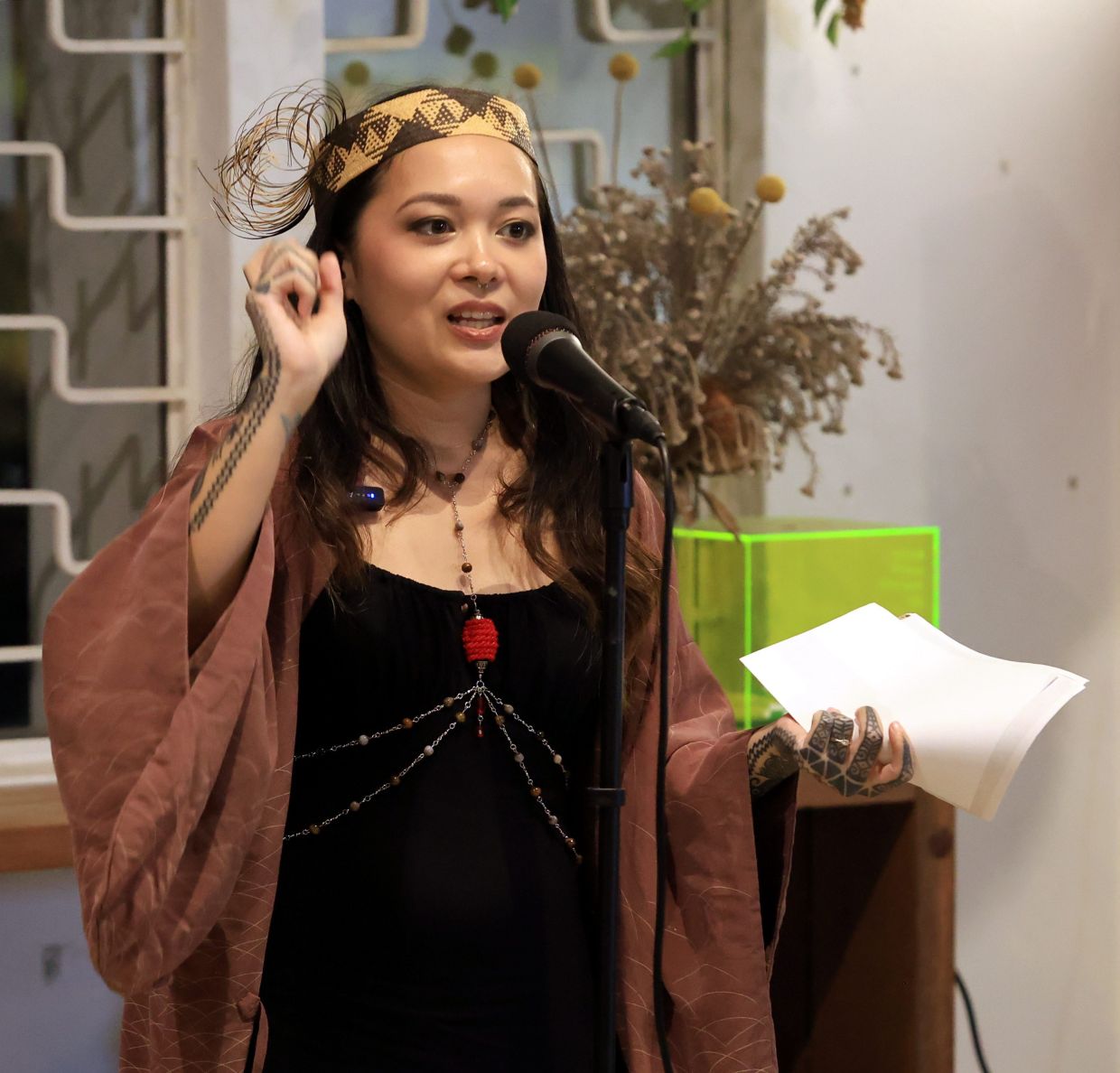
“As someone who often centres my Sarawakian identity and Dayak heritage in my work, the art scene in KL can be a mixed bag. The reception is usually good, but I do feel the need to ‘translate’ my work more than I would in Sarawak, which is to be expected, I suppose.
"Although we speak the same language, there is still a barrier. Sometimes it hits me that I’m one of the first Dayak artists to enter that space, and that’s a responsibility I don’t take lightly,” says Luhong Balan, who hails from Sungai Asap, Bakun in Sarawak.
That responsibility also extends to the tensions surrounding language and identity among Sarawakian artistes, where she says shame and guilt can often come into play.
“A lot of my peers struggle to balance tradition and modernity. If I call myself a Dayak artist, does that mean I can only make ‘Dayak’ art? Or is all my work considered Dayak simply because I am a Dayak artist? At the end of the day, I’m not living as my ancestors did. I’m a modern person living in a modern era, and my work reflects that,” says Luhong Balan.
“I don’t believe culture is stagnant or ‘unmoving’. Only dead things don’t move, and my culture is very much alive. So many Sarawakian and Sabahan artists and creatives today are redefining what ‘traditional’ or ‘cultural’ art can be, and it’s exciting to witness that firsthand,” she adds.
Carving out a niche
Few have brought Sabahan arts, crafts and publishing closer to everyday Malaysians than Jesse Joy. The Putatan-born, Kuala Lumpur-based embroidery artist has spent the last few years connecting with independent arts communities across the country.
His work includes Finding Bundusan, a documentary inspired by his grandmother’s tikar bundusan weaving, Derivatives: Beads & Lore, an exhibition on Sabahan beads and beadmaking that he curated in Kota Kinabalu; and Bundusan Books, a pop-up bookshop specialising in Bornean-themed publications, which he founded in 2022.
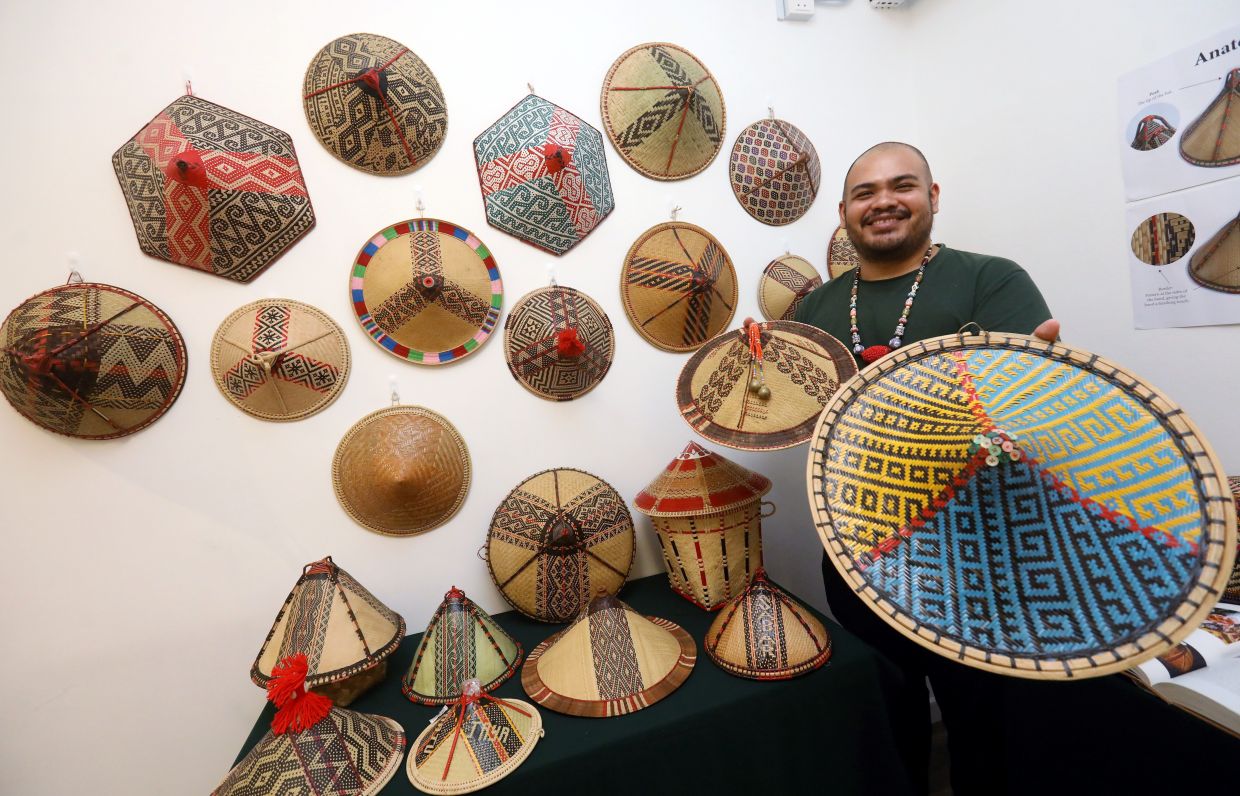
When he is not at book markets with Bundusan Books, Joy, 35, works with handmade beads. He recently showcased a selection of beads and embroideries at Temu House’s Ancestors Of The Future (AOTF) exhibition.
“When I learned about the idea behind AOTF, I immediately resonated with it. It reflects something I’ve long believed in – practising our culture and identity as we are, wherever we are today. It’s exciting to experiment with different materials and techniques, enriching our art and opening new ways to see and experience our culture,” says Joy.
While spaces for Sabah and Sarawakian voices remain limited, particularly in the Klang Valley, Joy sees hope in a younger generation increasingly willing to create opportunities rather than wait for them.
Having spent years in the arts and literary festival circuit, Joy has carved out a niche of his own, forging connections between the Klang Valley and Sabahan arts scenes.
“I think today’s generation isn’t afraid to take up and create space for their creative expression, whatever form it takes. While the Klang Valley offers many opportunities, I hope they won’t feel they have to move here to build a career in the arts. They should be able to thrive where they are,” he concludes.