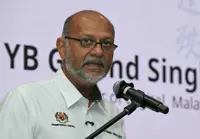
KUALA LUMPUR: Malaysia is preparing its roads for driverless vehicles, with network upgrades targeted for completion by year-end and legal changes being considered to allow vehicles to operate without human drivers.
Digital Minister Gobind Singh Deo said the country currently had a network that was “almost ready” to support autonomous vehicle activity, although further upgrades were required.
“We are looking at that, and that’s one of the areas that we are trying to complete within the next quarter, before the end of the year,” he said.
Gobind said this to The Star when met after his keynote address at the CloudTech & DataCentre Conference 2026 here on Thursday (Aug 13).
He said the second component involved establishing a regulatory framework for autonomous vehicles.
Existing laws expressly require vehicles on public roads to be operated by qualified drivers, creating legal and regulatory questions over driverless technology.
“Having a vehicle that operates without a driver is something that requires legal changes as well.
“What you’re going to have in the future is where things operate autonomously. In other words, they operate based on network coordination.
“That’s where we have to start looking at streamlining laws for that purpose. So we’re also in the process of doing that,” he said.
Gobind said existing legal provisions would have to be reviewed to accommodate vehicles operating without human drivers.
Current requirements for licensed drivers also formed the basis of discussions surrounding matters such as motor insurance, he added.
According to Gobind, Malaysia already has an autonomous vehicle test run operating in Cyberjaya, which he said had been underway for more than a year.
“I think the next question is: when are we going to take that one step further?” he said.
He also cited an autonomous bus system introduced by Pos Malaysia within its compound in Shah Alam.
Gobind said such systems could eventually be replicated in ports and other industries.
“So I think that’s currently already ongoing. The next will be where we can replicate such systems in perhaps other industries like ports,” he said.
He said the adoption of autonomous vehicles would require close coordination among several ministries, agencies and local authorities.
The Transport Ministry, he said, would oversee transport-related matters, while local councils and the Housing and Local Government Ministry could be responsible for traffic cameras and other infrastructure.
Gobind said information collected from cameras could help reconstruct events immediately preceding an accident and determine fault.
Visual data could also identify a vehicle’s type, registration number and owner, as well as whether it had an emergency communication system for passengers.
“There are so many things that actually are happening at once in this ecosystem.
“That’s where the Ministry of Digital comes in, and that’s what AI Nation is about,” he said.
Gobind said the objective was to build seamless interoperability among ministries and enable data to be used across government agencies to provide better services and solutions.
He added that the wider regulatory discussion would also have to consider other autonomous technologies, including drones, an area being examined by the Transport Ministry and the Civil Aviation Authority of Malaysia.