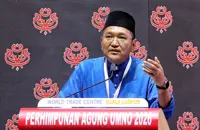
SEPANG: The Malaysian pilot who was caught in an Indonesian airport for drug smuggling had passed through security screening at the KL International Airport (KLIA), says the Malaysian Border Control and Protection Agency (AKPS).
AKPS director-general Comm Datuk Seri Mohd Shuhaily Mohd Zain said checks showed that the pilot in question had undergone all required screening before boarding on July 28.
He added that AKPS was not involved in the baggage screening process, with that responsibility at KLIA coming under Aviation Security (or AVSEC, which is under Malaysia Airports).
“I can confirm that officers from agencies under AKPS, including the Customs Department, were not involved in the baggage screening process using the X-ray scanners at KLIA,” he said when contacted later yesterday.
“Due to that, it passed through the checks. We are waiting for the response from the police so that we can study how he had passed through the screenings without being flagged,” he told a press conference here yesterday.
Comm Mohd Shuhaily said the screening system combines artificial intelligence (AI) with human assessment.
“The scanner will automatically assign a risk level before security personnel determine whether additional checks are required.
“The system uses AI to a certain extent but it is not like what people see on television.
“It still requires the judgment of the operator. AI assists the process but the final decision rests with the screening officer,” he said.
Comm Mohd Shuhaily said because the baggage did not trigger a higher risk classification, officers acted in accordance with existing standard operating procedures without subjecting him to a secondary screening.
He said the drugs might have been hidden in a way that the scanner wouldn’t detect.
“But the police is the agency that would determine how it had occurred,” he said.
Comm Mohd Shuhaily defended the competency of airport screening personnel, noting that AKPS had successfully intercepted numerous cases involving drugs and other prohibited items.
“For now, we can assure the public that the existing system was fully utilised in this case.
“We will look at whether the system or equipment can be further improved once the investigation is completed,” he added.
On the possibility of an inside job or “counter setting”, Comm Mohd Shuhaily said he would not compromise on any integrity issues if investigations confirmed them.
In a related matter, he said a joint meeting between airport stakeholders and the authorities was held yesterday to discuss improvements to protocols.
Others who attended included Bukit Aman Narcotics Crime Investigation Department director Comm Datuk Hussein Omar Khan, airport officials and other relevant agencies.
“The meeting was chaired and coordinated by the Transport Ministry’s secretary-general to examine how the existing procedures can be further improved.”
Comm Mohd Shuhaily said the matter is being viewed seriously and that procedures will be improved in the near future.
According to reports, the 39-year-old pilot had operated Malaysia Airlines Flight MH727 from Kuala Lumpur to Jakarta before he was arrested at Terminal 3 of Soekarno-Hatta International Airport last week.
He was suspected to have smuggled about 25kg of drugs in a suitcase with the promise of a RM50,000 reward.
The suspect also tested positive for drugs.