PETALING JAYA: The country is making progress towards eliminating hepatitis through vaccination, antenatal screening and public health programmes, says the Health Ministry.
It said early diagnosis and improved access to treatment have prevented patients from severe complications such as liver failure and liver cancer.
According to a report presented to the 79th World Health Assembly in Switzerland two months ago by Health Minister Datuk Seri Dr Dzulkefly Ahmad, hepatitis B cases rose from 3,781 in 2021 to 8,138 cases in 2025 per 100,000 population, while hepatitis C cases increased from 3,000 in 2021 to 5,470 cases in 2025.
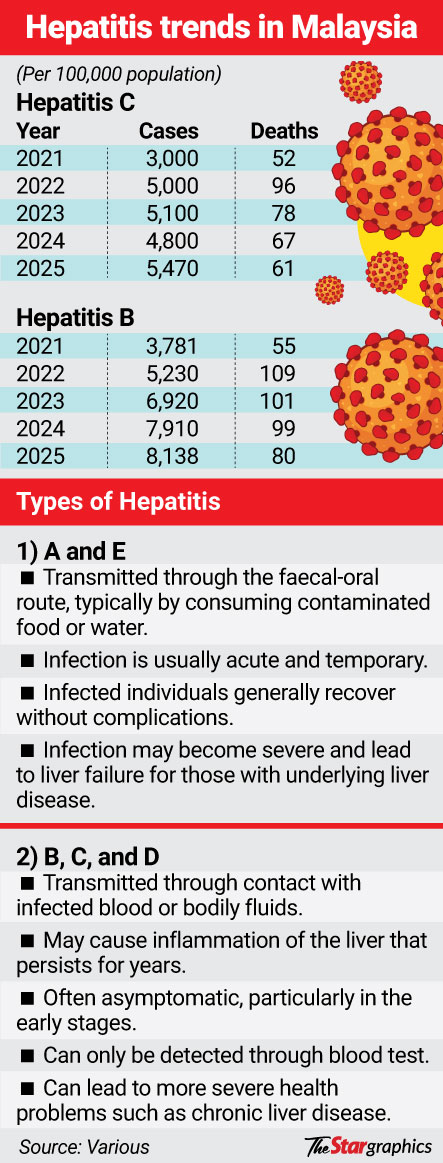
From 2021 to 2025, a total of 444 people died from hepatitis B and 354 people died from hepatitis C.
ALSO READ : Spotting a ‘silent killer’ beyond signs of jaundice
“This reflects greater awareness and wider access to affordable drugs.
“The report on Malaysia’s efforts in combating hepatitis also said a programme is currently being carried out to improve patient access to lifelong monitoring and treatment within their own communities, leveraging the existing network of primary healthcare providers across the nation.
It noted that the ministry is also intensifying initiatives to eliminate mother-to-child transmission through antenatal screening and birth-dose vaccination.
“Our goal is to stop babies from getting Hepatitis B from their mothers at birth.
“In 2025, 98.66% of pregnant women (183,536 people) were screened and the country achieved a zero transmission rate,” it said, adding that almost all babies are vaccinated against Hepatitis B.
ALSO READ : Get checked, don’t share items, those at risk told
In 2025, 35,169 people were treated for Hepatitis C following the expansion of the affordable public health system.
As of last year, 748 clinics, 85 hospitals, 15 prisons and three National Anti‑Drug Agency institutions provide hepatitis screening and treatment.
In 2025, a total of 220,264 screenings were carried out with 5,470 people having tested positive for Hepatitis C.
The ministry also noted screening and treatment in prisons since 2020 have further improved access among high‑risk groups.
It called for stronger international cooperation, sustainable financing, equitable access to diagnostics and medicines, as well as wider community engagement to ensure no one is left behind.
“Hepatitis elimination is not only a public health priority but a social and economic imperative.
“Malaysia stands ready to work with all partners to achieve hepatitis elimination by 2030 in line with the target set by the World Health Organization,” Dzulkefly told the audience at the assembly.
This year’s theme for the World Hepatitis Day, which fell on July 28, is “Hepatitis: Let’s break it down” – a call to make treatment accessible to all.