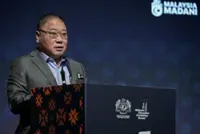
KUALA LUMPUR: The Immigration Department must take enforcement action against tourists who do not leave Malaysia within the specified period, stresses Datuk Seri Tiong King Sing.
The Tourism, Arts and Culture Minister said this was crucial to ensure that the number of tourists entering Malaysia equaled the number leaving the country.
"This (imbalance) issue has been raised many times. Visitors come to Malaysia not only through tourism agents, but there are also individuals who come on their own from various countries.
"If any tourist does not leave the country within the specified period, the Immigration Department must take enforcement action,” he said during the winding-up session of the debate on the King's Royal Address for the ministry at Dewan Negara on Monday (March 2).
Tiong was replying to a question from Senator Husin Ismail, who raised the issue of visitors who do not go back and proposed that tourism agents be held responsible for ensuring tourists leave the country within the specified period, to avoid an imbalance in the number of tourists.
Tiong said his ministry has also asked the embassies of several countries, including China, to provide lists of names and passport numbers of tourists who have overstayed to ensure more effective management.
"The embassies will conduct investigations, while the Immigration Department will compile the list of tourists who overstayed, and the ministry will identify the agents involved so that action can be taken,” he said.
Meanwhile, the Home Ministry has assured that the immigration autonomy for Sabah and Sarawak would continue to be maintained in line with the Malaysia Agreement 1963 (MA63) and the Federal Constitution.
Deputy Home Minister Datuk Seri Dr Shamsul Anuar Nasarah said that although the Malaysian Border Control and Protection Agency (AKPS) has been in operation since Jan 1, 2025, the autonomous powers of the Borneo territories will not be affected.
"Under Section 6(3) of Act 860, it is compulsory for the AKPS to comply with all instructions issued by the Sabah and Sarawak state authorities regarding the control of individuals at the country's entry points.
"The implementation of this new act will not, in any way, erode the existing powers of the state government,” he said during the winding-up session for the ministry.
Meanwhile, Entrepreneur and Cooperatives Development Deputy Minister Datuk Mohamad Alamin, during the winding-up session for the ministry, said it was implementing work process engineering initiatives to shorten the approval period for entrepreneur financing, thus enhancing the efficiency of service delivery among its agencies.
He added that the measure was taken in line with the ministry's 'ABCD’ strategy of Anjakan produktiviti (productivity shift), Birokrasi dipermudah (simplified bureaucracy), Capaian modal (access to capital) and Daya akses (market accessibility) to assist micro, small and medium enterprises (MSMEs).
He said that through the initiative, Tekun Nasional has shortened the approval and disbursement period for funds from 10 days to five working days, SME Corp has accelerated access to financing through alternative finance providers from 21 days to seven days, while SME Bank has reduced the approval period for work capital financing for RM100,000 to RM1mil from 30 to 15 working days.
Mohamad added that Bank Rakyat has also expedited the MSME financing process from 30 days to 14 days, while Ar-Rahnu transactions now take only 10 minutes, down from 40mins previously.
Also winding up the debate on the Royal Address on Monday were the Energy Transition and Water Transformation Ministry, the Transport Ministry, the Agriculture and Food Security Ministry and the Digital Ministry.
Dewan Negara sits again on Tuesday (March 3).- Bernama