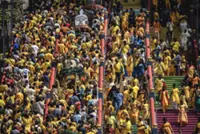
KUALA LUMPUR: Following Thaipusam, cleanup crews swung into action at the Sri Subramaniar Swamy Temple in Batu Caves.
Ali Jaafar said during Thaipusam, he and his cleaning team had to work longer hours to manage the volume of waste.
“We normally work nine hours a day, but this week our shifts run from 7am to 7pm,” he said.
“Since morning, we have collected a whole skip full of rubbish.
“People tend to throw rubbish wherever they like,” he said.
This is despite the efforts of non-governmental organisation Clean Thaipusam, which had placed cardboard bins for waste disposal outside the entrance to Batu Caves.
S. Kantharaw, who runs a stall selling clothes during Thaipusam and Deepavali, said he has seen an improvement in cleanliness.
“Compared to the last decade, young people are now much more aware about proper waste disposal.
“As a result, the streets here are much cleaner,” he said.
Although Thaipusam has ended, visiting Batu Caves – a sacred site for Hindus – is considered a must for tourists visiting Malaysia.
Indian nationals C. Vivek and Rakshitha Vivek said visiting Batu Caves and viewing the Lord Muruga statue was an eye-opening experience.
“Though we are Hindus, we do not celebrate Thaipusam. We learned a lot about the festival and the overseas Indian community here,” said Vivek.
German Muriel Kutschera said a visit to Batu Caves is a must for her and was excited to be at this beautiful holy site.
The backpacker, who will be travelling the world for the next three to five months, said one of her goals was to climb the 272 steps and explore the cave.
“While in Malaysia, I hope to learn more about this country’s vibrant multiculturalism,” she said.