KUALA LUMPUR: Heritage should not be viewed as a burden of the past, but as a strategic asset capable of generating tourism, driving the creative industry, creating job opportunities and strengthening the local business ecosystem, says Datuk Seri Anwar Ibrahim.
According to the Prime Minister, the revitalisation of heritage buildings is among the key strategies to boost both international and domestic tourist arrivals.
Citing the Sultan Abdul Samad Building (BSAS) along Jalan Raja here as an example, Anwar, who is also Finance Minister, said its conservation is not an effort to relive nostalgia, but an initiative to ensure that history continues to live on, be understood, and serve as a guide in facing future challenges.
“This effort is at the core of the Warisan KL initiative, a strategic approach by the government to revitalise Kuala Lumpur’s key heritage sites as catalysts for culture-based urban economic development,” he said in his speech at the ceremony to mark the completion of Phase 1 of the BSAS conservation here yesterday that was graced by the presence of His Majesty Sultan Ibrahim, King of Malaysia.
Also present were Deputy Prime Minister Datuk Seri Dr Ahmad Zahid Hamidi, Communications Minister Datuk Fahmi Fadzil and Chief Secretary to the Government Tan Sri Shamsul Azri Abu Bakar.
The Prime Minister said the conservation of the BSAS is an approach aligned with Visit Malaysia 2026 (VM2026), as the country is not only known for its natural beauty and cultural diversity, but also for the strength of its historical and civilisational narrative that shapes who we are.
He said efforts to revitalise heritage buildings are not only an important strategy to drive international and domestic tourist arrivals, but more importantly reflect the aspiration to build a modern and dynamic Kuala Lumpur that remains rooted in history and values.
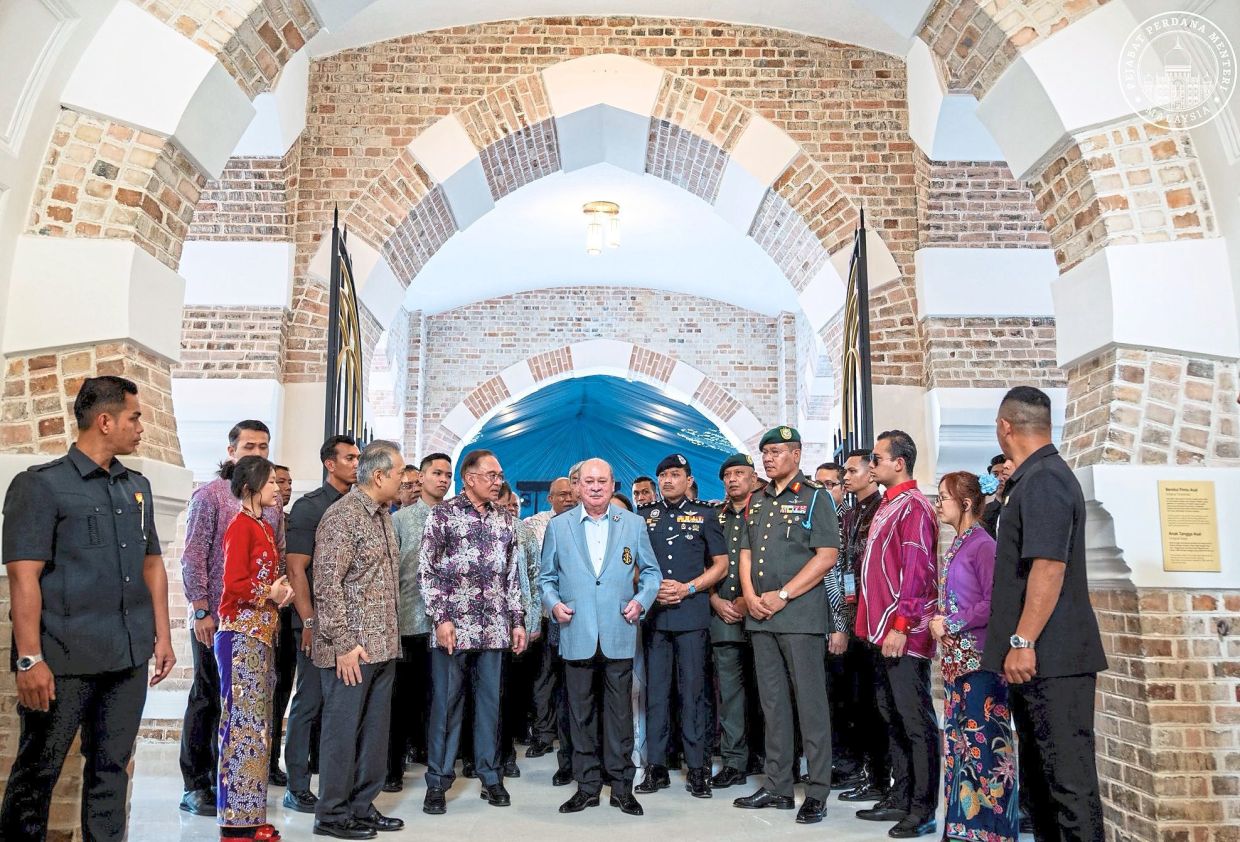
“As stated in the Budget 2026, the project covers all six blocks of the Sultan Abdul Samad Building complex, in addition to the conservation of Seri Negara and Carcosa at Bukit Carcosa.
“We must also ensure that the people are able to enjoy these facilities. The conservation of BSAS is among the early manifestations that can be seen and experienced by the public; however, conservation cannot stop at structures alone. Heritage buildings must be brought to life,” he said in his speech, Bernama reported.
He said BSAS will house the Kuala Lumpur City Gallery, which traces the journey of the building and the capital city through five themed spaces spanning three centuries of history.
Apart from that, he said the Royal Selangor Gallery will showcase pewter craftsmanship as a reflection of the economic legacy, creativity and entrepreneurial spirit of the people of Kuala Lumpur, rooted in the city’s tin mining history.
“I am confident that BSAS and this entire historic complex will continue to reflect the nation’s identity – a country that is advanced and progressive, yet remains connected to its historical roots, developing not only through economic strength but also through soul, values and humanity,” he said.
The Prime Minister said the presence of His Majesty Sultan Ibrahim was not solely to grace the ceremony, but symbolised a reminder that the nation’s journey remains anchored in history, guided by values and protected by the institution of constitutional monarchy.
“I would like to express my appreciation to all parties involved in making this effort a success, especially the team from Khazanah Nasional Bhd, as well as all the ministries and government agencies involved,” he said.
BSAS was named in honour of the late Sultan Abdul Samad ibni Almarhum Raja Abdullah, the Selangor Ruler during the era of its construction, and was officially opened in 1897 by Frank Swettenham, the first British Resident-General of the Federated Malay States.
BSAS also witnessed the birth of the nation when the Union Jack was lowered for the last time on Aug 31, 1957, marking the end of British rule and the beginning of independent Malaya.