
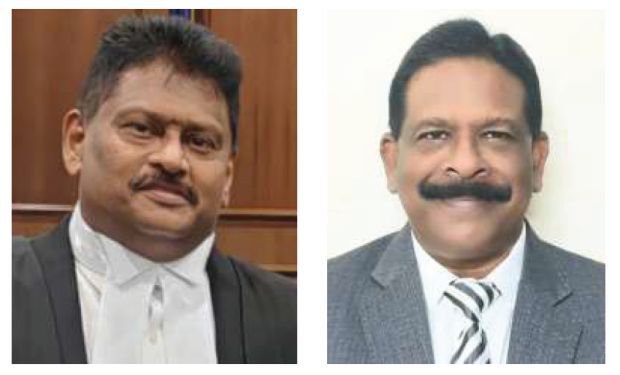
PETALING JAYA: Tougher penalties and stricter enforcement are crucial to rein in Malaysia’s booming illegal scrap metal trade, say two former police top brass.
Former federal CID assistant director Datuk S. Shanmugamoorthy said enforcement often failed due to outdated laws and limited capacity to handle modern scrap- related crimes.
“We need a compact, all-encompassing law with airtight procedures and heavier penalties, especially for habitual offenders.
“If the case is syndicated, the offence should be treated as organised crime under the Penal Code.
ALSO READ: Cashing in on illegal copper trade
“Some of these thefts involving public infrastructure can even disrupt essential services,” he said.
He noted that the Second-Hand Dealers Act 1946 (Act 189), a pre-independence law, mainly covers licensing, operating hours, record-keeping and dealer liability.
“It is inadequate with the current challenges we face.
“Police have long called for amendments as the law does not fully cover newer criminal methods or the role of foreign nationals. It needs urgent revision to suit current circumstances,” he added.
Shanmugamoorthy said thefts targeting public infrastructure were often intricate and required technical skill, with foreign scrap collectors increasingly being involved.
“Sometimes it is insider information that allows the perpetrators to succeed.
“Take LRT or MRT cable thefts as an example. Dismantling and extracting the material requires the technical know-how. The mastermind often remains unknown and pushes the work to foreign nationals.
“This can be a one-off act or part of a larger syndicate,” he said.
He explained that foreign collectors often stored and disassembled stolen items at isolated locations before bringing them to scrap dealers outside business hours.
“UNHCR cardholders have no immunity from prosecution. It is illegal for these cardholders to even work and in some cases their cards are found to be fake,” he told The Star.
To choke the illegal scrap supply chain, Shanmugamoorthy proposed several measures: strengthening the burden of proof, revising licence conditions, standardising record books, mandating CCTV at dealer premises and requiring all transactions to be registered.
He also suggested better engagement with scrap metal traders’ associations and greater transparency in procurement tenders.
“Enforcing these measures will make it harder for unlicensed foreign operators to profit, while protecting ethical local dealers,” he said.
Criminologist Datuk Seri A. Thaiveegan said to further regulate the scrap metal industry, closer monitoring could be adopted.
“If we can monitor moneychangers daily with computerised systems, we can do the same here.
“Overseers or ex-police officers can be roped in to manage compliance,” he said.
Thaiveegan said digitalising transactions and reporting them promptly to a dedicated agency would allow authorities to keep tabs on the businesses.
“Spot checks and routine inspections should also be carried out.
“Big manufacturing and export yards have Customs officers on site. The same system can be applied to large recycling companies based on its annual turnover,” he added.
While police have jurisdiction over scrap yards, Thaiveegan noted enforcement was “seemingly inefficient”.
He called for greater manpower, tougher laws, and ethical conduct among enforcers.
“Serving officers must maintain professional distance from scrapyard owners to avoid ethical conflicts. Law enforcers should revoke licences if owners are charged twice for related offences.
“The Anti-Money Laundering Act should be used to investigate illegal gains, with penalties including a minimum six-month jail term and fines from RM50,000 to RM1mil.
“I believe many scrap metal operators are law-abiding and ethical. It is only a small group that brings a bad reputation to the whole industry,” said the former police commissioner.