THE quiet town of Sandakan on Sabah’s east coast holds one of the darkest memories of World War II – a prisoner-of-war (PoW) camp where more than 2,700 Allied soldiers were held captive.
By the war’s end, only six survived.
The camp stands as a symbol of unimaginable suffering, but hidden in its history are rare stories of compassion and bravery – ordinary Sabahans who risked everything to help others.
One of them was Ernesto Lagan, a Sandakan policeman who used his position under Japanese rule to help Allied prisoners from Australia, New Zealand and Britain.
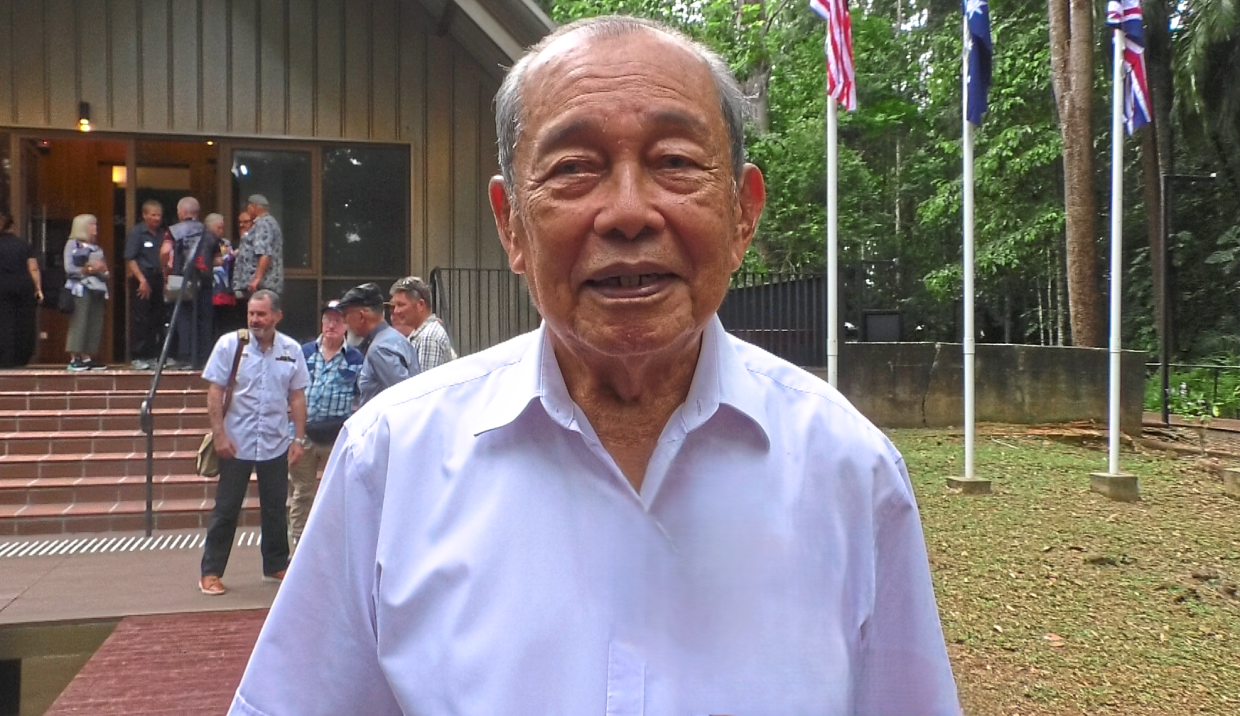
His eldest son, Alban Lagan, still recalls the morning the soldiers came for his father. He was barely six when their lives changed forever.
“We were about to have breakfast when the Japanese suddenly came in an open car,” he said.
“They called out my father’s name – ‘Lagan, Lagan’. He stood up, and they took him away. We never saw him again.”
Ernesto was accused of aiding the prisoners and joining a small underground network that secretly passed information and supplies to them.
In 1944, he was executed by firing squad in Kuching and buried in a mass grave with 13 others.
A child who saw everything
Alban grew up near St Mary’s Church, not far from the camp. He remembers prisoners being gathered there before being forced to march westward.
“There were about 2,400 of them,” he recalled softly.
“The Japanese were small but carried rifles and hit the tall white men. I can still hear them marching and singing Three O’Clock in the Morning as they passed our house.”
That haunting song became one of his earliest memories of the war.
Japanese soldiers often raided the Lagans’ home, overturning furniture as they searched for evidence.
His mother was sometimes allowed to visit Ernesto, returning with his blood-stained singlets and shorts.
“She cried while washing them,” Alban said. “I just stood there watching, not understanding. Only later, when we saw his name on the memorial, did we finally accept he was gone.”
Betrayal and forgiveness
Years later, Alban learned his father had been betrayed by someone within the secret committee.
“One person in the group had a change of heart,” he said. “He told the Japanese who was involved. That’s how my father was killed.”
But rather than harbour hatred, Alban chose to forgive.
“I forgive him. Maybe he thought the Japanese would treat him better. But they didn’t care either.”
The war years that followed were brutal. His family fled their home with nothing.
“Sometimes we went up to 10 days with nothing to eat,” he said.
“But my mother never stopped believing that my father did what was right.”
Witness to the Death March
From his home, Alban saw the beginning of what history would call the Sandakan–Ranau Death March – a 260km trek through jungles and mountains that claimed almost every prisoner’s life.
“They walked past our house,” he said. “We heard their footsteps, their voices, and then silence. None of them ever came back.”
Today, nearly eight decades later, Alban, now 90, still lives in Sandakan. Every year, he visits the war memorial where his father’s name is etched among the fallen.
“I come here every year because I want peace,” he said. “We don’t want this kind of suffering again.”
Asked if he blames the Japanese, Alban shook his head.
“I have no hatred. War makes people suffer. That’s why we must never have war again.”
For him, his father’s sacrifice is more than history – it’s a message for the future.
“My father died helping others. If he left anything behind, it’s that we can still choose kindness, even when the world is cruel.”
From the ashes of Sandakan’s past, Alban carries not anger, but peace – proof that even in the worst of times, humanity endures.