



GEORGE TOWN: The Teochew language and culture have persevered despite demographic shifts affecting the community.
Although few people still speak the Teochew dialect, the Teochew Puppet and Opera House (TPOH) remains one of Malaysia’s last bastions, preserving the traditional art of iron-rod puppetry and Chinese opera performances.
Penang Heritage Trust (PHT) president Clement Liang lauded the effort of Ling Goh, who is TPOH’s troupe leader.
“Despite the threat of cultural erosion, the language and culture have shown signs of revival.
“There are attempts to cultivate interest in the Teochew language and culture in Penang.
“Ling Goh’s exemplary leadership has been one of the reasons it could survive until today,” he said.
Last year, the TPOH, which includes an academy, reopened its doors, nearly four years after the Covid-19 pandemic movement restrictions. It also celebrated its 10th anniversary.
Established in 2014, TPOH, located in Armenian Street, houses exhibits such as musical instruments, costumes and scripts used in traditional Teochew performances.
Following renovations, items used in Teochew opera and puppetry were moved to the TPOH museum gallery in the same building.
The 10th anniversary also marked the inauguration of the Malaysia Teochew Performing Arts Heritage Centre.
Those visiting TPOH can experience interactive elements such as iron rod puppets and costume fittings, which were introduced to create a more engaging exhibition experience.
A traditional Teochew-type stage has also been moved inside the performance house for visitors to appreciate the charm of an opera set.
The PHT, said Liang, actively supports the preservation and promotion of Teochew culture and traditions.
“PHT promotes Teochew cultural activities in Penang and one of our Living Heritage Treasure Award recipients is the well-known Teochew puppeteer Toh Ai Hwa, who is also Goh’s mother,” he said.
Liang said traces of Teochew influence continue to thrive in everyday life and efforts are ongoing to ensure their legacy is not forgotten.
“Penang’s famous char koay teow is undoubtedly Teochew, influenced by the use of light soy sauce.
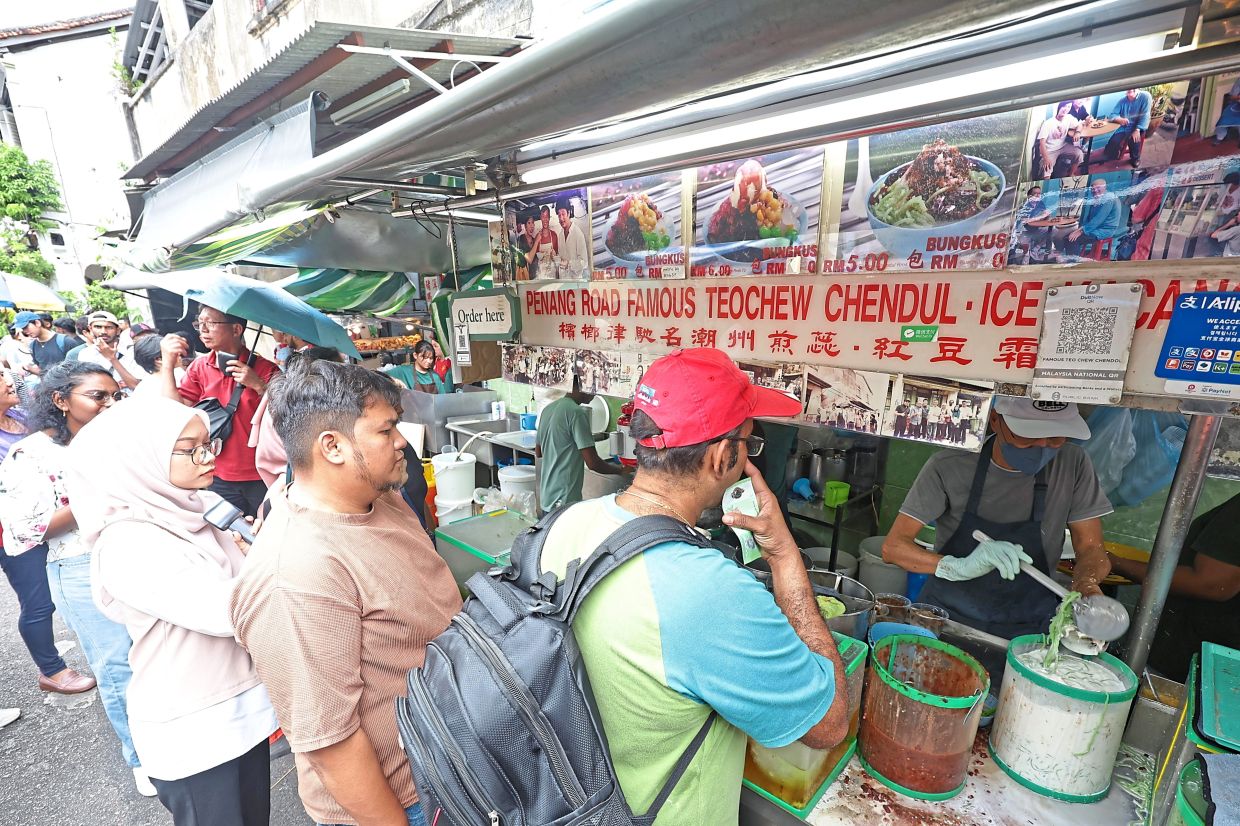
“The Teochews also make one of the best cendol desserts in the country, as seen in the daily long queues along Penang Road.
“Among Penang’s architectural gems reflecting Teochew heritage is the Han Jiang Ancestral Temple in Chulia Street.
“The main guardian deity worshipped by the Teochews is Lord Xuan Tian and he sits at the main altar of the Han Jiang temple.
“The temple is built in traditional Teochew architectural style with no side windows, said to prevent fortune from leaking out, according to feng shui legends,” he added.
The Han Jiang Ancestral Temple not only stands as a symbol of Teochew cultural legacy, but also serves as the headquarters of the Penang Teochew Association.
Its history dates back to 1855 when the Teochew Kongsi was established by six Teochew immigrants along Beach Street who laid the foundation for what would later become the Penang Teochew Association.
By 1867, the group successfully raised funds to acquire a plot of land in Chulia Street, where the Han Jiang Ancestral Temple, completed in 1870, now stands.
An ornate gate building was later added in 1890.
Liang also acknowledged the challenges faced by younger generations in maintaining their linguistic and cultural heritage.
“Due to the enforcement of a Mandarin-only education system in all Chinese schools in Malaysia and Singapore, many younger Teochews have lost the ability to converse in their mother tongue.
“The lack of media exposure has further reduced daily use of the Teochew dialect, which is now mostly confined at home with the elderly,” he said.
