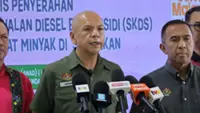
KOTA KINABALU: Talks on returning the rights of Sabah and Sarawak as enshrined under the Malaysia Agreement 1963 (MA63) are ongoing, including autonomy when it comes to staffing in their public education and healthcare sectors, says Datuk Seri Fadillah Yusof.
The Deputy Prime Minister said the challenge faced by the Borneo states currently was that such staffing decisions were made in Putrajaya.
When the process is done across the pond in the peninsula, he said, many of those who land positions there chose not to move, thinking their job placement would be in interior areas.
In the end, he said, there would be no one serving the two states, despite positions being taken up.
“So, that is why we are thinking it would be better to return the administration and management of the health and education sectors to Sabah and Sarawak,” Fadillah told reporters after attending the Malaysian Cocoa Board appreciation ceremony here yesterday.
“This is so we can decide for ourselves on hiring. These individuals must report for work in Sabah and Sarawak,” he said, adding that the approach was being finetuned.
He said the Federal Government was waiting for the Sabah and Sarawak governments to present their terms.
“This means empowerment (of Sabah and Sarawak) and also includes planning on things such as costing. Everything is done in (Putrajaya) now, so even the states are not aware of the priority being set sometimes.
“Hence, we are asking for autonomy so we can set the priorities,” said Fadillah, who is also the Plantation Industries and Commodities Minister.
Another MA63 matter, he said, was the one-third Sabah and Sarawak representation in the Dewan Rakyat.
When Malaysia was formed, he added, two-thirds of the seats were in Malaya while the rest was reserved for Sabah, Sarawak and Singapore.
After Singapore left the Federation, he said, Sabah and Sarawak had less than one-third of the seats.
He pointed out that currently, laws can be passed or amended in Parliament without the votes of MPs from either state.
“So, we want to have at least slightly more than one-third of the seats – this will preserve the spirit of the formation of Malaysia,” Fadillah said.
“After getting the legal views, we would also need the full backing of all MPs in the peninsula,” he said.
He said talks centred more on technical issues with the Attorney General and the two states.
Already a subscriber? Log in
Get 20% OFF The Star Digital Access
Cancel anytime. Ad-free. Unlimited access with perks.