



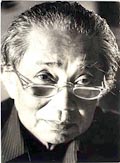
Tan Sri Nik Ahmad Kamil Nik Mahmud is better known as one of the first Malaycorporate players. He entered the business world in the 1960s and remained animportant participant until 1977 when he died of a heart attack on Dec 20. But hewas also involved in the independence negotiations, representing the Malay rulers.
By DR KHASNOR JOHAN
BORN on July 7, 1909, into the Kelantan aristocracy, Nik Ahmad Kamil was the elder son of a long-serving Mentri Besar of Kelantan, Datuk Nik Mahmud Nik Ismail.
He first studied at the Madrasah Muhammadiah, Kota Baru, and completed his secondary education at the Malay College Kuala Kangsar. In 1926, he sailed for London to begin his tertiary studies, thus becoming the first Malay student from Kelantan to be sent overseas.
Nik Ahmad Kamil studied Arts at the University of Bristol and finished law studies at the Inns of Court in 1929. He was called to the Bar in 1930.
On his return to Kelantan in 1931, he joined the Kelantan civil service. He held various positions until 1934 when he was promoted to the post of Secretary of State at age 25, succeeding his uncle Datuk Muhammad Tok Khatib Mohd Said.
In 1938, he was appointed acting Deputy Mentri Besar, thus placing father and son in the highest appointed positions for Malays under colonial rule in Kelantan.
 |
Vital role: Nik Ahmad Kamil (second from left) in the group representing the Malay rulers and Umno attending a meeting in Kuala Lumpur on Nov 20, 1946, of the Working Committeeformed to draft the Constitution Proposals for the Federation of Malaya. |
During this time, Nik Ahmad Kamil played a prominent role in revising and codifying the laws of the state.
He stepped into his father’s shoes as Mentri Besar in 1942, a position he held throughout the Japanese Occupation.
Upon the introduction of the Malayan Union, Nik Ahmad Kamil, whose services to the Japanese appeared to have been no barrier to his career, was appointed Deputy Resident Commissioner in Kelantan, the highest post for Malays, from 1946 to 1948.
Following that, under the new Federation of Malaya in 1948, he became the first Mentri Besar of Kelantan and held the position until 1953.
His qualities as a bureaucrat and political leader during this period impressed British officials and also gained the confidence of the Malay rulers.
When Sir Harold MacMichael visited the Sultan of Kelantan in 1946 to seek agreement to the Malayan Union plan, he found Nik Ahmad Kamil extremely intelligent, well educated and progressive.
Tan Sri Mubin Sheppard who, upon being appointed the acting top British official in Kelantan in 1950, worked closely with Nik Ahmad Kamil whom he described as a “brilliantly intelligent and outstandingly able leader.”
Independence involvement
The Malayan Union protests propelled Nik Ahmad Kamil into the national arena. The Malays in Kelantan took to the streets to voice their opposition to the Malayan Union plan. Leading the protest were two organisations, Persatuan Melayu Kelantan (PKM) led by Nik Ahmad Kamil and Persekutuan Persetiaan Melayu Kelantan (PPMK).
PKM represented mostly the elite, the English-educated and civil servants of Kelantan while the PPMK drew its members from the Malay-educated. Following widespread protests throughout the Malay states in early 1946, a Malaya-wide congress was convened in Kuala Lumpur.
The two Kelantan associations were represented, the PMK delegation headed by Nik Ahmad Kamil who was immediately drawn into the national movement to oppose the Malayan Union Plan.
Despite his role in the anti-Malayan Union movement, Nik Ahmad Kamil was said to have been instrumental in persuading the Sultan of Kelantan to sign the MacMichael treaty and was a witness to its signing but he soon reversed his position and sent a telegram of protest to London.
From then on, he committed himself to a course of action which saw him play significant roles in the various phases in Malaysia’s political development leading to independence.
Writing about the effects of the Malayan Union on his state in the Annual Report on Kelantan for 1948, Nik Ahmad Kamil explained that “the Malay people saw in it the local power which they had been accustomed to being usurped by an abstract body many miles away.”
Nik Ahmad Kamil was a member of the working committee, along with Datuk Onn Jaafar, Datuk Panglima Bukit Gantang of Perak, Datuk Hamzah Abdullah of Selangor and Zaaba, entrusted with the drafting of a charter and constitution for the new party, Umno, which the first Malay congress had agreed to form.
This was followed on May 11 to 12, 1946, by the Pan-Malayan Malay Congress in Johor Baru at which Umno was launched with Onn Jaafar as its first president. It was at this point that Nik Ahmad Kamil began to devote more attention to national politics, working closely with Onn as a member of the Umno executive committee.
When Onn left Umno following its rejection of the principle of opening the party to non-Malays and formed the Independence of Malaya Party (IMP) in 1951, Nik Ahmad Kamil joined the new party. He later followed Onn when he formed Party Negara in 1954.
Nik Ahmad Kamil retired from government service in 1955 and stood for elections that year in Kelantan as a candidate for Party Negara. His failure to win the election as well as the realisation that Party Negara was no longer a viable political force made him rejoin Umno.
In the meantime, due to its rejection by the Malays the Malayan Union was replaced by the Federation of Malaya constitution. Before its introduction, a Constitutional Working Committee of 12 members was formed, consisting of representatives of the British government, the Malay sultans and Umno.
As one of four members representing the sultans, and no doubt because of his law background, Nik Ahmad Kamil sat on the legal sub-committee. Subsequently, under the government of the Federation of Malaya, he served on its Executive and Legislative Councils and held, firstly, the position of Member for Lands, Mines and Communications in 1953 and then Member for Local Government, Housing and Town Planning.
Negotiations for the independence of the country once again placed Nik Ahmad Kamil in centre stage when he was appointed one of four representatives of the Malay rulers to the Merdeka Constitutional Conference in London in 1956. The others were Abdul Aziz Abdul Majid (later Tun) of Selangor, Datuk
Panglima Bukit Gantang of Perak and Datuk Seth Mohd Said of Johor.
Although there were serious divergences of views between the Alliance Party and those representing the rulers, these were eventually sorted out so that there was a unified Malayan stand during negotiations with the British.
Diplomat and corporate leader
In 1956, Nik Ahmad Kamil also embarked on a new career path as a diplomat.
Following the formation of the Alliance government after the elections of 1955 and the opening of Malaya’s missions overseas, Nik Ahmad Kamil was appointed Malaya’s first Commissioner of Trade to Australia (1956-57), followed by a brief stint as the country’s chief envoy in the United Kingdom (1957-58).
On returning from his tour of duty, he was appointed Permanent Secretary to the Ministry of Foreign Affairs but was soon sent overseas again as Ambassador to the United States and Permanent Represen-tative of Malaya to the United Nations between 1959 and 1962.
After he returned from the United States, Nik Ahmad Kamil became a prominent businessman at a time when British companies saw advantage in appointing distinguished Malays to high positions despite their lack of business experience.
He was on the boards of several public and private companies, including Dunlop Industries and Malayan Banking, and was chairman of Rothmans and Pall Mall Ltd in the early 1970s.
He also served as president of the Federation of Malaysian Manufacturers which was formed in 1968.
In late 1963, Nik Ahmad Kamil returned to the political arena in the face of an impending general election and the threat of another Alliance Party defeat by PAS which had won the state elections in 1959.
Umno in Kelantan was rife with internal friction and his stature and standing in the state was thought to make him the most likely person to rescue the party from PAS.
Although he won his parliamentary seat of Kota Baru Hilir, PAS retained control of Kelantan and won the majority of the parliamentary seats in the elections of 1964.
Nik Ahmad Kamil attempted to help Umno in Kelantan by establishing and heading a party information bureau in 1965 and sought to ensure that his state would not be ignored or punished by the central government for having chosen PAS.
He retained his seat in the 1969 elections with an even bigger majority but the PAS stranglehold on Kelantan remained intact.
His position as the head of Kelantan’s Umno Information Bureau, in the meantime, was taken over by Tun Abdul Razak when Tunku Abdul Rahman felt that an Umno heavy-weight had to be in charge in the state.
In 1971, Nik Ahmad Kamil was appointed Deputy Speaker of the Dewan Rakyat and on Nov 4, 1974, he became the Speaker.
According to Datuk Dr Rais Yatim, it was “a post that he so impressively filled and carried out. I still remember his deep resonant voice booming over the Dewan, not without a sprinkling of humour and air of advocacy.”
During his career in the Kelantan civil service, Nik Ahmad Kamil also encouraged the expansion of education.
He was a culturally accomplished man, a “staunch supporter of all varieties of Kelantan Malay culture,” as observed by Tan Sri Mubin Sheppard.
In later years, he lent his support and leadership to various organisations such as the Malayan Historical Society, the Malaysian Branch of the Royal Asiatic Society, the Malaysian Zoological Society and the Royal Commonwealth Society.
He was deputy chairman of the Board of Governors of Lady Templer Hospital, served on the Council of University of Malaya and was a Pro-Chancellor of University Kebangsaan Malaysia.
But perhaps the most enduring legacy left by Nik Ahmad Kamil to future generations of Malaysians was his spirit.
He was a man who, at an important juncture in Malaysian history, was comfortable with the idea of a more inclusive arrangement insofar as ethnic relations were concerned.
Had there been more like him at that stage, Malaysia might well have gone down a different and, arguably, less risky political path.
Dr Khasnor Johan taught history at Universiti Kebangsaan Malaysia and among her publications is The Emergence of the Modern Malay Administrative Elite. The Founding Fathers series is coordinated by Dr Joseph Fernando of Universiti Malaya, Kuala Lumpur, and Research Editor Dr Lee Kam Hing (leekh@the-star.com.my).
Already a subscriber? Log in
Get 20% OFF The Star Digital Access
Cancel anytime. Ad-free. Unlimited access with perks.
