THE scars on Victor’s forearm are a permanent reminder of the day a Ukrainian drone tore into him – after he was forcibly conscripted into the Russian army.
It was never his war. Like hundreds of other young Kenyans, he says he was lured to Russia with promises of a well-paid civilian job, only to be coerced into fighting in Ukraine. He is lucky to be alive.
Victor, 28, is one of four men – alongside Mark, 32, Erik, 37, and Moses, 27 – who described a web of deception that took them from Nairobi to the killing fields near Vovchansk. Their names have been changed for safety.
It began with offers from a Nairobi-based recruitment agency promising salaries of between US$1,000 and US$3,000 a month. In a country where unemployment runs high and overseas remittances are encouraged, that kind of money can transform a family’s fortunes.
Victor was told he would work as a salesman. Mark and Moses expected security jobs. Erik believed he was heading into professional sport.
They were added to WhatsApp groups where fellow Kenyans, writing in Swahili, spoke enthusiastically about good pay and new opportunities. Instead, Victor’s first night in Russia was spent in an abandoned house three hours outside Saint Petersburg.
The following day, he says, he was taken to a military base and handed a contract in Russian.
“They told us: ‘If you don’t sign, you’re dead’,” he recalls, producing a Russian military service record and combat medallion as proof he was enlisted.
In a military hospital later, he reunited with some of the men from the WhatsApp groups. “Some had no legs. Some were missing an arm,” he says. They told him they were threatened with death if they posted negative messages back home.
Mark says recruits were offered the option of paying about US$4,000 to leave – an impossible sum for men who had already borrowed money to travel.
“We had no choice but to sign,” he says.
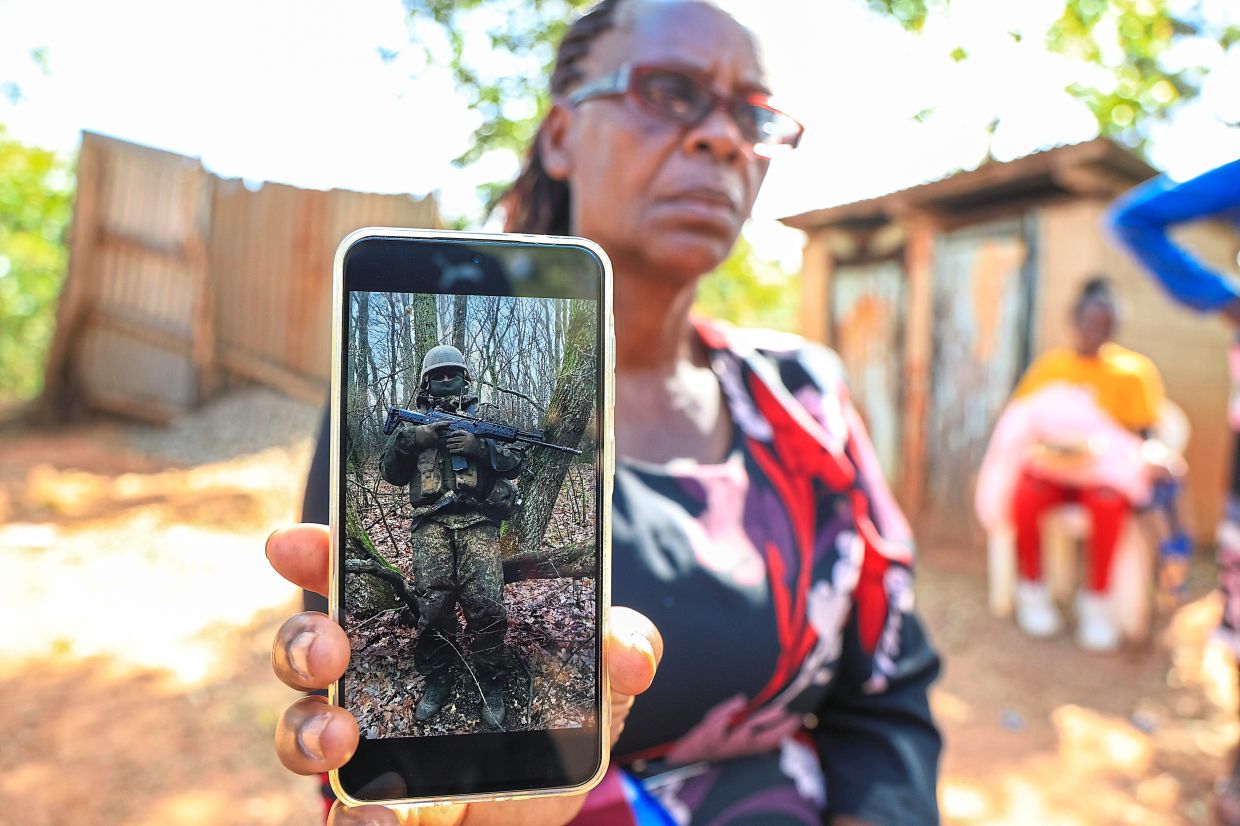
Erik’s route was different but ended in the same place. His first day in Russia was spent training with a basketball team. He believed he had secured a contract with a professional club. Only later did he realise the document he signed was military enlistment papers. By the next day, he was in uniform at an army camp.
All four say the pay never matched the promises. Mark and Moses received modest sums during roughly a year in service. Victor and Erik say they were paid nothing.
They had travelled through a Kenyan recruitment firm, Global Face Human Resources, which advertised itself as connecting clients to “exciting opportunities”. The agency has since relocated several times within Nairobi and could not be reached for comment.
One employee, Edward Gituku, is facing prosecution on human trafficking charges after police raided an apartment he rented on the outskirts of the capital last September. Twenty-one young men, reportedly preparing to fly to Russia, were rescued. Gituku, released on bail, denies the allegations.
The four returnees say they met him and describe him as central to the operation. Erik and Moses say he drove them to the airport.
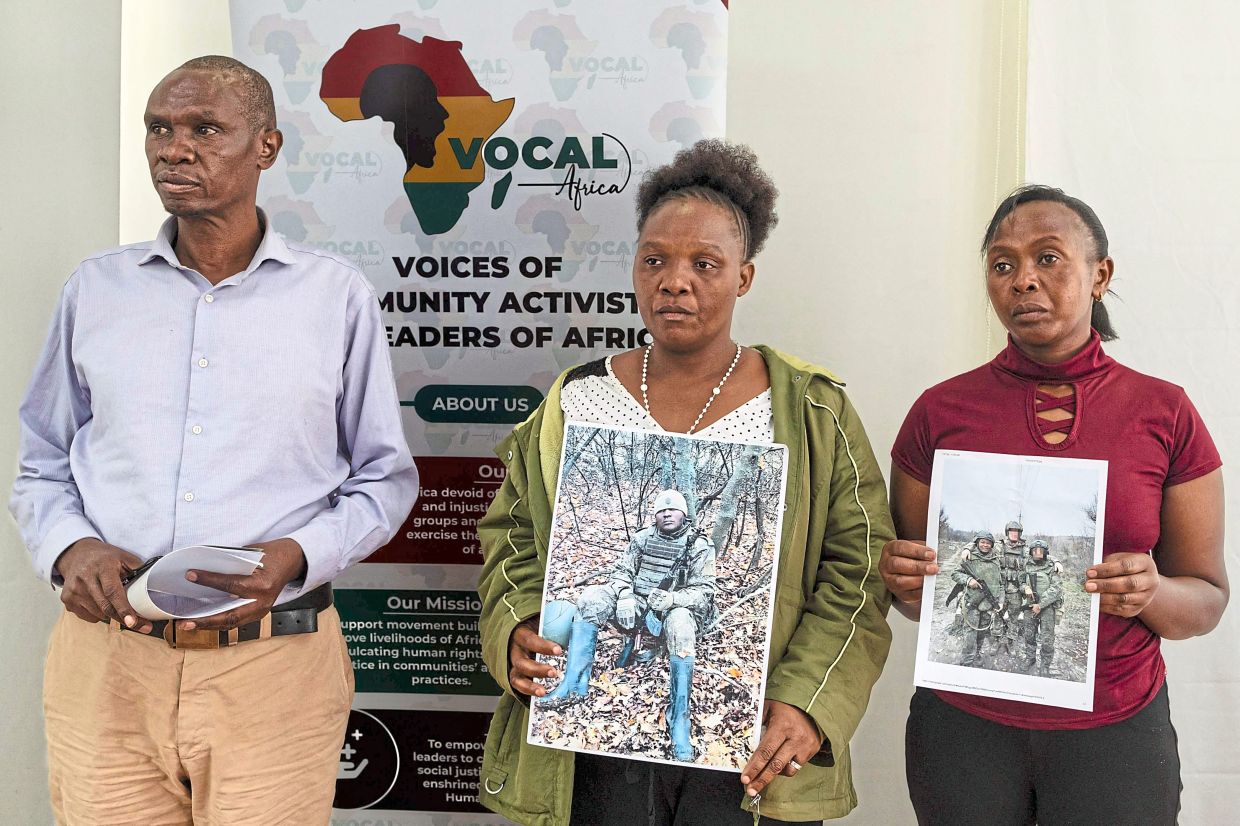
Last year, Kenyan authorities said about 200 citizens had been sent to fight in Ukraine, with 23 repatriated. The four men believe the real figure is higher. At one Nairobi clinic conducting pre-departure medical checks, staff said 157 prospective recruits were examined in just over a month.
There are confirmed cases of former Kenyan soldiers voluntarily joining Russian ranks. But Mark and Erik insist they were never told they would be deployed to a war zone.
The push for foreign fighters reflects the scale of losses suffered since Russia’s full-scale invasion of Ukraine in 2022. Western intelligence estimates suggest Russian casualties exceed 1.2 million – roughly double Ukraine’s.
Ukraine’s ambassador to Kenya, Yurii Tokar, says Moscow initially recruited in Central Asia before turning to India, Nepal and parts of Africa. “They are looking for people for cannon fodder everywhere it is possible,” he says, accusing Russia of exploiting economic desperation.
The four Kenyans recall encountering dozens of other Africans in camps and on the battlefield – Nigerians, Cameroonians, Egyptians and South Africans among them.
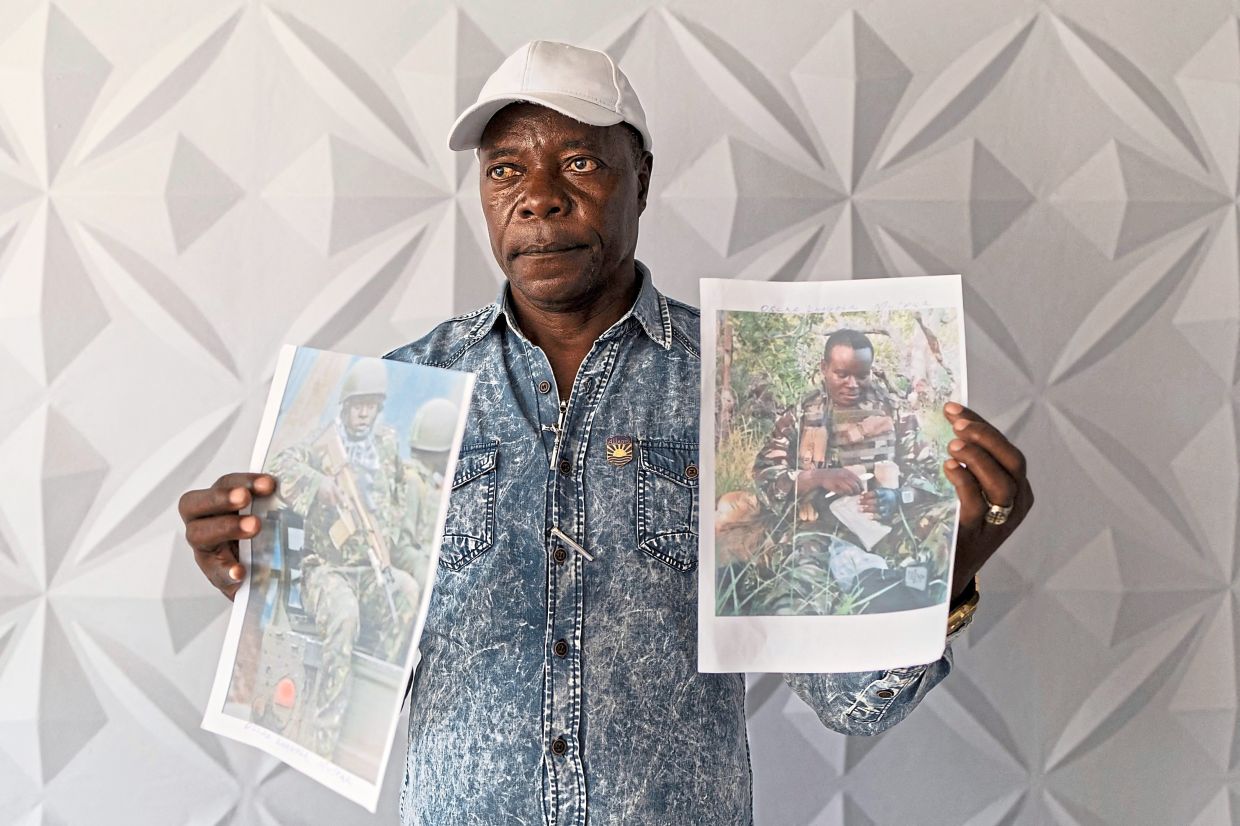
Victor describes apocalyptic scenes near Vovchansk in Ukraine’s Kharkiv region. Ordered to advance across open ground, his unit first had to wade through two rivers strewn with bodies.
“Then there was a big field covered with hundreds of bodies. We had to run to cross it. With drones everywhere,” he says.
“The commander tells you: ‘Don’t try to escape, or we shoot you.’”
Of the 27 men in his unit, he says, two made it across alive. He survived by hiding beneath a corpse until darkness fell but was struck in the right forearm by a drone. The wound festered for two weeks as he continued missions, unable to properly carry his weapon. Maggots infested the injury before he was finally allowed treatment behind the lines.
Weeks later, Erik was sent to the same area. Of the 24 men in his group, three survived the crossing – including a Pakistani fighter whose legs were broken and a Russian soldier with catastrophic abdominal injuries.
Erik escaped that assault but was later hit by drone fire in the arm and leg.
Mark bears deep scarring on his shoulder from a grenade dropped by a drone as he headed towards the front last September.
All three eventually ended up in a Moscow hospital before making their way to the Kenyan embassy, which facilitated their return. Moses fled his unit in December and contacted Kenyan officials directly.
Physically, he escaped unhurt. Psychologically, he says, the damage lingers. Even the sudden flutter of a bird overhead can trigger panic.
For men who thought they were chasing opportunity abroad, the cost has been measured in blood – and in memories they cannot shake. — AFP