Al-Sharaa’s long road to the White House


Kaseer on the grounds in Barisha, Syria, where American Delta Force commandos conducted a mission to kill al-Baghdadi, leader of the Islamic State global network. Six years after the night raid, he still shudders at the memory of the clattering helicopters overhead. — David Guttenfelder/The New York Times

SIX years after the night raid in the quiet northwestern Syrian village of Barisha, Rashid Muhammad Kaseer still shudders at the memory of helicopters overhead.

Awakening, he thought a Syrian regime chopper might need to land.

He did not imagine he was about to witness the American elimination of Abu Bakr al-Baghdadi, the world’s most wanted terrorist and leader of the IS network, whose territory once covered half of Syria and a third of Iraq.

“He died like a dog,” US President Donald Trump said on Oct 27, 2019, describing his obsession with killing al-Baghdadi.

He dwelt on how the orchestrator of beheadings, stonings, executions of Americans and devastating attacks “went whimpering and crying and screaming” to his death.

“Of course he did,” said Kaseer, wearing a hat inscribed with “Be brave, Be free,” sitting in his garden surrounded by olive groves. “We were in the house next door and we were scared out of our minds!”

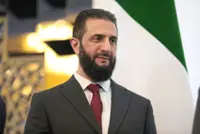
President al-Sharaa of Syria in Damascus in April, 2025. He once worked under al-Baghdadi, leader of the Islamic State global network, but broke with him around 2013. —Daniel Berehulak/The New York Times

Forty kilometres south in Idlib, Ahmad al-Sharaa, a former associate of al-Baghdadi, had become a local leader resisting Syria’s suffocating regime.

Tasked originally with expanding al-Qaeda into Syria, he broke with al-Baghdadi around 2013 and, from 2016, pursued a more moderate course.

Last December, al-Sharaa toppled Bashar Assad, becoming Syria’s president after five decades of dictatorship.

He met Trump in Saudi Arabia in May and was welcomed at the White House last month – the first Syrian leader so honoured.

“It is an amazing turn of events when you think that Trump killed al-Sharaa’s erstwhile boss and mentor, al-Baghdadi,” said Randa Slim, a fellow at the Johns Hopkins University Foreign Policy Institute.

“The al-Sharaa story is yet to be written. He has brought hope, but will he become repressive?”

Al-Sharaa’s journey from militant to international statesman is immense, prompting questions about the completeness of his conversion.

For now, many Syrians, including Kaseer, are speaking more freely, relieved by the government change.

“Al-Sharaa is excellent,” Kaseer said, cutting radishes, chives, tomatoes and peppers from his garden for his guests. “He is trying to serve the people. We are very relieved by the change in government.”

Asked what he made of the fast-blossoming alliance between the president and Trump, he said didn’t want to be detained for giving the wrong answer.

Detained by whom? “Mr Trump,” he said with a laugh. “Of course.”

Humour is returning to Syria.

The sun beat down, a call to prayer rose from a nearby mosque, and beyond Kaseer’s fence, an open expanse of stunted trees and rocks marks al-Baghdadi’s former compound.

A couple of yellow concrete structures built for internally displaced people form a desolate sight.

Trump said the terrorist leader had ignited his vest, killing himself and three children.

Kaseer recalled hearing an American soldier screaming in Arabic for the house’s occupants to step outside undressed, followed by gunfire and explosions.

The operation lasted three and a half hours. The next morning, four bodies lay in the rubble; nothing remained of al-Baghdadi.

Kaseer hopes for compensation – perhaps US$5,000 – for the damage and trauma caused by the raid.

Down in Idlib, a six-lane highway from the north is nearing completion. A massive white flag of al-Sharaa’s former rebel group, Hayat Tahrir al-Sham, now greets visitors. The group had been designated a terrorist organisation by the US until four months ago.

On the flag: “No God except Allah. No Prophet except Muhammad.” There is yet no Syrian flag at the city’s main northern entrance.

Al-Sharaa’s construction of a united Syria is a work in progress, strongly backed by the United States.

The new president is more familiar with authoritarian systems than power-sharing, and the country’s political direction remains uncertain. But the freedom compared to 11 months ago is palpable.

Once he turned away from militancy, al-Sharaa is believed to have cooperated with the US, providing intelligence that helped hunt IS and al-Qaeda leaders around Idlib, according to a Western ambassador in Damascus.

Whether that contributed to what Trump calls one of the crowning achievements of his first term – killing al-Baghdadi – may never be known. — ©2025 The New York Times Company

This article originally appeared in The New York Times

Get 20% OFF The Star Digital Access

Monthly Plan

RM 13.90/month

RM 11.12/month

Billed as RM 11.12 for the 1st month, RM 13.90 thereafter.

Best Value

Annual Plan

RM 12.33/month

RM 9.87/month

Billed as RM 118.40 for the 1st year, RM 148 thereafter.

Follow us on our official WhatsApp channel for breaking news alerts and key updates!

Next In Focus

‘It’s not my son’s fault’
How the West is going dry
Cultural talks a milestone
Who research is really for
Gold fever in Ebola’s deadly grip
Silicon riches, salary struggles
US-Saudi deal prompts fears of a global nuclear arms race
Editorial: US exhibits lawlessness in its call to dismantle ICC�
App-spies like us
Navigating the AI slop

Others Also Read