UNIVERSITI Tunku Abdul Rahman (UTAR) is strengthening its educational ties with China in technical and vocational education and training (TVET) and artificial intelligence (AI) with three recently inked memorandums of understanding (MoUs) with Guangzhou General Vocational and Technical School, Guangzhou City Vocational Technical School and Nanning Normal University (NNNU).
The MoUs with Guangzhou General Vocational and Technical School and Guangzhou City Vocational Technical School are to explore a broad range of collaborative initiatives, including international research projects, joint talent cultivation, academic staff exchanges, student mobility programmes, internship opportunities, postgraduate progression, and the potential development of joint supervision for master’s and doctoral candidates.
Noting that UTAR has established partnerships with more than 900 universities and institutions worldwide, including over 200 in China, the varsity’s vice president (internationalisation and academic development) Prof Dr Goi Bok Min said the MoUs signed on July 14 with representatives from the Guangzhou schools reflect a shared commitment to enhancing educational ties between the two economies through talent development and international engagement.
Expressing hope that the MoUs would benefit more students through well-managed and sustainable collaborative programmes, Guangzhou City Vocational Technical School principal Yin Chuanxin said both institutions share a common commitment to nurturing industry-ready talent through practical education.
Separately, UTAR also inked an MoU with NNNU on June 30.
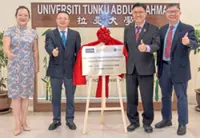
Following the formalisation of the partnership, the AI and Intelligent Communication Innovation Laboratory was unveiled at the UTAR Faculty of Information and Communication Technology (FICT).
Established through the collaboration between UTAR, NNNU and Runjian Co Ltd, the Guangxi-Malaysia AI joint laboratory will deepen cooperation in scientific research, the co-development of science and technology platforms, talent cultivation, the application of AI technology to drive economic development, as well as the sharing of laboratory facilities and academic resources.
Building on this foundation, the collaboration will also provide student exchange opportunities between Malaysia and China, with the aim of enhancing academic expertise, professional competencies and global competitiveness.
Prof Goi said the relationship between higher education institutions and industry extends beyond a simple supply-and-demand dynamic; rather, it is a mutually beneficial partnership in which both sides complement and empower one another.
NNNU vice president Prof Wang Guohong said he hoped the partnership with UTAR would result in the international development of education, economy and AI.