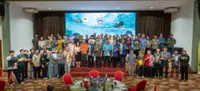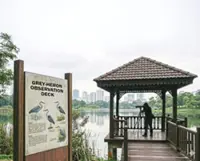
BESIDE a quiet pond at Bandar Bukit Raja Wetland Townpark, a small group stands with binoculars raised toward the water’s edge.
Just beyond the reeds, a White-breasted waterhen (Amaurornis phoenicurus) steps softly along the bank, slipping in and out as if playing hide-and-seek, with rows of houses a short distance away.
Focus dials are adjusted and someone softly mutters, “Where is it?” Moments later, the waterbird, a member of the rail and crake family, Rallidae, appears nestled in the thick vegetation, a quiet reminder that birds are a vital part of the township’s shared ecosystem.
Just an hour-and-a-half earlier, at the start of the Nov 21 birdwatching session organised by Sime Darby Property, many were unsure of what to look for beyond naming a few familiar neighbourhood birds. Yet by the end of the morning, they had spotted 23 species and begun learning how to read the subtle clues of field identification.
Instead of simply pointing out birds and naming them, Nature Sustainable Ecosystem Society (NEST) deputy president Ismail Mamat and NEST facilitator and bird guide Ashwin Kalai Chelvan guided their group through an observation exercise.
Whenever movement caught their eye in the trees, shrubs or open field, they offered a clue as to the bird’s family – such as a myna, an egret or a shrike – before asking participants to describe its features.
What colour are its legs? Does the corner of its mouth extend past its eye? Is the plumage one solid colour, or does it change around the neck? Participants huddled around an open pocket field guide, comparing illustrations to determine whether a dark bird perched nearby was a Javan or Jungle myna.
“Birding makes you observe nature more closely rather than just walking,” Ashwin said. “It helps you notice the minor details and when you do, you appreciate the beauty of nature even more.”
The real surprise, however, was not how quickly the beginners learnt to tell one species from another; it was the variety of birds turning up in a still-maturing urban park.
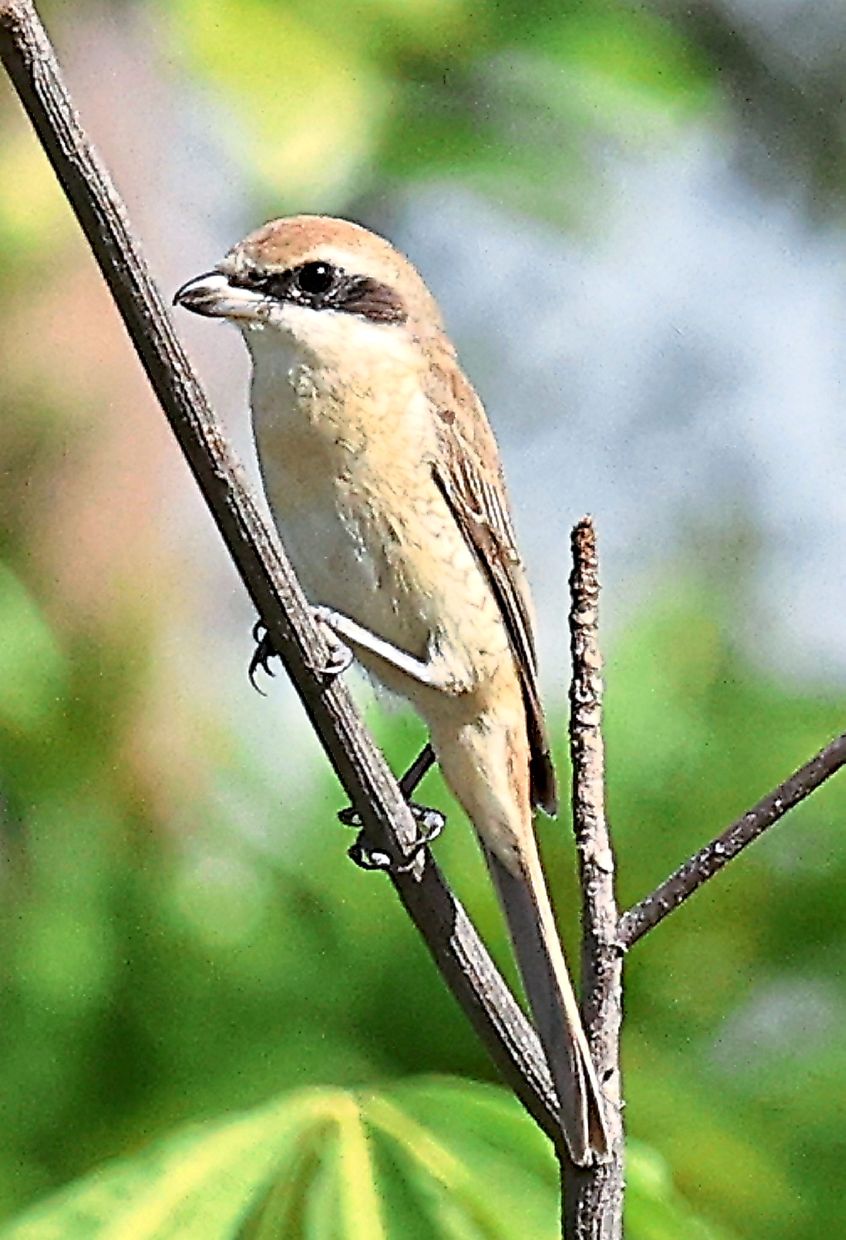
While 23 species were observed that morning, including the Blue-tailed bee-eater, Brown shrike and Purple heron, Sime Darby Property’s sustainability report notes that 65 bird species, mostly wetland-dependent and migratory, have been documented here.
Among the morning’s notable visitors were an Oriental reed warbler and a Common sandpiper. For NEST technical support member Dr Nur Munira Azman, a Universiti Pendidikan Sultan Idris (UPSI) biology lecturer who specialises in shorebirds, spotting a Common sandpiper here stood out.

Typically found along coastlines and estuaries after migrating from as far away as Siberia and Alaska, the small shorebird was resting unbothered in the middle of a residential township. Nur Munira noted that unlike standard recreational parks, this space combines ponds, wetlands, shrubs, flowering plants and fruiting trees that form distinct microhabitats.
“Different types of vegetation attract different types of birds,” she said, explaining that while flowering and fruiting plants draw nectar- and fruit-eating species, the wetlands support plankton, fish and insects that sustain waterbirds and raptors.
Although the park’s trees have yet to mature, Ashwin pointed out that the presence of species like the Oriental reed warbler, which prefers undisturbed wetlands, suggests a healthy ecosystem is taking shape.
For participant Sufiyan Hadi Mahadir, a father with a science background who brought his young children along to join a separate kids’ session run by NGO Knowledge New Old Twists, the hands-on format made a difference.
“Watching through TV or video is different from actually touching it and doing it practically,” Sufiyan said, noting that being outdoors helped his children better understand the science behind what they see in nature.
While a single morning will not turn beginners into seasoned birdwatchers, Ashwin said getting people to pause, pay attention and share in the quiet excitement of those first sightings was what mattered most.
“Every journey begins with the first step,” he said. “As long as participants go home and start observing birds, that is already a sign they are getting closer to nature.”