Pet adoption, animal rescue and fostering are among ways to help reduce the number of strays and improve animal welfare in our cities, towns and neighbourhoods.
Unlike permanent adoption or independent rescue, which involve longer-term care or responsibility, fostering provides animals with a safer environment, personalised care and affection while they await rehoming.
StarMetro speaks to selfless individuals who have opened their homes to homeless animals.
Fostering hope
According to SPCA Selangor kennel manager Erica Remington, fostering involves temporarily caring for an animal on behalf of a shelter while it recovers, becomes ready for adoption or awaits a permanent home.
She said foster homes could be particularly beneficial for sick or very young animals, shy dogs, as well as senior or long-term shelter residents with poor adoption prospects.
“For dogs, we want to focus on those that have been here for a long time – the senior dogs or those we know are unlikely to be adopted,” she said.
“It gives the older ones that have been here a long time a chance to experience a different kind of life.”
While fostering can give animals a much-needed break from shelter life, Remington stressed that it should not be treated as a trial run for pet ownership.
Prospective fosterers would be matched with animals according to their available time, experience, living arrangements, existing pets and the level of care required, she said.
“Experience is preferred. If they have no experience but are willing to learn, be patient and have time, we are open to giving everyone a chance,” she said.
The commitment can vary
considerably depending on the animal.
Someone fostering a sick kitten, for instance, might need to remain at home for most of the day, while a shy animal could require considerable time to become comfortable in its new surroundings, said Remington.
“A shy animal may take one month just to decompress and settle down.
“That is why there is a minimum of three months,” she said adding that SPCA Selangor currently has about 80 dogs and 30 cats.
Family of rescuers
Beyond formal fostering programmes, some animal lovers take matters into their own hands by rescuing animals they encounter and care for them until they recover, find new homes or where appropriate, release them back into the wild.
Anatomic pathologist Dr Yabitha Vasavan, 45, is one such rescuer.
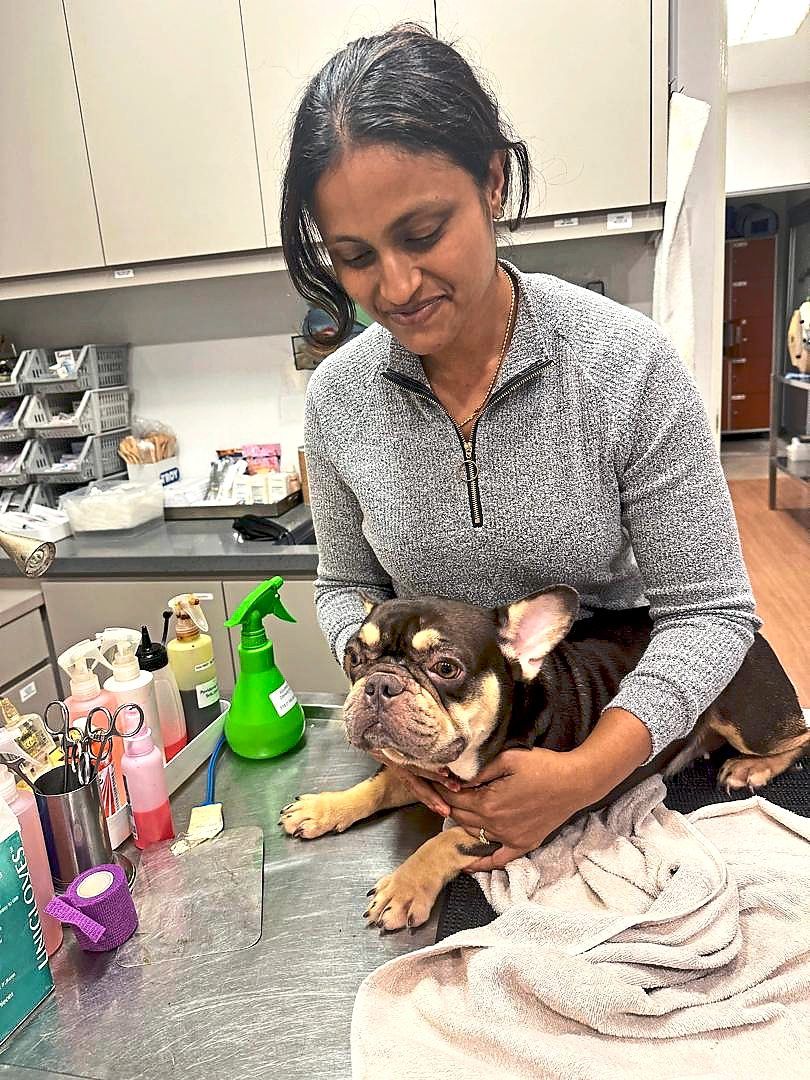
She has spent years helping sick, lost and abandoned animals with her family’s support.
Her charges have ranged from dogs and cats to birds and even an Asian palm civet.
Her compassion for animals was nurtured from a young age with her parents advocating kindness towards them.
Today, she continues the work with the support of her husband, Dr Ramanand Achannan, who has experience in orthopaedics, and her veterinarian father, Dr Vasavan Chockalingam.
When preparing animals for adoption, Dr Yabitha spays, neuters and vaccinates them.
She said the general public were more likely to adopt pedigree dogs than mongrels.
“Only a few people are open to adopting mongrels.
“However, I have reliable friends who own factories, estates or farms and are willing to take them in,” she said of the dogs she has rescued.
“I am upfront about the animal’s condition. If they have health complications, I tell the adopters that they can bring the dogs back to me for treatment and care.”
For Dr Yabitha, finding suitable homes is only part of her responsibility.
“I am also thankful that I have my dad who is generous with his knowledge and also helps treat these animals.
“My husband does his part by helping some of the animals with bone-related problems.
“So far, the animals I have rehomed are living in happy homes.
“In one case, a dog was adopted by a Chinese family. Several years later, I dropped by their house and the dog ran to my car, kissed me and left.
“The adopters told me the dog was not usually affectionate towards strangers, but it remembered me,” said Dr Yabitha, who lives in Johor Baru.
Her rescue work extends beyond dogs and cats to wildlife, with birds released after they recover.
“I had a strange encounter with a hawk while driving along a busy road. I thought it was a chicken. I picked it up and placed it in the back seat.
“It was only when I got home that I realised it was a baby hawk. Through video calls with my father, we tried to figure out why it could not fly.
“I cared for it by hydrating it using a straw every half an hour.
“Eventually, the bird flew out of the house and perched on the gate. It turned and looked at us before flying away.
“I think it was exhausted and ended up by the roadside because it could not fly,” she said.
Another rescue came during the Covid-19 pandemic, when Dr Yabitha’s neighbour found a baby Asian palm civet, locally known as musang.
She said many houses, particularly those belonging to Singaporeans, were left unoccupied at the time, prompting animals to move into them.
“Security guards in my housing area found a hungry baby musang with its eyes still shut.
“We volunteered to care for it because an adult musang had been found dead two days earlier. It was most likely the mother.
“I took leave from work and fed the musang every two hours, like caring for a baby.
“I gradually extended the feeding interval to every four hours before introducing solid food.
“We cared for the musang for four months, and later contacted Zoo Melaka and surrendered it to them,” she said.
Dr Yabitha recently treated a pigeon with broken wings which is under her aunt’s care as it can no longer fly or survive outside.
Every rescue ultimately comes down to the same principle, she shared.
“Human or otherwise, a life is a life,” she said.
“Humans can speak up and seek help from the community and the government, but animals cannot.
“There is greater awareness of human welfare, but not enough for animal welfare.
“Humans are the ones taking over their habitats. In this ecosystem, we are the problem. Why can’t we be the solution for these animals?” she said.
She added that rescuing, treating and rehoming animals had brought her family closer.
“It is a family effort, and I am thankful to my husband for helping me. My daughter has watched us, and become part of the effort.
“Caring for animals takes up a lot of time, but we work as a team.
“We learn a lot through caring for animals. I hope more people in society will develop a stronger sense of compassion and care for them responsibly,” she said.
Unexpected companions
Adopted pets have been known to bring joy to their families, as two couples learn in their journey of caring for their attention-seeking fur-kids.
The time spent caring for their pets is worth every minute, they share.
Husband and wife Vijay Naidu, 48, and Letticia Leopold, 42, said their four adopted black cats had enriched their lives and made them more selfless.
The couple, who travelled to Australia and Singapore throughout their careers before returning to Malaysia, adopted their cats along the way.
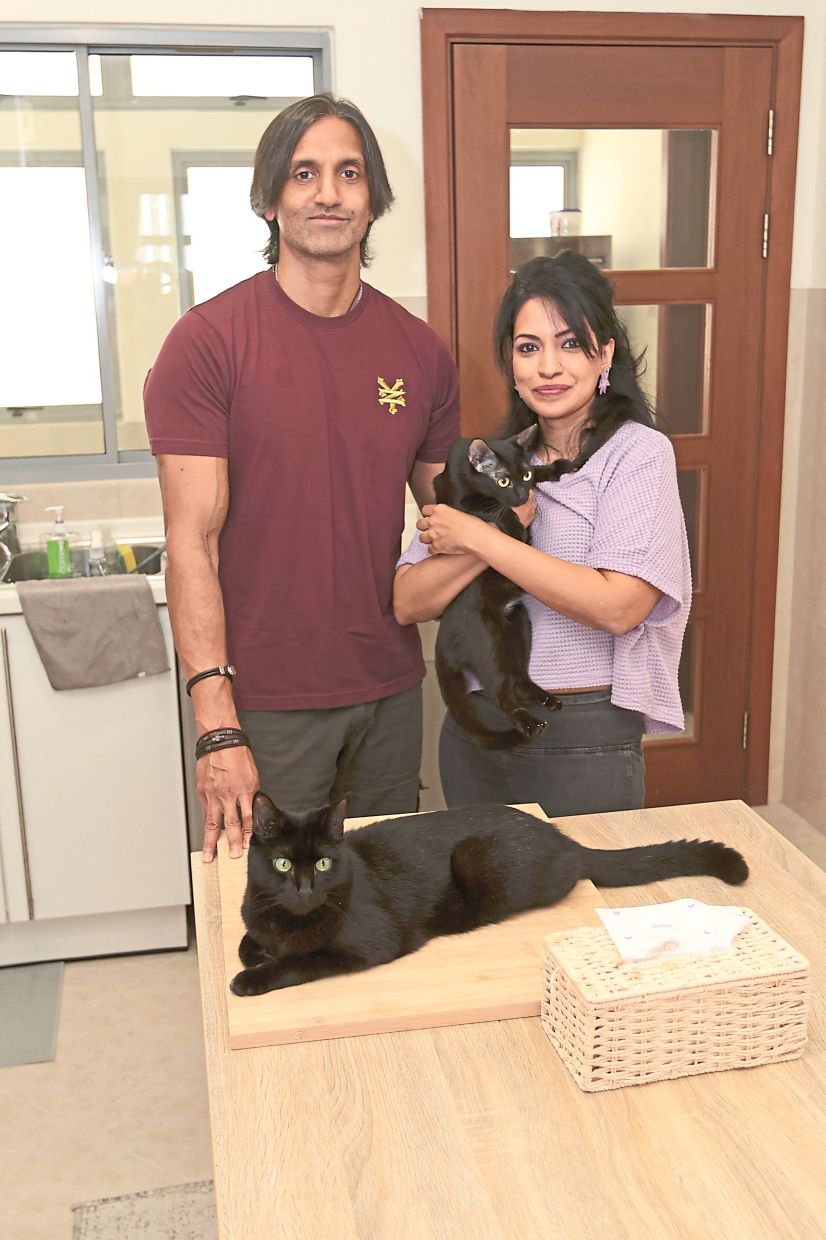
“I watched my mother caring for the neighbourhood cats and dogs when we lived in Shah Alam and Petaling Jaya. This taught me to care for stray animals and show them empathy,” said Letticia.
“If we see stray mother cats nursing their kittens, we will provide them food,” she said.
Naidu’s affection for cats began after he rescued one from a road divider in 2013.
“I picked up a cat from the road divider in Jalan Gasing, Petaling Jaya; the cat was about to be run over by vehicles.
“I cared for it but it died within three months. I was badly affected by its death,” he said.
Letticia said when they moved to Australia in 2013, the couple went to a no-kill animal shelter to adopt their first black cat.
“Black cats are least preferred based on the superstitious belief of some folk, hence, they are more likely to be subjected to abuse.
“We adopted a black cat named Ninja.
“Ninja lived with a foster family in Australia before we adopted her in 2014,” she said.
Letticia said prospective adopters in Australia were screened before taking an animal home.
“This process ensures the adopters have the financial means to care for the pet and a safe home environment.
“We can only adopt a cat once it’s eight weeks old, and they’re already neutered or spayed,” she said.
The couple said their pet cats not only brought them joy but also made them better people and taught them patience.
“We often put holiday plans on hold because we need to be at home with them,” said Naidu who lives in Kuala Lumpur.
“If we have to travel, we approach family or friends who can care for our pets at our home while we are away.
“Either my wife or I will be back by the evening, as we do not want our cats to be alone.”
Letticia said the cats were fed quality cat food for their health and longevity.
She added that both Australia and Singapore had good stray animal management systems in place, which Malaysia could learn from.
“Singapore has Project Luni, which handles community cat feeding, trap-neuter-return programmes, medical care, and the socialising and rehoming of cats and kittens.”
“We adopted one of our cats while volunteering in the feeding programme,” she said.
The couple hopes to see a kinder, more compassionate society when it comes to animal welfare.
Small pets, big impact
Sugar gliders may not be conventional pets, but a Petaling Jaya couple are proud parents to 11 of them.
Husband Manfred Lim, 40, and wife Vanessa Kan, 36, became interested in sugar gliders after visiting a pet expo.
Lim described sugar gliders as social animals which needed companions to play with.
They also require plenty of time and attention.
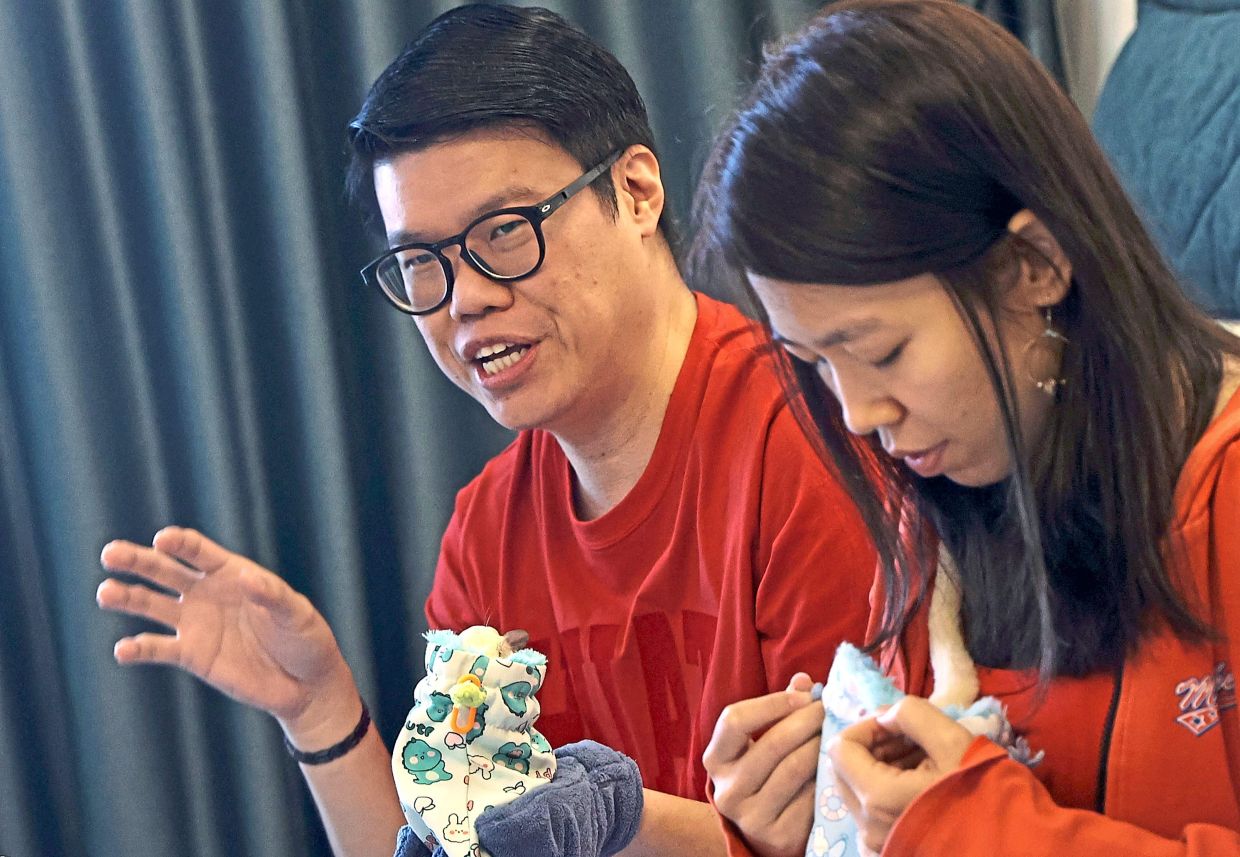
“These animals have a lifespan of about 12 years. Someone I know took care of one that lived for 17 years,” he said.
He added that if the animals were not given enough attention, they would bark – a sound similar to that of a small dog.
“Some people buy them but are unable to care for them. So they resell them, and that is how we adopted a few,” he said.
Lim said caring for sugar gliders was challenging when the couple had to travel.
In such instances, they would find a friend to stay at their house while they were away.
“I also cook them nutritious meals, freeze the food, thaw it and feed them,” said Kan.
The couple, who have been married for several years, said their pets played a part in helping strengthen their relationship.
“In the past, if we had arguments, we might not speak to each other for days,” said Lim.
“But now we have pets that need caring for, so if we argue, we need to speak to each other by the end of the day.
“It is a blessing to have these pets as they make our lives more meaningful.”