Spending hours observing Laduma Ngxokolo, one can tell that he has long been haunted – and propelled – by a single question: What, exactly, makes a man?
Ngxokolo, 38, who created MaXhosa Africa, a luxury knitwear label that has found fans in Michelle Obama and Beyoncw, grew up in Port Elizabeth, a coastal city in South Africa’s poorest province that changed its name to Gqeberha in 2021.
He, along with his older sister, Tina, helped raise his two younger siblings after their mother, Lindelwa Ngxokolo, died when he was 15.
She had instructed her children not to seek a guardian, insisting they had learned all they needed from her about how to keep a home, how to stand up for one another and themselves and how to earn money selling knitted goods at the local market.
Ngxokolo had to grow up quickly.
As a teen, he underwent the traditional initiation rite of the Xhosa people, which is held high in the mountains. Before participants leave, they relinquish the belongings of their boyhood.
Their relatives typically give them items intended to aid their transition to being young adults. The gifts often include expensive and high-quality Western clothing that is intended to symbolize a sartorial introduction to adulthood.
“You’d learn more about yourself as a character and about your cultural history in general,” Ngxokolo said, before expressing his frustration with the clothing initiates were typically given.
“In the end, why were we wearing Western clothes? Why are we going to end up looking like English men?”
Ngxokolo, unsettled by the sight of young South African men outfitted in newsboy caps and argyle sweaters, decided he wanted to be part of changing that tradition.
His commitment to South Africa and the Xhosa culture has guided his career and has powered the current success of MaXhosa Africa.
Read more: From archives to runways, fashion doubles down on the power of brand heritage
Starting from scratch
Ngxokolo credits his mother for his career trajectory.
Not long before she died, she took him to the Salvation Army under the pretense of purchasing a colour television, something they did not have at home.
But instead of a television, she bought a knitting machine to make fabric for goods they would sell at the local market, much to the disappointment of his younger siblings at home who were hoping for a television set.
His mother was adamant that the children learn how to make their own clothing. The skill proved invaluable when, after his mother’s death, Ngxokolo began knitting scarves and beanies as a student at Lawson Brown High School.
He sold his accessories, which featured the school’s colours, for prices lower than those of items sold at the official school store – the administration looked the other way after promising his mother they would help him after she was gone – and quickly built a customer base.
After his sartorial revelation during his initiation rite, Ngxokolo enrolled in a course on textile design and technology at Nelson Mandela University and centred his thesis on creating alternative attire for recently initiated Xhosa men.
The looks he designed were rooted in Xhosa history and culture and were made from wool and mohair sourced from Port Elizabeth.
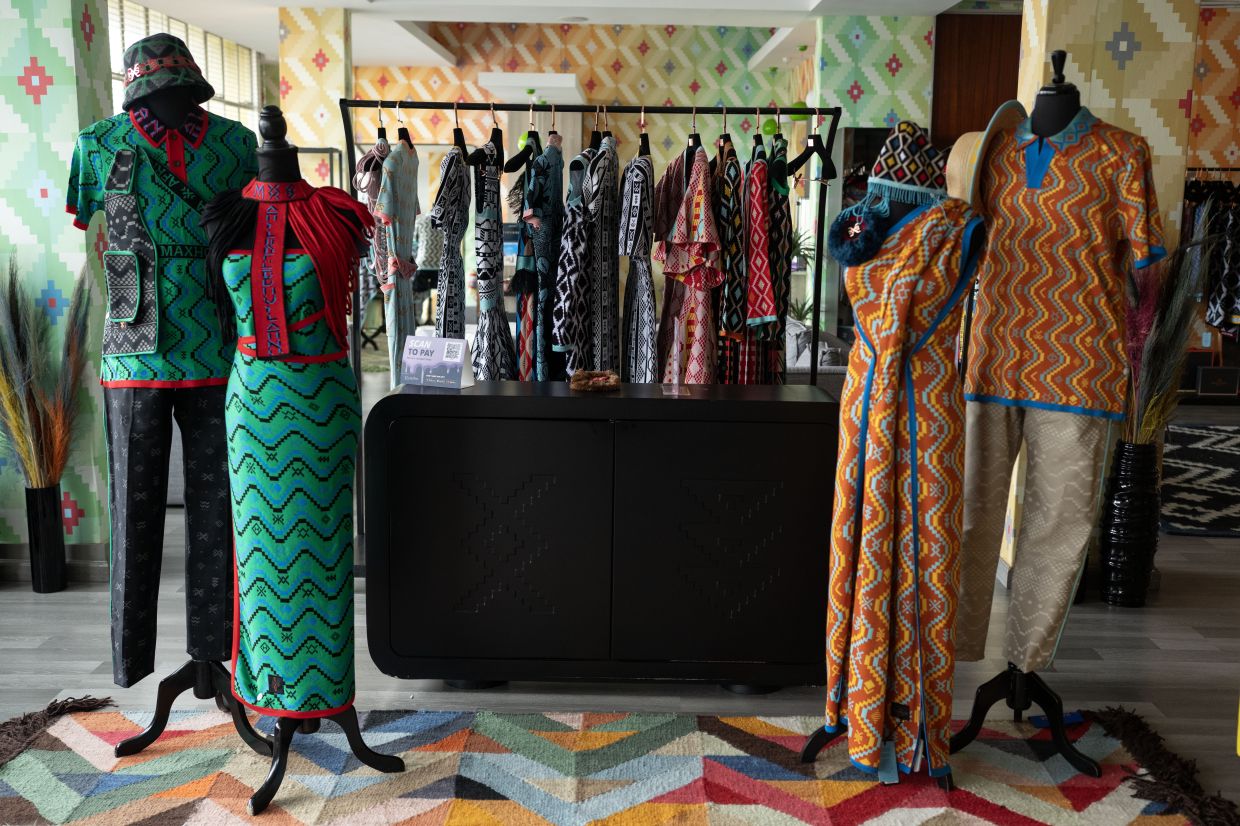
They featured bold colours and geometric patterns – a stark contrast to the subdued hues the young men going through the initiation rite typically wore.
His rethinking of that attire, and the designs he came up with, caught the attention of several industry figures, including Ravi Naidoo, the founder of Design Indaba, a creative conference held annually in Cape Town, where Ngxokolo was asked to present his work before an audience of scholars, artists and designers from around the world.
He garnered praise for his work and received 300 orders, along with inquiries about his fashion label.
But Ngxokolo had no label – he had only the samples he had presented – and he was strapped for cash. He took the names for the orders anyway, figuring he would find a way to fulfill them.
One of the people impressed by his work was Hanneli Rupert, founder of Merchants on Long, a luxury boutique in Cape Town that stocks African designers (Hanneli is also the daughter of Johann Rupert, the chair of Richemont, one of the world’s largest luxury conglomerates).
“What Laduma was doing already was completely different to anyone else in terms of the design, the integrity, the authenticity,” Hanneli said.
She offered to help Ngxokolo fulfill the 300 orders, paying him 450,000 rand (approximately RM110,000)).
That’s when Ngxokolo, who had spent his youth selling knitwear to his friends for 250 rand (RM61), realised people were willing to pay for luxury products.
“I’d never even seen 10,000 rand (RM2,400) in my account,” he said.
Read more: Fashion’s new power move? Turning away from influencers and the overhyped
Making MaXhosa Africa
Ngxokolo founded MaXhosa Africa in 2010, basing the label’s offerings on traditional Xhosa patterns and motifs, but reimagined for the modern world.
His goal was to bring cultural clothing into the mainstream. By doing so, he was also disrupting the South African fashion scene, where most designers produced Western-style clothing, leaving local heritage largely unexplored.
“Many brands that we come across, like Hermws, have heritage stories which we find exciting,” Ngxokolo said.
“But then we are not sharing our own as a form of decolonization of our own history to help us find a new form of confidence in our society and our people.”
Breaking from his peers, he deliberately focused on South African luxury consumers rather than seeking validation from abroad.
“Designers believe that to go international will buy them success, and it is exactly the opposite of that,” said Lucilla Booyzen, founder of South African Fashion Week.
“They often jump at the opportunity to go abroad, but they don’t know what the culture is, what the buying structure is, what the buyers want, what they don’t want. The markets are completely different.”
Ngxokolo, instead, believes in South Africa’s luxury market. His brand operates nine stand-alone stores, and even as he has presented his collections during Paris Fashion Week, local shoppers in South Africa make up 90% of the company’s sales.
A sense of Ubuntu
A driving philosophy for Ngxokolo is a sense of ubuntu, a South African value rooted in the interconnectedness of all people and the belief that one person’s success is inseparable from the well-being of their community.
It is why he has insisted on keeping his manufacturing in southern Africa (beyond South Africa, the brand also manufactures in Lesotho).
“I knew I wanted this brand to focus on social development,” Ngxokolo said.
“The wool that is being sourced here has to have an impact on the community by creating jobs.”
With money saved from early sales, he invested in a manufacturing facility in Johannesburg where he could oversee production and ensure that the work directly benefited the community. He now employs more than 300 people.
As his business grew, Ngxokolo stepped down as its managing director to focus solely on his role as its chief creative director.
His youngest sister, Lihle Nqini, succeeded him as its managing director. His two other siblings all have worked – or currently work – for the business, too.
“We believe that our job is not to sell and that our job is to become cultural advocates,” said Ngxokolo, who along with his siblings created the Lindelwa Foundation in their mother’s honour, offering support for students and mentorship for young professionals.
“I call myself a head diplomat of the brand, because we are trying to push an agenda that has a vested interest in our culture, people and our economy.” – ©2025 The New York Times Company
This article originally appeared in The New York Times.