He was hardly 43, at the peak of his mountaineering career, a man of many firsts and probably one of the greatest climbers the world has ever known.
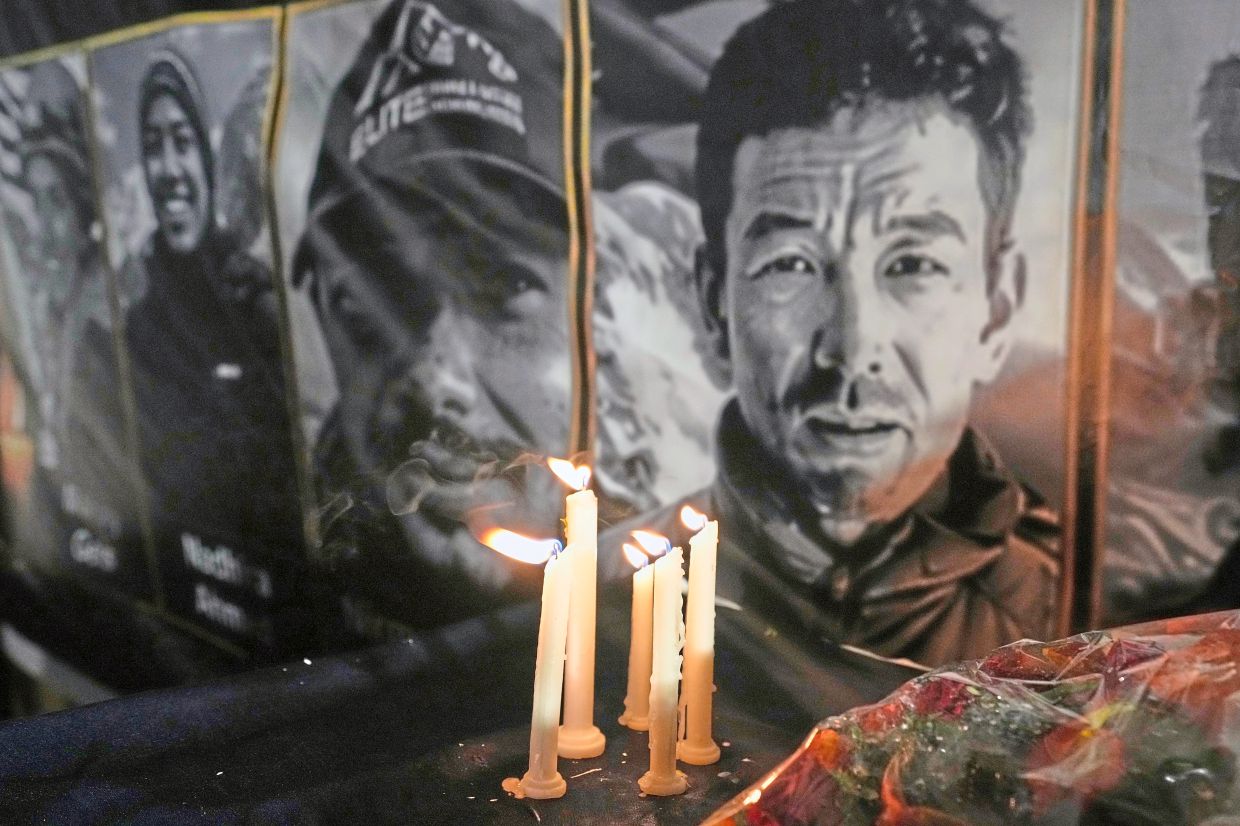
He died on the slopes of Broad Peak (8,051m), the 12th highest mountain in the world located at Pakistan’s Karakoram Range, on the morning of July 30, 2026. There were nine other climbers swept down to their death by an avalanche that fateful morning.
Nirmal Purja, also known as Nims Purja or Nimsdai, was aiming to climb all 14 8,000m mountains not once, but thrice, twice without the help of supplemental oxygen. He was on Broad Peak to complete his third round.
Broad Peak was supposed to be his second last prize before the 8,188m Cho Oyu in Tibet. That would have completed the treble – the only human who would have done so. And that would have been his 58th successful ascent of 8,000m peaks. He had climbed Broad Peak twice before his July 2026 attempt.
Broad Peak by the 8,000m standard is reasonably “tame” compared to other mountains. Purja had climbed Mount Everest nine times. He also summited K2, dubbed the savage mountain, Annapurna, the killer mountain and the dreaded Nanga Parbat each more than once.
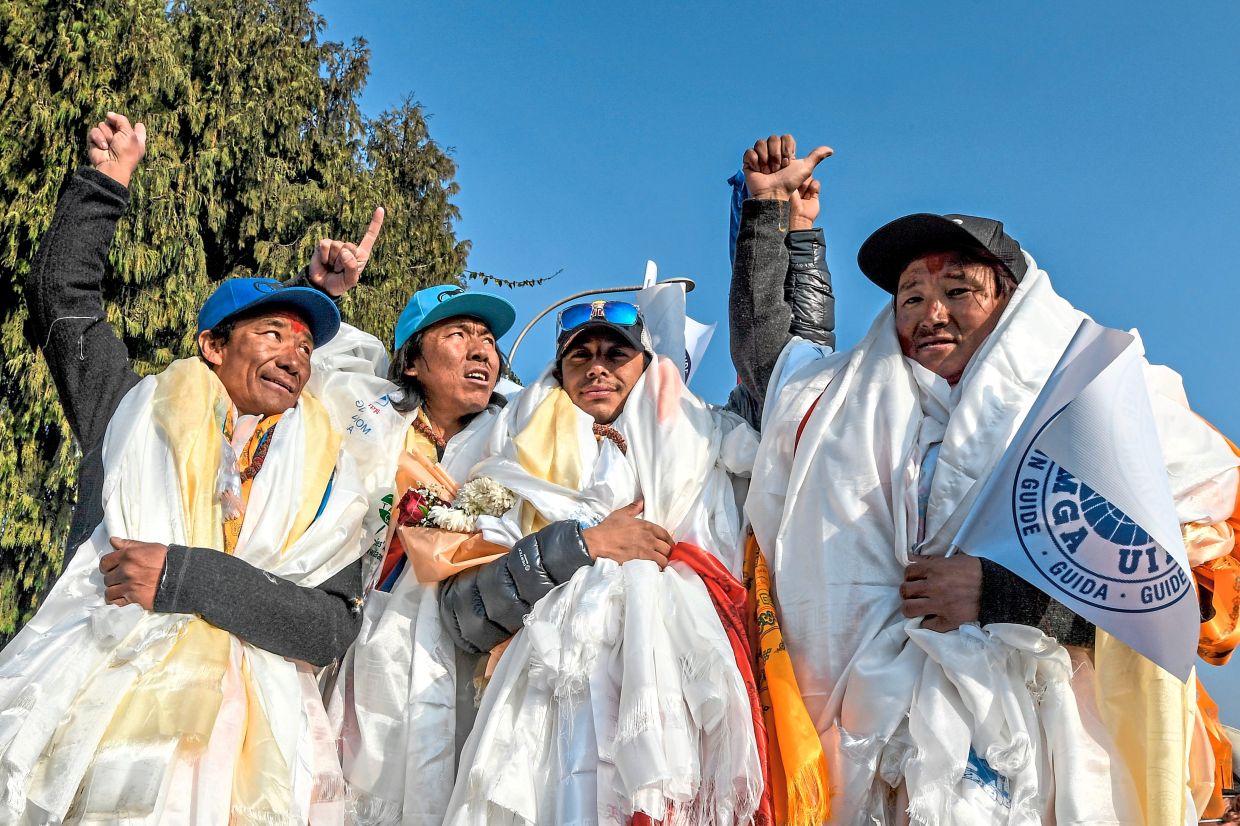
He summited many of the mountains in record times. Along with nine other Nepali mountaineers, he made history on Jan 16, 2021 by summiting K2 in winter, the first ever team to do so. He alone did it without supplemental oxygen.
He wasn’t even interested in climbing although he was born under the backdrop of Mount Dhaulagiri (8,167m). He just wanted to join the Gurkha regiment following his father’s footsteps and that of three of his elder brothers.
He was recruited at the age of 19. In 2009, he was admitted into the elite British Navy’s Special Boat Service, the first Gurkha in its 200 years history to do so.
He was on military leave in December 2012 when he attempted the hugely popular Everest Base Camp (EBC) trek. En route he diverted to climb Lobuche East, a 6,119m peak. He was on the top of that mountain when he discovered something that he had missed all along: The majesty of the mountain ranges, the clouds swirling beneath him and the panorama he had taken for granted. He fell in love with the mountains.
He climbed his first 8,000m peak, Dhaulagiri, in May 2014 and subsequently attempted Everest, Lhotse and Makalu almost effortlessly. And in record time of six days.
He knew his new destiny was not with the military, but the mountains. He made a decision to leave military service six years short of a pensionable stint. It was a major decision for him and his family.
He was planning to climb all the tallest mountains in seven months, a feat considered by many as impossible.
The legendary climber Reinhold Messner took 16 years to complete that. Kim Chang-Ho of South Korea bettered the record to seven years, 10 months and six days. Purja did it in six months and six days. Incredibly, a woman climber from Norway, Kristin Harila, recorded the fastest time – which she completed on July 27, 2023 – of 92 days or three months and one day!
Purja has never been known to be reckless. He approached his climbs with military precision. His “Project Possible” to target all 14 peaks in less than seven months involved massive preparation. It was methodical and precise, leaving almost no room for error.
It was devised in three stages, conquering six mountains first, then another five and eventually the last three. He covered 11 mountains in 95 days. He could have completed the feat earlier had China not stopped issuing permits to climb the last mountain, Shishapangma (8,027m) in Tibet. He managed to secure a special permit later.
On Oct 29, 2019, he summited the last mountain. That was his first round.
What actually happened on Broad Peak that killed him? Other parties had left the mountain citing unstable slopes. Snow had been falling for days, making the route up prone to avalanches.
But still he and his team went up. Was it hubris, over-confidence or simply bad decisions? Or was he blinded by his goal to push for the ultimate glory of climbing 14 mountains thrice, twice without supplemental oxygen?
Incredibly, in one of his social media postings, he wrote that Broad Peak was never in the plan. The initial aim was just to climb Gasherbrum II (8,035m), the 13th highest mountain, which he had done nine days earlier.
“If I tick off Broad Peak whilst I’m here, only one remains, Cho Oyu.”
He added, “Then I become the FIRST person in history to climb all 14 eight-thousanders twice. Without oxygen.”
Before the climb, he wrote a poignant appeal to the mountain: “Broad Peak, I ask for nothing but safe passage up and back down.”
Purja’s story is a cautionary tale of a mountain that didn’t care about your legacy, achievements, glory, history or reputation. Or the fact that he was at the time the world’s best-known mountaineer thanks to the Netflix documentary 14 Peaks: Nothing Is Impossible.
Mountains kill. And Broad Peak killed Purja, whose love for the mountains and his dominance in the world of mountaineering made him an icon and inspiration to millions of climbers, including potential ones.
He will be immortalised as his generation’s best mountaineer.
The writer, a National Journalism Laureate, is an avid trekker and climber. He succeeded in reaching the 4,130m Annapurna Base Camp at the age of 71 years, 10 months and 14 days on Sept 23, 2025. He will attempt to trek to the EBC this September.