Exploring Krishen Jit’s legacy


Krishen’s direction of K.S. Maniam’s 'The Cord' (1986) opened to great acclaim.

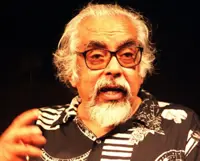
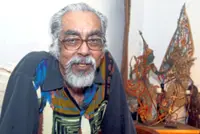
A conference commemorates the 10th anniversary of the passing of theatre doyen Krishen Jit.

IN interviews he had given over the decades, the late Krishen Jit (1940-2005) mentioned, more than once, that he can’t write plays, can’t sing, can’t dance, and can’t act. But for all his self-professed cannots, he did it all, anyway. He produced and directed plays in both English and Malay, taught theatre to students, and was a newspaper theatre critic for almost four decades.

A founding member of Five Arts Centre, established in 1984, the prolific “father of modern local theatre” was awarded the Lifetime Achievement honour at the Boh Cameronian Arts Awards in 2002 for his contributions in the local performing arts scene.

Theatre legend Krishen Jit. (Photo dated Dec 2, 1999)

This year is the 10th anniversary of his passing. To mark this occasion, a three-day international theatre and performing arts conference will be held at the Kuala Lumpur Performing Arts Centre (Klpac).

Titled Unfinished Business, after Krishen’s final production, Monkey Business, it examines the idea that Krishen’s work is ongoing rather than over. His influence on the ongoing work of contemporary local and international artists, researchers and academics who collaborated with him in the past, is a huge part of the discussion.

“This conference is a dedicated space for theatre dialogue and reflection among practitioners, academics, audiences and students – which includes dialogue through performances, keynote papers, workshops and panels,” says conference convenor Charlene Rajendran, who conceptualised and curated the conference and the activities in relation to the theme.

“Unlike a conventional conference which is primarily about academic papers, this one highlights performance and artistic process as equally significant to the discourse,” she says, describing Unfinished Business as “a thinking and creative space” allowing all those who attend an “opportunity to engage with theatre as serious business and monkey business”.

Rajendran, a long-time theatre educator, researcher and practitioner who currently teaches at the Nanyang Technological University in Singapore, had worked with Krishen in the 1990s and took a closer look at his work in her doctoral dissertation.

“I was interested in his capacity to think through and make theatre with such diversity and depth. I was fascinated by his ability to move between varied kinds of theatre-making and work in multiple collaborations with a wide array of artists,” she shares, when asked what piqued her interest in the man and his work.

“But more than all this, Krishen’s response to issues of culture and identity through theatre, and through radical experimentation with content and form, fascinated me.”

Rajendran hopes that the conference will bring together people who worked with Krishen in a celebration of his life and work.

She refers to his work as “bold and of untimely quality”, adding that he took on everything – from large-scale to small-scale, big budget to minimal budget productions – and was keen on collaborating with a wide range of artists from different backgrounds, aesthetics, politics, and training.

“He took it all on and he was unafraid to try new things, even when they were unlikely to please. The pleasure was in the process and the play; the live and unexpected moments of spontaneity and invention,” she says.

Asked which of his works resonates the most with her, Rajendran comments that it is hard to narrow it down to one, but finally settles on one of Krishen’s plays from 1993, Us: Actions And Images, that explores the theme of identity in Malaysian society. This play pitches the childhood memories, ambitions, and perceptions of five people against each other, in their own languages, style and form.

“The intersection of these stories and the vocabularies of performance created a very complex yet hopeful sense of what it means to make theatre about everyday life, and to think about Malaysian culture amid political rhetoric about Us and Them,” says Rajendran.

“I still think about this work a lot and it probably influenced my own work, in terms of how I teach, what I research, how I respond and how I make theatre.”

She fondly recalls that Krishen had an insatiable curiosity about what was possible in theatre, and thus had no limits about what he would do.

“This marks him as someone whose vision could not be pinned down to one thing. But there are markers that also make it distinctive, such as commitment to local creativity, experimentation and collaboration, among them.”

On putting the conference together, she comments that the most challenging part has been to figure out how best to pitch it so that it is “provocative and rigorous, but not dense and dry”.

“Also, how to reflect the multiplicity that was crucial to Krishen’s theatre, and yet be able to find enough focus and clarity for the conference to build significant discourse and dialogue.” she adds.

The conference is suitable for a broad group: anyone interested in contemporary and experimental theatre, performance and culture, or simply Krishen and his work.

Rajendran believes that there is huge value in getting practitioners and academics, students and theatre-lovers together, to engage in “serious, thoughtful, hearty and practice-based dialogue”.

“This conference attempts to do that, and bring together people who worked with Krishen, to have a celebration of his life and work – with anyone interested.”

Although the motivation for the conference is Krishen’s work, it will not be a documentation of his work. Instead, the focus is on contemporary and experimental performance.

Presenters will talk about their work, their current ideas, their interests – with links to Krishen’s ideas and their relationships with him. Speakers, facilitators and presenters include playwright and director Makoto Sato; actor and director Chee Sek Thim; director, curator and researcher Mark Teh; Five Arts Centre founding member and choreographer Marion D’Cruz; professor of performance art and theory Ray Langenbach; and professor of ethnochoreology and ethnomusicology Mohd Anis Nor.

“Much will depend on the discussions that emerge and how people respond to the performances, workshops and papers,” says Rajendran. “I hope the conference will move in multifarious directions – way beyond Krishen and his work and yet deep into Krishen and his work.”

Unfinished Business runs from Jan 9 to 11 at the Kuala Lumpur Performing Arts Centre (Sentul Park, Jalan Strachan, off Jalan Ipoh, Kuala Lumpur). Visit fiveartscentre.org/conference or call 03-7725 4858 for details.

Get 20% OFF The Star Digital Access

Monthly Plan

RM 13.90/month

RM 11.12/month

Billed as RM 11.12 for the 1st month, RM 13.90 thereafter.

Best Value

Annual Plan

RM 12.33/month

RM 9.87/month

Billed as RM 118.40 for the 1st year, RM 148 thereafter.

Follow us on our official WhatsApp channel for breaking news alerts and key updates!

Others Also Read