



There is evidence that plants and insects interact through sound, researchers at Tel Aviv University said recently, opening a new frontier in the study of acoustic communication in nature.
The study, published in the journal eLife, suggests that female moths detect ultrasonic distress signals emitted by dehydrated tomato plants and use this information to decide where to lay their eggs.
Moths usually lay their eggs on tomato plants to provide food for their larvae after they hatch.
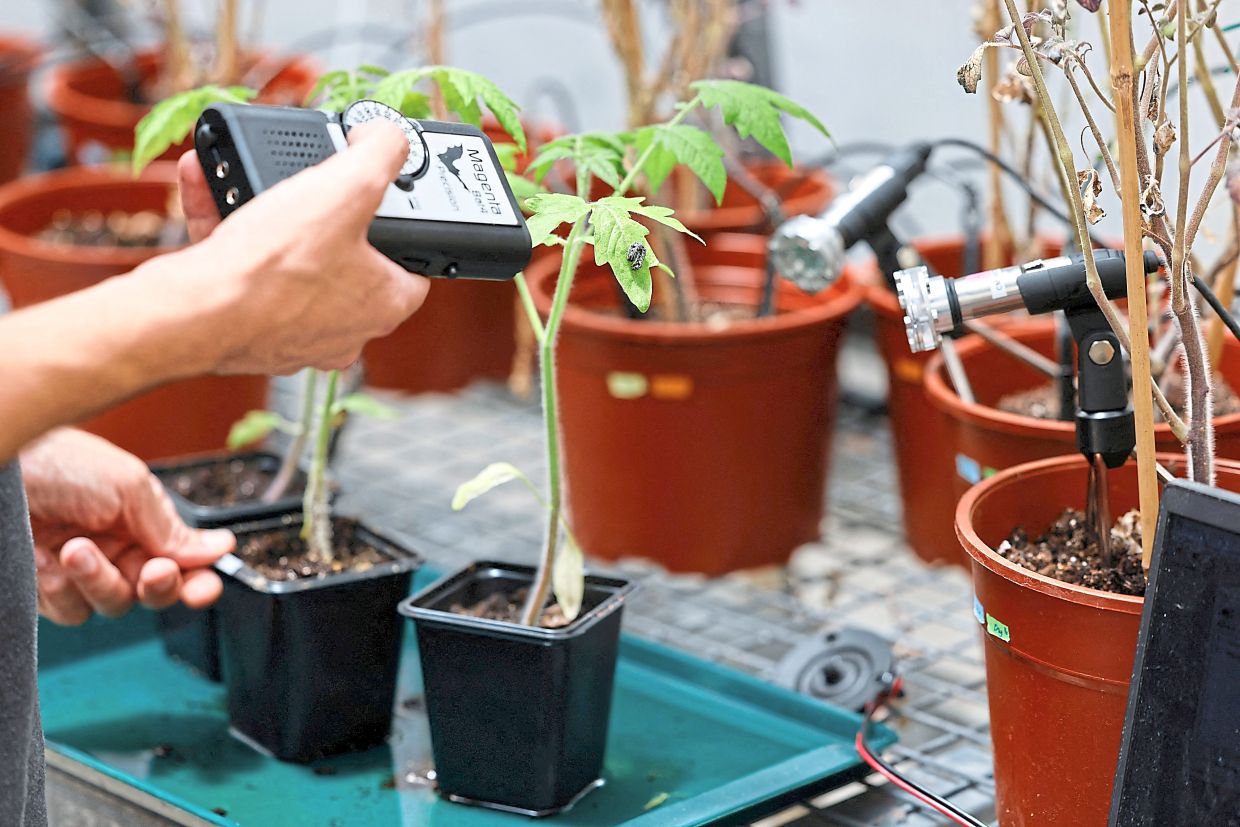
The research was led by Rya Seltzer and Guy Zer Eshel in the laboratories of Yossi Yovel and Lilach Hadany, both professors at the university’s Wise Faculty of Life Sciences.
“We revealed the first evidence for acoustic interaction between a plant and an insect,” the team said in a statement.
The findings build on previous research by the group, which revealed that plants emit ultrasonic sounds when under stress.
The discovery could have implications for agriculture and pest control, opening up possibilities for managing crop health and insect behaviour through sound.

While the ultrasonic sounds emitted by plants are outside the range of human hearing, they can be picked up by many insects and some mammals, such as bats.
Investigating this preference, the researchers presented female moths with two healthy tomato plants – one with a speaker playing sounds registered from a drying plant, and one that was silent.
The moths preferred the silent option, suggesting they use these cues to identify optimal sites for laying eggs.

Further experiments confirmed that the moths’ choices were guided specifically by sound and only to sounds from the plants.
“Here, we’ve seen that there are animals that are capable of making sense of these sounds,” said Hadany.
“We think that this is just the beginning. So, many animals may be responding to different plants.” – AFP

