
In Japan, policymakers and economists are paying close attention to the "oshikatsu" phenomenon as a growing driver of consumer spending. Momoka Matsui, 24, is one of many doing her part to shore up the economy.
Matsui is part of an expanding demographic of mostly 20- and 30-somethings engaged in activities supporting one's favourite celebrities, anime characters, cuddly mascots or any "oshi" – the Japanese term for the object of one's adulation.
"If my salary goes up, I'd like to go to concerts out of town, even overseas, more frequently," said Matsui as she, like many workers in Japan, waits eagerly for another year of bumper wage hikes.
Matsui, who does oshikatsu-related marketing and research as part of her overall work at advertising giant Hakuhodo, declined to identify her bands of choice due to conflict-of-interest concerns in her job.
The explosion of oshikatsu, which entered the mainstream lexicon during the pandemic, as a social phenomenon has economists and even the Bank of Japan taking note for its potential to prop up Japan's tepid consumption.
That's especially true now, when many companies are planning their biggest pay rises in 34 years, particularly for younger workers who are in short supply in a tight and ageing job market, Nomura Securities analyst Kohei Okazaki said.
"The 20-somethings, who'll probably receive another big pay rise in this spring's wage talks, are more proactive about oshikatsu than other age groups and there's a high possibility that spending by the age group will continue to grow this year," he said.
A joint survey by Tokyo-based marketing firms CDG and Oshicoco in January estimated that some 14 million people could be engaged in oshikatsu today – 11% of Japan's population. With respondents spending an average ¥250,000 (RM7,542) a year, the survey suggested a potential ¥3.5 trillion (RM103.73bil) contribution from oshikatsu to the world's fourth-largest economy.
While that accounts for only 2.1% of Japan's total annual retail sales, according to analysts the positive knock-on impact on consumption is expected to be bigger.
"It's safe to say that consumption expenditure due to oshikatsu is on an increasing trend," Okazaki said, adding non-essential spending appeared to be holding its own even as inflation prompts many to pinch pennies elsewhere.
Oshikatsu can take many forms beyond the conventional concert tours. Fans can crowd-fund an advertising space as a birthday gift for their idols, or simply buy the same merchandise used by their oshi.
Among the most popular oshis are "VTubers", or entertainers who represent themselves as an avatar online and live-stream concerts and interact with fans.
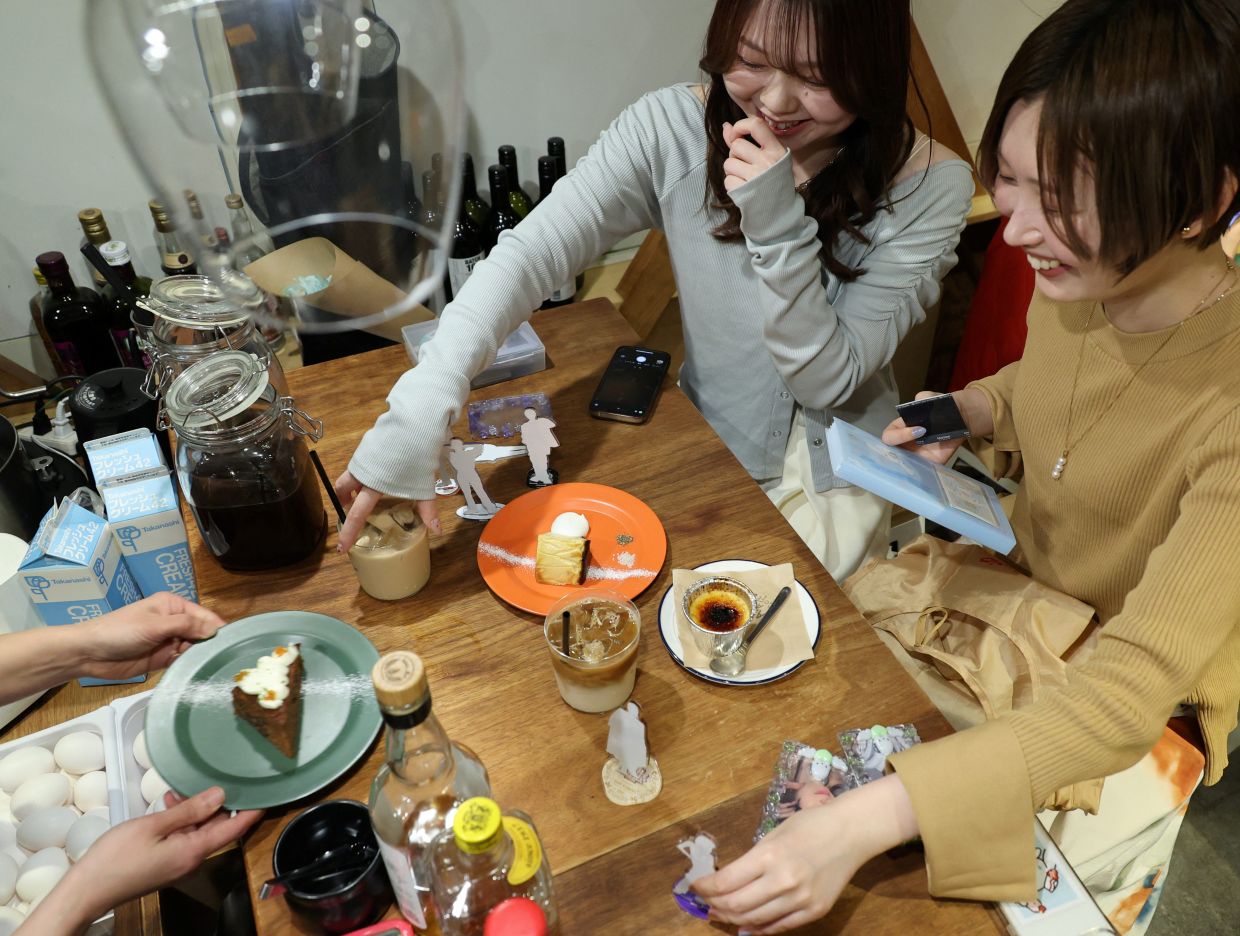
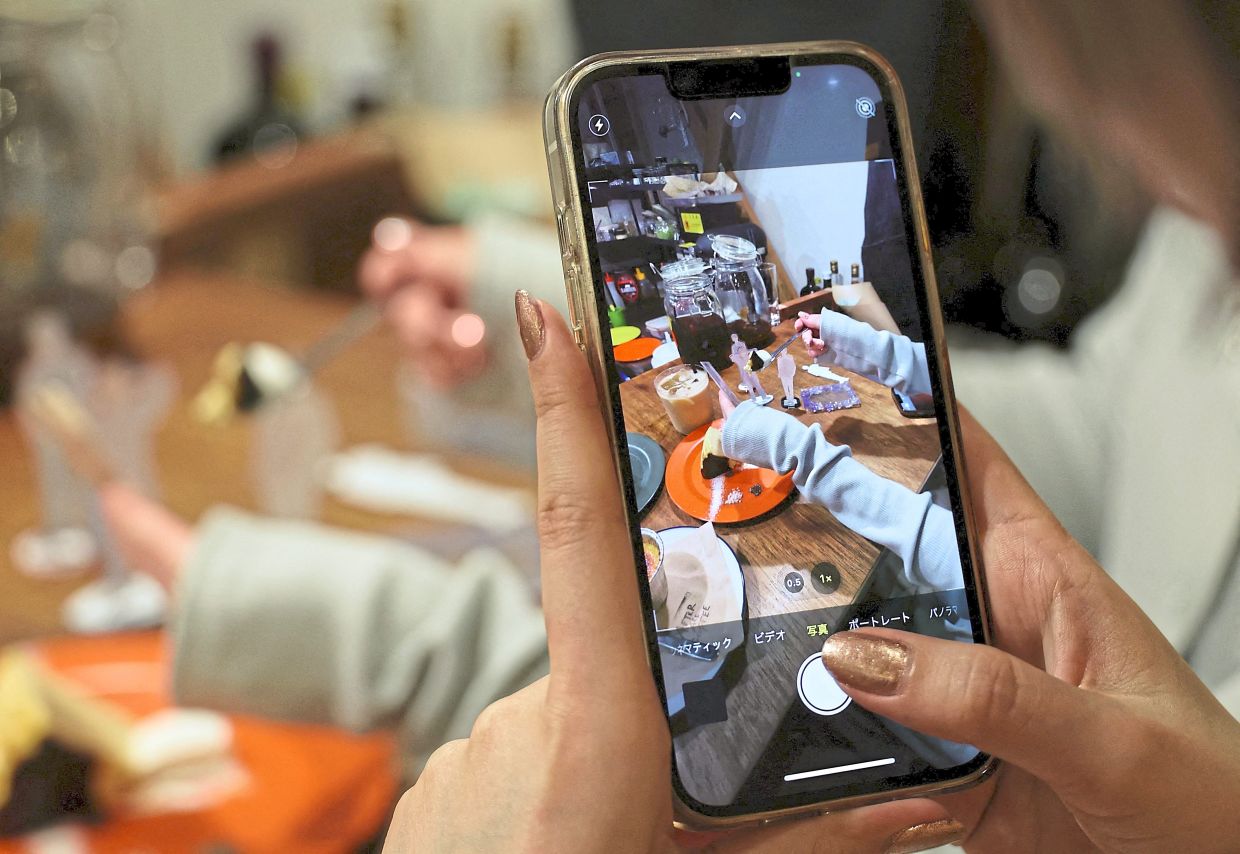
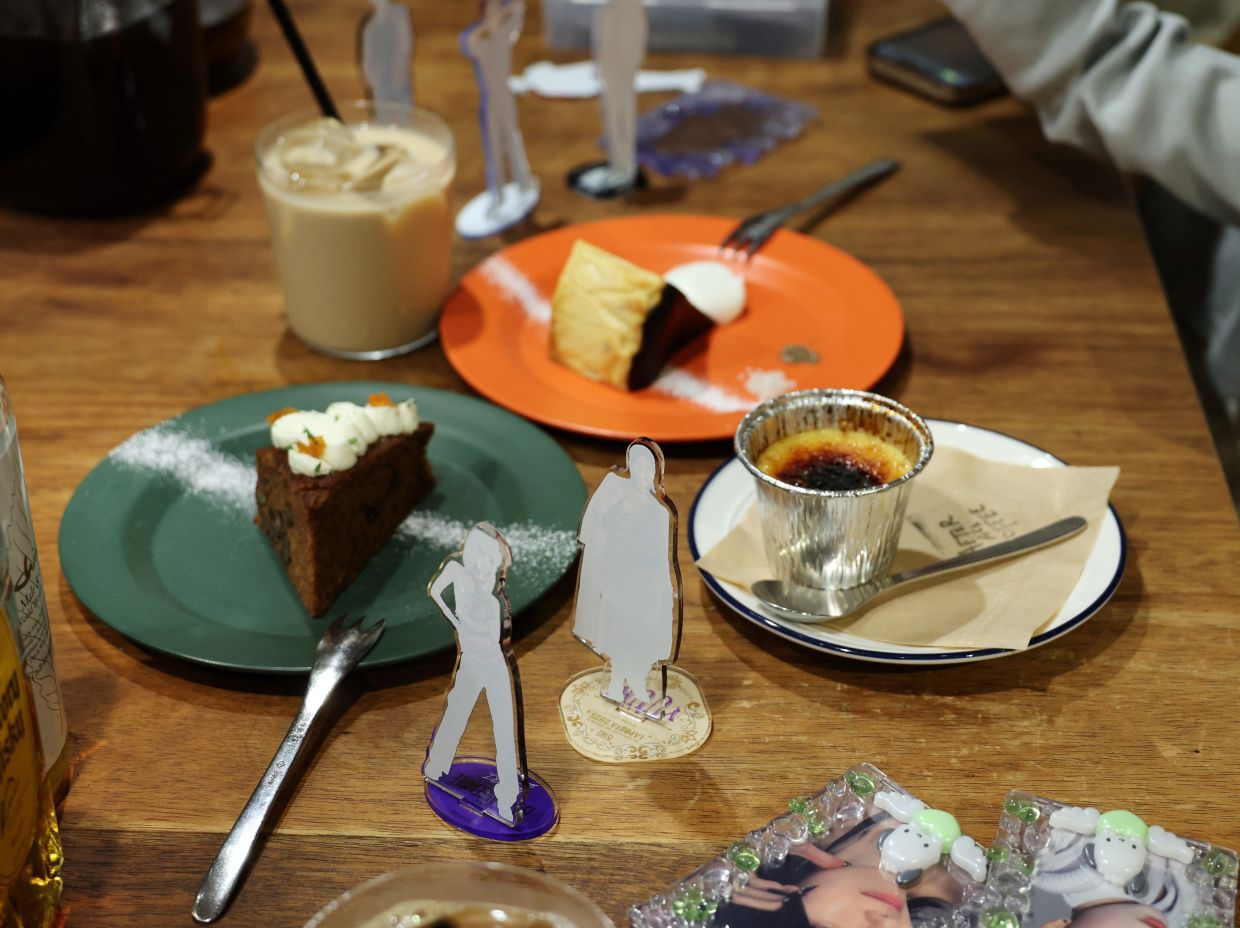
For Matsui, it could be as simple as spending an evening occupying the same seat at a Tokyo cafe where a member of her favourite boy band had once visited. On a recent Sunday there, she placed several table-top acrylic stands printed with his images – costing about ¥8,000 (RM237) combined – next to her cake and tea, and snapped photos.
"Oshikatsu is part of my identity; it's what makes me who I am," she said.
That sentiment was shared by Ayari Koga, a 28-year-old office worker, and 21-year-old college student Miki Takeda, who were visiting an oshikatsu goods cafe at a popular shopping district in Harajuku in Tokyo to enjoy their tea with their manga character plushies.
"The plush dolls are cute and they give me comfort," Takeda said.
No passing fad
It may provide some comfort for policymakers too, as they look to revitalise consumer spending and support Japan's economy amid rising external risks including from US tariffs.
In a Bank of Japan state-of-the-economy report in January, one retailer in the northern city of Akita noted that young people were buying multiple sets of oshikatsu-related trading cards costing more than ¥10,000 (RM297) each.
Corporate Japan is making the most of the phenomenon.
East Japan Railway recently began offering exclusive videos and smartphone wallpapers featuring Nijisanji VTubers on certain routes. MUFG Bank will launch a banking app featuring characters from online game The Idolm@ster.
Young people getting married and having children later in life, freeing up more time and money, was one reason oshikatsu has grown in prevalence, Oshicoco head Natsuho Tada said.
"Even people in the financial industry and those who had previously felt that they had nothing to do with oshikatsu have started to realise that this is not a passing fad," she said.
But the activity isn't limited to the youth. Think tank Video Research said in a survey published in March that about 30% of those in their 50s had an oshi.
Junko Arai, a therapist in that age group, said she spends ¥60,000 to ¥70,000 (RM1,780 yo RM2,077) to attend concerts of her favourite K-Pop groups such as Stray Kids and NCT.
"We all have to deal with stress from work, childcare, or family issues, but by doing oshikatsu people can overcome that and find the energy to keep going." – Reuters