



 |
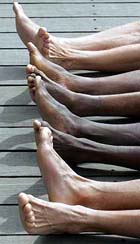
THE foot is a complex anatomical structure tailored to withstand the demands of being the organ of locomotion of the human being. It consists of 26 bones, various interlocking ligaments and multiple tendon slings all cushioned by specialised tissues of the sole.
This complex combination allows the foot to adapt to the infinite demands placed on it during the various activities of daily living. But it is also this complexity that makes it vulnerable to injuries and ailments. Conditions of the foot that may need medical attention include traumatic, degenerative, inflammatory and infective problems.
Traumatic injuries to the foot are a common presentation to the orthopaedic specialist. Acute ankle and foot sprains are normally treated with cold compresses, rest, elevation and compression bandaging. Medication is needed for pain relief.
Fractures of the ankle and foot are not uncommon. Ankle fractures can be complex and may need surgical intervention, especially for those involving the ankle articulation. Neglected fractures can lead to rapid ankle joint degeneration, as the ankle mortise does not tolerate even minor incongruity.
Fracture of the 5th metatarsal base is very common and is normally treated conservatively.
Chronic trauma can lead to corns and calluses of the sole. This can be treated by paring of the skin or local applications. Large calluses may need to be excised.
Inflammatory degenerative conditions that affect the foot include osteoarthritis, rheumatoid arthritis and gout. Osteoarthritis is normally secondary to trauma. Gout normally affects the big toe. Acute gouty attacks are treated with anti-inflammatory medications and rest. Long-term treatments include diet manipulation and allopurinol.
Heel pain is a frequent complaint. It is frequently due to plantar fasciitis, an inflammatory ailment involving the soft tissue around the heel. Treatment with anti-inflammatory medications, heel cushion or corticosteroid injections normally work. Surgery for plantar fasciitis has unpredictable results.
Achilles tendinitis is an inflammatory condition of the Achilles tendon. Anti-inflammatory medications and physiotherapy is the mainstay of treatment. Corticosteroid injection for achilles tendinitis is risky as it may predispose to rupture of the tendon.
Ingrown toenail infection is a common infective condition. It can normally be prevented by proper nail care. If antibiotics fail to control the infection, surgical resection of the nail may be needed.
Diabetic patients are particularly prone to infection of the foot due to reduced resistance and insensitivity of the foot due to involvement of the nerves. Amputation is always a possibility in diabetic patients.
Proper foot care involves understanding and prevention of the above ailments. Proper footwear is of utmost importance. The shoe should be comfortable to wear and support the foot at the correct places. Tight shoes and heels (although fashionable) should be avoided.
Maintaining an ideal body weight and prompt and proper treatment for injuries will prevent osteoarthritis.
Dietary manipulation to reduce purine intake is important in patients with gout to prevent the complications of hyperuricaemia.
The foot is the bane of the diabetic patient. Because of nerve involvement, their feet become insensitive and they are often unaware of something amiss until the infection is advanced. Diabetic patients should be extra vigilant of their feet. A podiatric service is invaluable.
The members of the panel include: Datuk Prof Dr Tan Hui Meng, consultant urologist; Dr Yap Piang Kian, consultant endocrinologist; Dr Azhari Rosman, consultant cardiologist; A/Prof Dr Philip Poi, consultant geriatrician; Dr Hew Fen Lee, consultant endocrinologist; Prof Dr Low Wah Yun, psychologist; Dr Nor Ashikin Mokhtar, consultant obstetrician and gynaecologist; Dr Lee Moon Keen, consultant neurologist; Dr Ting Hoon Chin, consultant dermatologist; Assoc Prof Khoo Ee Ming, primary care physician. For more information, e-mail starhealth@thestar.com.my
The Star Health & Ageing Advisory Panel provides this information for educational and communication purposes only and it should not be construed as personal medical advice. Information published in this article is not intended to replace, supplant or augment a consultation with a health professional regarding the reader’s own medical care.
The Star Health & Ageing Advisory Panel disclaims any and all liability for injury or other damages that could result from use of the information obtained from this article.
Already a subscriber? Log in
Get 20% OFF The Star Digital Access
Cancel anytime. Ad-free. Unlimited access with perks.
