Mandarin-speaking German poet discusses languages, new ways of thinking


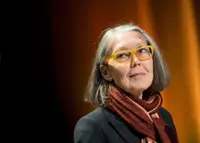
‘When I was finally able to read Chinese poetry, I was completely astonished by the fact that there was a totally different tradition present,' says Schneider. Photo: Mueck Fotografie

Changing and being stuck, at the same time. Of both leaving and staying behind.

Through the eyes of poetry, the recent George Town Literary Festival (GTLF) 2020 explored the “in betweens” of emotion, space and states of being.

A Mandarin-speaking German poet, exploring a new realm, was one of the highlights at this year’s 10th edition of the festival, which was a virtual affair.

Lea Schneider, 31, was still in school the first time she stepped foot on mainland China. After learning Mandarin as a subject (lazily, she says), she was offered a place on a six-week student exchange programme.

“I was young and I wanted to see the world. When I arrived, I had all those cliches and stereotypes in my head, even though I had been learning the language, (albeit) quite badly, for two years.

“I think I was still very much embedded in the historical, colonial and reinforced-by-the-media image of China that we have here in Germany.

“So, I was expecting a country and a culture that was completely alien to me as a European person, ” she told Kota Kinabalu-based poet Thira Mohamad in a GTLF2020 podcast entitled "What Remains Of The Light".

China, Schneider remembers, had been widely depicted as Europe’s great “other” so she was fascinated by what she found.

“I realised that there were a lot of discourses I could relate to and a lot I could learn from the people – all those stereotypes I had about China were just shattered, ” she says.

Of course, there were differences between the two countries and cultures, but Mandarin, surprisingly, would eventually provide an avenue for Schneider to come into her own in writing German poetry.

Trends in art and literature ebb and flow and when Schneider started writing professionally, word games were the dominant style in Berlin.

“I came of age as a poet at a time when the German poetry scene was very much dominated by a late postmodernist stance where irony and language games were very much valued.

“But if you wanted to speak about a real, specific content or had a story you wanted to tell, that was basically looked down upon by many of the poets who were considered famous or important.”

As a young poet, Schneider tried to imitate that and was very afraid to write about actual content or feelings, or current events and anything that was part of the outside world of reality.

“But I always felt limited by that and could never really put my finger on why, ” she says.

As her Mandarin improved, Schneider was able to comprehend more Chinese literature, which opened her eyes to new ways of thinking.

“When I was finally able to read Chinese poetry, I was completely astonished by the fact that there was a totally different tradition present.

“Chinese poets were not limited to this idea that poetry should be a pure language game and (they) could reach into society with their poetry because they could rely on different traditions.

“That was a major liberation for me: to realise that the German tradition at the point that I started writing was just one of many, ” she says.

Since then, Schneider has concentrated her time on both writing German poetry and translating Chinese poetry into German.

Those two passions, more often than not, cross paths.

In 2014, her debut book entitled Invasion ruckwarts (Invasion In Reverse) used both German and Chinese, and won her the Dresden Poetry Prize.

“I mixed the languages and tried to find a way for a German-speaking audience to follow along as I incorporated Chinese into my poems.

“I did that by using pinyin as a bridge of languages on the page.

“That was interesting because that book was very much about translation and building bridges between German and Chinese and the different cultures. And pinyin itself is exclusively devoted to being a bridge (between Chinese characters and the Roman alphabet), ” she shares.

However, the road to a harmonious balance of language and culture – even within Schneider herself – has not been an easy one.

While her first volume of poetic essays leaned towards analysing power structures in language and involved big-picture concepts like nationalism and identity, Schneider’s second undertaking has been much more personal.

Made In China, released in February this year, focuses on her own experiences and discourses with her friends in China.

“At some point, I had realised that I had been involved with the Chinese language for over 15 years but was never able to write poetry about that time of my life.

“That was very weird to me because that was such a big and important part of my life. I tried and what came out was basically – like my first visit to China – just cliches and stereotypes, ” she says.

She goes on to say that further examination revealed certain limitations in her native tongue that she needed to overcome in order to properly articulate her encounters in China.

“I realised that my language – the German language – didn’t actually offer me any pre-packaged metaphors, images or narratives for the kind of complexity and ambiguity that I experienced in China and for all the intellectual generosity that I got in discussions with Chinese friends.

“When I broke it down, German didn’t offer me any possibility to speak about my Chinese friends as... friends.

“That was a major revelation to me. I’ve been talking about layers of violence and also colonial violence in connection with language and that’s what I realised (was happening) at that point, ” she explains.

To overcome this challenge, Schneider turned to an anthropological method called “thin description” where one uses basic observational tools to look at the world without interpretation.

“I tried to employ that and to write about China as if I were a camera; as if I could just walk around and objectively write down what I saw.

“The other thing I did in the book was to employ an ethics of quotation and multi-vocality.

“So, what I basically did was quote all the discussions with my Chinese friends with them talking in their own words.

“I also quoted other books so I’m not the only person speaking in the text. That was important to me because I was also thinking about my position as a white, European woman talking about China and I didn’t want to appropriate stories that weren’t mine to tell, ” she says.

The result is a volume of poetry that greatly involves other voices but also speaks of the personal experiences Schneider lived in mainland China.

“It became more vulnerable because I couldn’t hide behind language... because now I had something I really cared about and I wanted to make it right.”

To her, there was a different kind of responsibility in writing these new poems because she was not only talking about herself but at the same time, she was putting herself much more out there and speaking from a position that made herself much more visible.

“That was a new experience but also a good and interesting one, ” she says.

Get 20% OFF The Star Digital Access

Monthly Plan

RM 13.90/month

RM 11.12/month

Billed as RM 11.12 for the 1st month, RM 13.90 thereafter.

Best Value

Annual Plan

RM 12.33/month

RM 9.87/month

Billed as RM 118.40 for the 1st year, RM 148 thereafter.

Follow us on our official WhatsApp channel for breaking news alerts and key updates!

Next In Culture

Penang State Museum reopens with free admission until Aug 31
New book offers rare glimpse into letters of prominent Malaysians
Weekend for the arts: Wayang Kulit Kelantan at TRX, Rimbun Dahan Open Day
Hundreds of miniature Mozarts bring a larger-than-life legacy into focus
Historical Terengganu Quran among Louvre-ACM exhibition highlights in Singapore
Silent reading clubs are attracting a growing following around the world
British-Malaysian disabled-led theatre production examines the weight of being
Safeguarding North Borneo’s century-old philatelic legacy
HK official urges booksellers to avoid titles that threaten national security after arrests
IAMM exhibition bears witness to a Palestinian history stitched through generations

Others Also Read