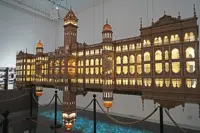
You can almost see people jumping out of their skins when the Azan blares across the gallery. The Muslim call to prayer gusts suddenly, almost out of nowhere. But then again, it is also something you would expect from an exhibition on faith in Kelantan – the land of segregation, banned arts and entertainment, compulsory modest dressing, among others, under the pervasive shadow of the state’s long-ruling Islamic political party.
Yet, the religious ruminations in the Khabar Dan Angin: Excursus On Faith In Kelantan exhibition at Kuala Lumpur’s National Visual Arts Gallery aim at more than simple religious definitions or earnest contemplations of spirituality.
“When you look at Kelantan, you immediately associate it to certain connotations ... there are a lot of pre-conceived notions of what Kelantan is, so we thought, why don’t we just go and explore it to see for ourselves. We wanted to look at Kelantan with a fresh perspective,” says Yana Rizal of Projek Dialog, a youth platform promoting open and critical dialogue on religion, culture and sociopolitics in Malaysia.
With that aim, Yana and co-curator Ong Jo-Lene led a motley crew of visual artists with architecture, psychology, philosophy and mass media backgrounds on a field trip to explore and debunk, or not, the myths of the self-proclaimed Islamic state.
What they discovered is equally eclectic, says Yana, highlighting the various issues facing minority groups such as the Temiar tribe, as well as the diverse clusters of Muslim communities, living under the big umbrella of the politically constructed Islamic society.
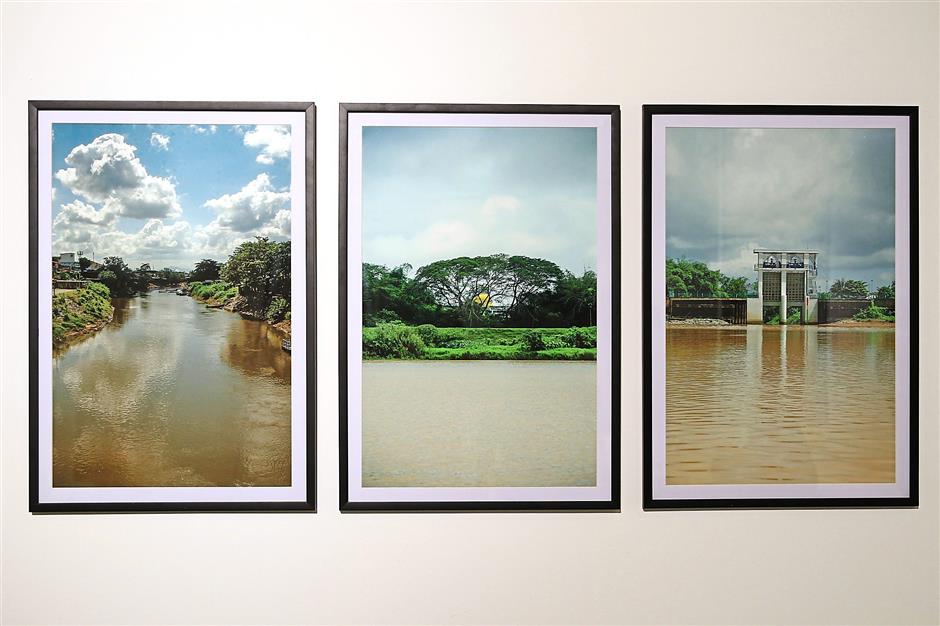
For Ong, it was an opportunity to explore and engage the “other” in a not-so-other environment.
“Kelantan is a place often remarked on for its difference. It is a place with a different local dialect, different food, different history, different politics and soon to be, a pink football stadium,” says Ong.
“On the field trip we found that in some ways we were ‘tourists’, but at the same time we were not outsiders in the sense that we are part of a landscape where religion, ethnicity, national identity, social class and political governance all ultimately become conflated into the singular affiliation to one’s religion,” she elaborates.
True, the artists’ works, or as Ong calls them, “field-notes”, create a rough guide for a religiously complex topography that is at once a familiar snapshot of our collective (national) landscape.
Take the Azan, it is a mere snippet of a looping eight-hour aural installation by William Sim, Here, Listen (Kelantan) which blends the celestial with the ordinary and mundane to take us on a soundscape trip that is instinctively recognisable.
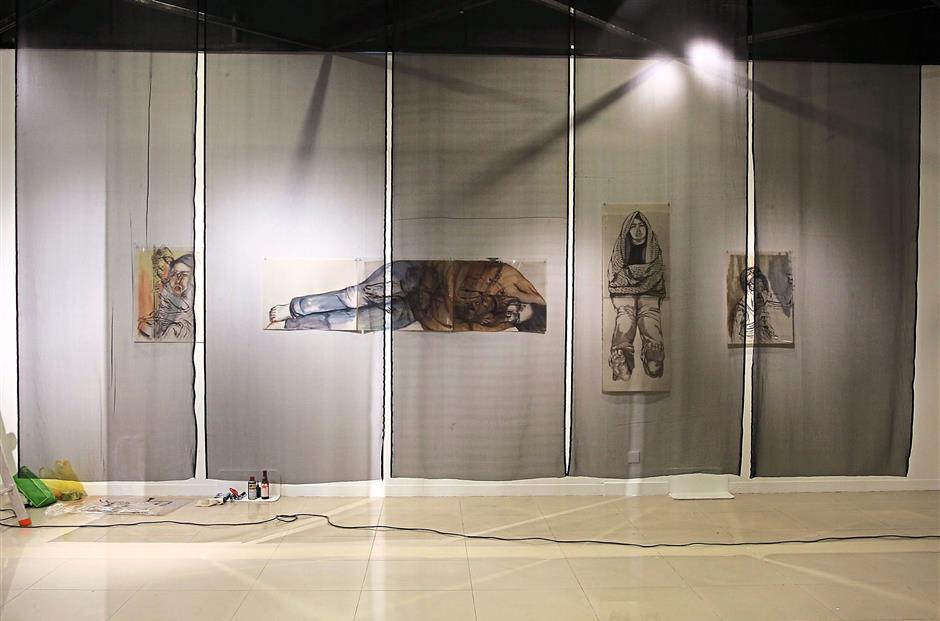
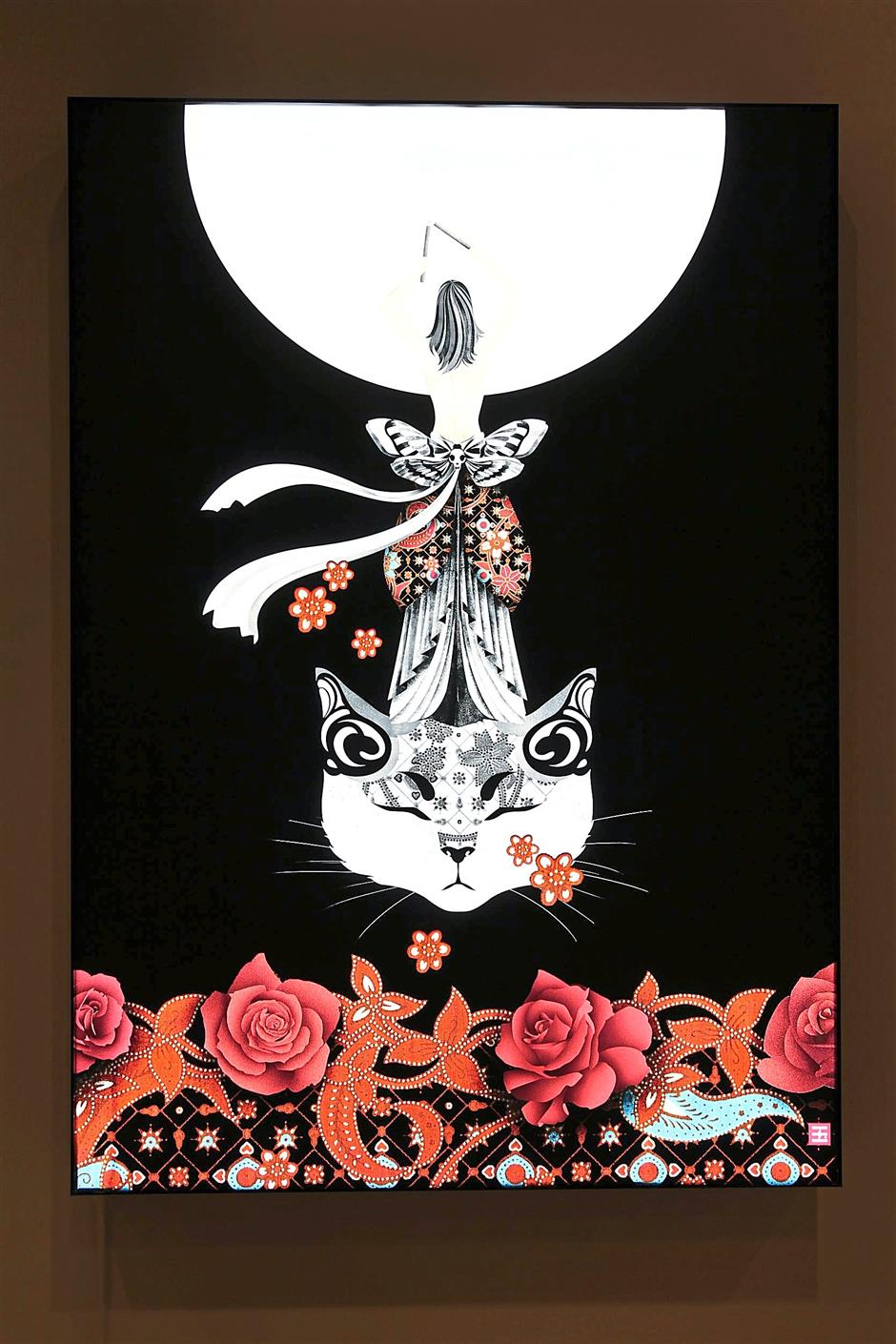
Another is Alex Lee’s Cinemana? which probes into the state of leisure under Islamic law with his search for the elusive pre-Pas government relic – the cinema.
Nadia J Mahfix’s Wahyu (Revelation) meanwhile takes you on a blacklight search for answers to our perennial existential questions under the dark dome of what appears to be a giant songkok. As her experiential photo-installation suggests, the answers lie all around us, if we only try to see beyond the super-ficialities of faith.
This is also the undercurrent sentiment of Engku Iman’s interactive games Kilang Agama and Pilih Bulu (roughly translated to Religion Factory and Birds Of A Feather) which scrutinise the bonds of religion in an increasingly connected world.
KG Krishnan and Yoke Tan examine contemporary Kelantan through a more universal lens: Krishnan on public spaces in a restrictive environment and Yoke Tan on the value of life for all God’s creatures, regardless of race, religion or species.
Khatijah Rahmat evokes the discarded memory of “Malayness” as she questions its manufactured conflicts with institutionalised Islam in her multi-layered drawings on traditional Kelantanese healing ritual Main Puteri.
It’s a theme continued by fellow excursionist Poodien, who, coincidentally, is a born and bred Kelantanese.
Using an earlier oil painting of his late mother entombed in prayer garb as his personal centre of gravity, he maps out his interfaith quest with his three-part series Dari Ketiadaan Sampai Ke Sini (From Nothing To Here).
Ong notes that the exhibition grew out of their journey as a rag tag group sharing spaces and experiences and learning from each other.
“As we turned to gaze back at ourselves, we thought, were we different from a travelogue?
“The works take off from inquiries and research that are still ongoing, and we hope this travelogue of ours can spark a space for critical openness and conversations on a more inclusive national narrative.”
Khabar Dan Angin: Excursus On Faith In Kelantan is on at the Galeri Reka, National Visual Arts Gallery (Balai Seni Visual Negara), Kuala Lumpur till March 16. For more info, go to www.projekdialog.com.
Already a subscriber? Log in
Get 20% OFF The Star Digital Access
Cancel anytime. Ad-free. Unlimited access with perks.