FRANKFURT: Tens of thousands of workers across Germany plan to stage protests, seeking protection for jobs and factories after Volkswagen (VW) AG delivered another stark demonstration of the depths of the country’s auto-industry downturn.
Employees at VW, which slashed its profit outlook late last Friday, as well as Mercedes-Benz Group AG, BMW AG, Audi, Porsche and major suppliers, will take part in demonstrations at more than 280 events nationwide on Monday.
The powerful IG Metall union is pressing companies to protect plants and jobs while urging Chancellor Friedrich Merz’s government to lower energy costs and shield domestic production from low-cost imports.
“We won’t stand by while a key industry is hollowed out step by step,” Thorsten Gröger, IG Metall’s regional chief for Lower Saxony and Saxony-Anhalt, said.
“The workers didn’t cause the failures of recent years. They shouldn’t now be made to pay the bill for them.”
VW last Friday cut its operating-margin forecast to no more than 1%, from at least 4% previously, citing worsening conditions in China, restructuring costs and a 6bil (US$6.9bil) writedown tied to sportscar maker Porsche AG.
The warning from Europe’s biggest carmaker underscored the pressures converging on German manufacturers.
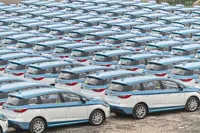
China, long a lucrative source of growth, is weakening while increasingly formidable Chinese rivals are expanding in Europe.
German carmakers are also spending heavily on electrification, grappling with US trade barriers and trying to shrink an expensive domestic production base.
“The market changes are profound and lasting,” Volkswagen chief financial officer Arno Antlitz said after the warning.
“We have no time to lose.”
The protests also come a day after a pair of regional elections in which Merz’s Christian Democrats suffered crushing losses.
They were defeated by the anti-capitalist Left party in Berlin, while in the northeastern state of Mecklenburg-Western Pomerania they crashed out of a state assembly for the first time in the country’s post-World War II history.
The results, including more gains for the far-right AfD party, add to the challenges for a government trying to restore Germany’s competitiveness as manufacturers cut jobs and consider factory closures.
Germany’s storied car industry has shed 100,000 staff since 2019, according to the VDA industry lobby more cuts are coming.
Volkswagen has laid out plans that could ultimately affect around 100,000 positions globally, BMW is eliminating around 8,000 jobs and Mercedes-Benz is shrinking production in Germany while expanding lower-cost operations in Hungary.
The pain reaches deep into the industry.
Automotive suppliers shed 74,000 jobs between 2019 and 2025, almost a quarter of their workforce, according to the VDA.
The retrenchment reflects broader challenges to Germany’s industrial model.
Manufacturers prospered for decades on relatively cheap energy, open markets and booming demand from China.
Russia’s invasion of Ukraine disrupted energy supplies and growth weakened in China, where local competitors such as BYD Co emerged with cheaper alternatives to some of Germany’s best-selling models.
Volkswagen encapsulates many of those pressures.
Rich profits from China and premium brands helped support an enormous manufacturing base in Germany and finance investment in new technology.
With China’s car market contracting, Chinese manufacturers are pushing lower-priced electric and hybrid cars into Europe. In July, their share across the continent soared to 11%.
The conflict in the Middle East has added another strain, with petrol and diesel prices climbing to record levels in Germany this month.
Although electric vehicle sales are rising in Europe, they’re often less profitable.
The United States, meanwhile, has become a tougher market for German carmakers that lack production there – especially Porsche and Audi – due to President Donald Trump’s tariff policies.
“A recovery for VW will have to come through its two premium brands, Porsche and Audi, held back by US tariffs, but above all needing China to stabilise,” said Adrien Brasey, an automotive analyst at Alphavalue.
“The read-across for the sector: with such high production overcapacity at home, Chinese carmakers will keep exporting significantly, increasing pricing pressure globally.”
Merz’s government has responded with a 500bil infrastructure fund, investment incentives and measures to lower electricity costs and taxes. — Bloomberg