
KUALA LUMPUR: A single job created directly inside Google’s upcoming US$2bil (RM9.4bil) data centre (DC) in Selangor will generate nine additional jobs across the local economy.
That powerful one-to-nine employment multiplier lies at the heart of the tech giant’s first Malaysian facility and cloud region in Elmina Business Park.
The facility, Google’s second in South-East Asia after Singapore, aims to debunk the widespread industry myth that hyperscale DCs are empty, low-employment “ghost boxes” once construction wraps up.
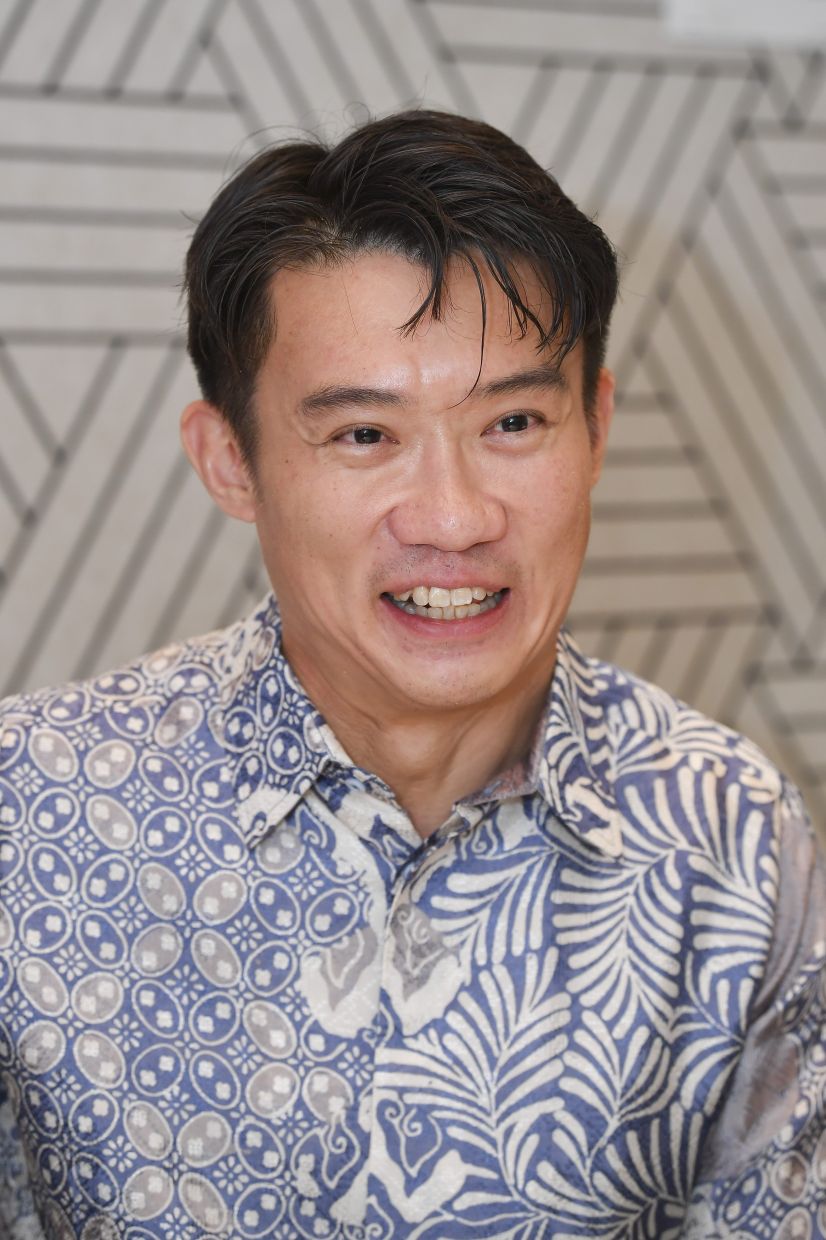
Beyond the thousands of short-term construction roles, Google aims to hire hundreds of high-value, permanent engineers, technicians, and specialists directly inside the facility, said Ken Siah, principal for global infrastructure market development at Google Asia Pacific, in an exclusive interview with StarBiz.
Google’s DCs, he explained, drive extensive local contracts, from server rack supply chains and specialised engineering consultancies to on-site dining services and green energy projects.
Siah also sought to dispel the misconception that operational DCs require minimal human oversight, noting that managing Google’s proprietary “all-product area” hyperscale infrastructure requires round-the-clock, highly specialised technical talent.
These jobs go beyond information technology maintenance, Siah said, and include DC technicians comprising highly skilled engineers managing server operations, hardware deployments, software coding and live troubleshooting; network engineers responsible for connectivity, ensuring global ultra-low latency and network reliability for millions of users; mechanical and electrical engineers as operational leads maintaining continuous 24/7 power distribution, backup systems and complex thermal cooling loops; and environmental and compliance leads specialising in water management, energy strategy, community affairs and safety compliance.
“It’s not just about the hardware. Engineering inside a hyperscale facility is an entire organisation, so these are jobs that are created specifically because of the contracts that the Google DC is driving,” he said.
As Google sources hardware components and maintenance services locally wherever possible, Malaysia’s mature semiconductor and electronics manufacturing ecosystem stands to capture significant commercial value, he pointed out.
While Malaysia’s unemployment rate remained low at 2.9% for the first five months of 2026, high-skilled workers accounted for the largest share of those affected during this period, making up more than half of retrenchments from 2021 to 2025.
“There is a very educated and talented workforce here. We’ve really had no issue finding and hiring local talent,” Siah said.
To ensure local talent fills these high- value positions, he said Google is investing across three human capital tracks: on-the-job upskilling, comprising mandatory operational and safety training for all employees and contractors; tertiary skilling programmes comprising industry-aligned courses in artificial intelligence (AI) and DC operations; and early science, technology, engineering and mathematics partnerships, providing foundational training through initiatives such as Arus Academy KL focused on future skills development.
Rapid DC expansion has also sparked public debate over energy grid stability and municipal water consumption.
Siah outlined Google’s self-funded operational model built on 20 years of global infrastructure development.
For example, rather than driving up electricity costs for local households, Google finances its own infrastructure expansion.
“Think of a power grid like a toll highway with fixed maintenance costs,” Siah explained.
“If very few cars drive on it, the toll per car is high. But when a major logistics fleet commits to using that highway, the overall cost burden per user drops.
“If there is insufficient power in an area, or if we are going to be taking power away from a community, we will either find ways to develop more power, or we will not go there,” Siah said.
In other words, Google would not pass any infrastructure costs on to local ratepayers.
He added that Google is one of the few hyperscalers that publicly reports its operational power usage effectiveness (PUE) on a quarterly basis across all its campuses. PUE is the primary industry metric used to measure the energy efficiency of a DC.
While the global industry average hovers around 1.52 to 1.56, Google’s global fleet operates at 1.08 to 1.09. Even in hot, humid tropical climates like Singapore, Google maintains a PUE of 1.13.
“So, it’s precisely because we have efficient design, good chips and good operational culture that allows us to achieve this, and we are very confident we can do the same in Malaysia,” he said.
As of early 2026, DCs in Malaysia consume an actual average of 28.68 million litres of water per day, according to the National Water Services Commission.
Estimates project total nationwide water consumption by tech hubs to surge past 37 billion litres annually, climbing steeply through 2030.
The question is how Google assesses the risk of water scarcity at a particular location.
“If a community faces water scarcity, we simply will not use water cooling methods. We will rely on other methods, whether that is air cooling or newer chips with more advanced liquid-cooling methods,” Siah said.
DCs use water and liquid-cooling systems to manage intense heat loads from high-density servers and AI workloads. Traditional facility-level systems use chilled-water loops and evaporative cooling towers, while modern rack-level designs deploy direct-to-chip or immersion cooling to boost thermal-transfer efficiency
Where water is used, closed-loop systems continually recycle it. On top of that, Google has committed to a global goal of replenishing 120% of the freshwater its DCs consume.
In an industry where tech multinationals routinely demand tax holidays before entering a market, Google’s approach in Malaysia breaks from the norm: the company says it is not seeking local tax breaks.
“We believe in being a good corporate citizen,” said Siah. “We pay all relevant taxes, which go straight to the Malaysian government to support public services.”