SEOUL: The European Central Bank (ECB) can no longer look through the inflationary impact of the US-Israel war on Iran as price pressures spread beyond energy and the risk of unanchored inflation expectations rises, according to executive board member Isabel Schnabel.
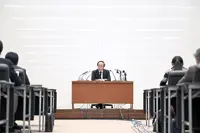
Damage to Middle East energy infrastructure and global supply chains have already altered price dynamics in a more lasting way, meaning policymakers may need to respond even if the conflict were to end immediately, Schnabel said at a Bank of Korea conference yesterday in Seoul.
“We can no longer look through this shock,” said Schnabel, who is widely regarded as the ECB’s most hawkish policymaker. “The risk of de-anchoring inflation expectations is rising.”
The comments reinforce Schnabel’s remarks from last week when she said a rate hike at the ECB’s June 10 and 11 meeting would be needed.
Markets broadly expect such a move as officials grapple with the prospect that higher energy costs spill over into broader inflation, though policymakers have been cautious to signal how far rates will rise given uncertainty over the economic fallout from the conflict.
While most officials remain cautious on the path beyond June as the economy is also already slowing, Lithuania’s Gediminas Simkus said last week that a second rate increase “is more likely than not”, though the timing was unclear.
Schnabel suggested it was too early to specify how many rate increases might be needed, saying policymakers would continue to assess incoming data and developments in the Middle East.
“It’s too early to say that it’s a certain number of hikes and then it’s done,” she said. “We really have to see what’s going to happen.” — Bloomberg