BEIJING: Hopes for a strong rebound in China’s demand for liquefied natural gas (LNG) are fading, despite the ceasefire called in the Middle East, as analysts caution over lingering supply risks and higher prices.
Chinese LNG imports plunged 11% last year to 68.4 million tonnes, a rare decline in nearly two decades of almost uninterrupted growth.
BloombergNEF (BNEF) expects another drop in 2026 to 62.3 million tonnes. Rystad Energy predicts a slight rise to 70 million tonnes.
Even before the United States and Israeli strikes on Iran shattered the supply chain from the Persian Gulf, Chinese demand for gas was falling as the economy slowed.
Apparent consumption declined 0.9% in the first two months of the year, according to government figures, extending the weak run that had persisted through 2025.
The 30-day moving average of China’s net LNG imports through Wednesday were already 20% lower than the same time last year, according to ship-tracking data compiled by Bloomberg.
BNEF’s forecast, which is unchanged from before the ceasefire, assumes shipments will resume from Qatar through the Strait of Hormuz from late April.
Rystad’s forecast is also unchanged and assumes a resumption from the middle of the month.
But reopening the key waterway won’t make up for the long-term damage caused by Iranian strikes on Qatari facilities. And it won’t quell fears that the strait can be weaponised at any time as a chokepoint for global oil and gas supplies.
China, the world’s largest gas importer, took roughly a quarter of its LNG from Qatar, which is now facing a yearslong effort to restore operations.
Most pertinently, the destruction of two Qatari LNG trains at the world’s biggest export facility could remove 12.5 million tonnes of annual capacity over the next three to five years, according to BNEF.
Faced with such a shortfall, China is all but certain to limit its exposure to the Persian Gulf.
Given Qatar’s heft in the market, that could also mean cutting back on LNG, and leaning more heavily on domestic output and overland gas pipelines from Russia and Central Asia.
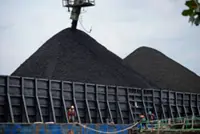
Substitutes such as coal and renewables, which China has in abundance, are also likely to be favored.
China has already shown resilience to the disruption because of diverse supply lines outside the Persian Gulf, said Rystad analyst Xiong Wei.
Those contracts are enough to cushion the impact for four months.
After that, it could be tempted to turn to the United States for replacement cargoes, even though those imports are tariffed, she said.
Asian benchmark spot LNG futures nearly doubled in March to about US$20 per million British thermal units (mmbtu).
The equivalent market in China, which competes with gas procured domestically and overland, rose by only 44% to about US$15 mmbtu. — Bloomberg