

G7’s Russian oil tanker ban shows teeth, but bite is in doubt


FILE PHOTO: Rosneft's Russian-flagged crude oil tanker Vladimir Monomakh transits the Bosphorus in Istanbul, Turkey, July 6, 2023. - Reuters

THE Group of Seven’s or G7’s proposed plan to bar tankers from hauling Russian oil ups the ante in the West’s economic stand-off with Moscow, but the ultimate bite hinges on whether governments will ratchet up punishments on those skirting sanctions.

And with Russian President Vladimir Putin working tirelessly to strengthen Moscow’s own alliances, including India and China, the West may need to act quickly.
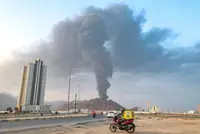

G7 countries and the European Union are discussing plans to impose a full maritime services ban on Russian oil transportation, restricting Moscow’s access to a large pool of tankers, Reuters reported last Friday.

The initiative, which could take effect by early 2026, will end the G7 price cap introduced in late 2022. That mechanism allows buyers to access Western shipping and insurance only if they purchase Russian crude below the set cap.

The aim was to curb the oil revenue that helps finance Russia’s war in Ukraine, while keeping global oil supply flowing.

Russia produced around 9.3 million barrels per day (bpd) in October, around 9% of global supply, of which over half was exported, according to the International Energy Agency.

The G7 governments appear willing now to bite deeper into Russia’s oil exports, yet the ban does not mean they will stop.

Russian producers have in recent years developed efficient ways to circumvent Western financial systems and sanctions, primarily using so-called “shadow fleet” tankers.

In October, only 38% of Russian crude oil exports were shipped on G7 compliant tankers, according to data from the Centre for Research on Energy and Clean Air (Crea).

Expanding the shadow fleet and replacing capacity lost to the new G7 restrictions appears doable as there are plenty of old vessels that Russia and its partners can purchase, including from Western shipping companies.

How the West will respond remains the big unknown.

A price for every risk

The market for Russian crude is quite concentrated.

Over 90% of Russian seaborne crude oil exports of around 3.5 million bpd so far this year have gone to China, India and Turkiye, according to shipping analytics firm Kpler.

The question is whether these countries will continue buying the oil under the new G7 restrictions.

The answer is probably yes – at the right price. Russian sellers will need to offer significant discounts to global oil prices to compensate for the higher risks and greater logistical complexity associated with dark fleet tankers, including ship-to-ship transfers.

In effect, this is already happening under the current price cap.

The risk, then, is that removing the price cap will actually simplify the calculus for Russian crude buyers, ultimately reducing the discount Russia is forced to offer, especially if oil prices rise.

Measures with bite

The effectiveness of the new G7 proposal therefore hinges on Western governments’ willingness to enforce these new restrictions. But here, too, there is reason to be sceptical.

Western governments have ratcheted up economic pressure on the Kremlin in recent months.

Several G7 members in September lowered the price cap on crude oil to US$47.60 a barrel from US$60.

The European Union has also announced plans to ban imports of refined products made from Russian crude starting next year, and last Wednesday, the bloc agreed to phase out Russian gas imports by 2027.

Crucially, US President Donald Trump in October imposed sweeping sanctions on Russia’s two largest oil companies, Rosneft and Lukoil.

Trump had earlier imposed a 25% tariff on India over its purchases of Russian crude, as the two countries struggled to hammer out a trade deal.

Yet despite all this, Russian exports have remained largely stable, while Indian and Chinese imports of Russian crude have continued, albeit at reduced levels.

Indian imports of Russian crude are set to drop to 1.38 million bpd in November and December from an average of 1.75 million bpd in the first 10 months of the year, according to Kpler.

China has seen a similar trend.

Yet, actual sales of Russian oil into India, China and other countries may end up far higher, judging by recent history, as Russian crude is often blended mid-ocean with other grades, rebranded and then gradually imported.

The right appraoch

Enforcement will depend on how much pain Western governments are willing to tolerate – whether by constraining the supply of Russian crude, which would push up oil prices, or by risking retaliatory measures from buyers of Russian oil.

Isaac Levi, energy analysis team lead at Crea, says that the new G7 service ban “is the right approach” since most Russian crude oil is already under US sanctions, effectively rendering the price cap moot. — Reuters

Ron Bousso is a Reuters Energy Columnist. The views expressed here are the writer’s own.

Follow us on our official WhatsApp channel for breaking news alerts and key updates!
Russia , oil , sanction

Next In Business News

Stocks dip as nervy markets wait for Fed verdict, rates outlook
China to prioritise innovation, AI in 2026 economic agenda
Moody’s downgrades Genting and subsidiaries; outlook stable
TechStore unit bags RM89.68mil job for Kelana Jaya Line
I-Bhd to partner UiTM in developing AI innovations
FBM KLCI's losing streak poised to continue for fifth day
FBG secures RM206.16mil construction job in JB City Square
Jeffrey Cheah honoured in Forbes Asia's 2025 Heroes of Philantrophy
Oil edges down with Ukraine peace talks, US rate decision in spotlight
Malaysia's IPO market on track for 60 listings in 2025

Others Also Read