NEW YORK: Solar and wind energy companies are betting on a novel form of insurance to protect their assets against wild and volatile weather – the very type of climate risk they were set up to fight.
Renewable power projects can lose substantial revenue if the wind fails to blow, if clouds block the sun or when a hurricane slams into expensive infrastructure.
To protect against such climate-induced losses, many owners are turning to parametric insurance, a product providing rapid compensation when certain weather-related metrics are met.
The downside is that if the pre-defined trigger is missed by even a tiny amount, there is no payout. And the money that’s paid may end up covering only a small portion of actual losses.
Even so, more clean-energy companies are using parametric insurance to supplement traditional indemnity programmes.
“It’s definitely an area we see growing massively,” said Marcel-Steffen Reif, global head of weather and AgRisk Partners at reinsurer Munich Re.
The shift is being driven by the rising impact of global warming on green assets.
In Texas, solar farms are routinely battered by hail, while wind farms suffer massive damage during winter storms.
Australia is seeing lower wind speeds in some areas and more cloud cover in others.
Nearly half of Europe’s renewable power capacity will be at “critical risk” from extreme weather unless more is done to protect them, according to Zurich Insurance Group AG.
Indonesia, Malaysia and Brunei have witnessed large declines in solar irradiation, and Qatar and Kuwait have seen a slump in wind speed this century, according to Copernicus Climate Change Service data analysed by Bloomberg.
The threat is especially severe in India, where Prime Minister Narendra Modi’s plan to more than double renewable energy capacity by 2030 could be undermined by the country’s high susceptibility to wind droughts and reduced solar irradiation.
Wind power generation there fell by 0.77 petawatt-hour per decade between 1980 and 2016, according to a 2018 study, as a lower differential between temperatures on land and the Indian Ocean sea slowed wind flows.
Such unpredictability “increases the amount of equity needed to fund a project, which is obviously a barrier to development,” said Iain Staffell, associate professor in sustainable energy at Imperial College London.
A few years ago, ReNew Energy Global Plc bought parametric insurance for a modest-sized project, seeking to protect revenues from a potential drop in wind speed.
But when it made a claim, the insurer declined to pay, saying the fault lay with a faulty turbine instead of variable weather.
Renew said the lack of a payout discouraged it from buying parametric cover for larger projects.
“Wind has continued to underperform in the last three to four years so the declines will have to be significantly worse to get insurers to pay out,” said Kailash Vaswani, chief financial officer of ReNew.
“It’s basically heads they win, tails you lose.”
Some clean energy companies worry about the cost.
Actis GP LLP, which manages US$108bil in assets together with parent General Atlantic, is in discussions with insurers “to see whether the pricing level justifies the risk coverage,” said Abhishek Bansal, managing director for energy infrastructure at Actis.
Foreign insurers, nonetheless, see a growing opportunity in emerging markets. Munich Re said it has received “first requests” from clean energy companies in India and China.
Willis Towers Watson Plc said it has seen a “doubling of demand” from Indian developers since 2023.
Paris-based Descartes Underwriting is pitching wind parametric products in several developing countries.
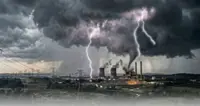
The promise of speedy payouts has made parametric deals especially popular as a hedge against losses tied to the physical impact of global warming – everything from more intense wind gusts that dislodge solar panels, to more frequent lightning strikes that damage turbines.
When Typhoon Rai hit the Philippines in late 2021, Aboitiz Power Corp was able to collect a parametric payout within 30 days and quickly repair the damage caused to its renewable energy assets.
“Extreme weather events are more severe and more frequent in the Asian region,” said Jeong Won Kim, senior research fellow at the National University of Singapore.
In time, “more and more parametric insurance products will emerge” to help the renewables sector cope with the risk, she said. — Bloomberg