PETALING JAYA: As global trade tensions resurface, Malaysia finds itself navigating a challenging economic landscape shaped by unpredictable tariff policies and geopolitical rivalry between its two largest trading partners – the United States and China.
While short-term growth remains resilient, economists warn that prolonged uncertainty could dampen business confidence and consumer sentiment, especially in the second half of 2025.
Malaysia’s economic performance in the first quarter surprised on the upside, thanks in part to front-loading in the manufacturing and export sectors.
“Because of the front-loading, actually the manufacturing and exports haven’t done that badly.
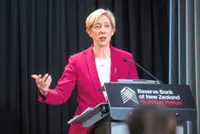
“That’s why when you look at most of the first quarter growth, it’s actually not too bad,” said OCBC Bank chief economist and head of global markets research and strategy, Selena Ling.
However, the outlook could quickly shift as tariff measures begin to take effect.
“If it’s a clear tariff announcement, then we can be done with it after we revise the growth forecast,” she told StarBiz.
She said this lack of clarity has already led to the bank revising downwards Malaysia’s gross domestic product (GDP) forecast from 4.5% to 4.3%, with further adjustments possible depending on the implementation and scale of reciprocal tariffs, particularly in key sectors like semiconductors and pharmaceuticals, which are currently exempted from tariffs.
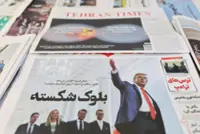
For Malaysia and its Asean neighbours, the challenge isn’t just economic – it’s geopolitical. “With China and the United States accounting for significant shares of Malaysia’s trade and foreign direct investment, taking sides is not an option.
“The United States and China are both our top three trading partners. You can’t kind of antagonise either of them. You want to remain neutral. You want to be open for business on both sides,” Ling added.
This tightrope walk is evident in the growing presence of Chinese brands and technologies in Malaysia – from eCommerce giants like Alibaba and Taobao to electric vehicle makers like BYD.
“There is a growing presence ... so it’s not easy. It’s like a Gordian knot, very hard to cut,” she said.
Despite the gloom, there are emerging opportunities – especially in green infrastructure, the digital economy, and technological productivity enhancements.
“Even for Malaysia, with the green transition, they’ve done well,” Ling said, citing infrastructure and energy transition projects, particularly in Sarawak, as areas of resilience.
In Sarawak, for instance, the push toward renewable energy is gaining momentum.
“They are at the forefront of trying to create and innovate a lot more energy sources for sustainable fuel and hydrogen,” she said, noting the region’s openness to foreign direct investment and new technologies.
One of the more immediate implications of slowing global growth and tariff uncertainty is its impact on interest rate policy.
Bank Negara was previously expected to keep its overnight policy rate (OPR) unchanged until 2026, but the situation has since changed.
“Now that this window has opened up where Asian currencies can actually cut interest rates a little bit to support growth without too much pressure on their currencies, we actually brought forward our Bank Negara OPR cut expectations to the second half of this year,” she said.
“We said that they may cut up to like 50 basis points in the second half of this year.”
The US Federal Reserve is also expected to ease policy. “We still think that they will cut at least two times – maybe September and either November or December. The third cut, if they get pushed out into early 2026, (is) likely to happen,” she explained.
The impact of tariffs on inflation is likely to be uneven across the globe.
“Tariffs are going to be inflationary for the United States, but they may be deflationary for the rest of the world,” she said.
As Chinese exports to the United States decline, excess supply could push prices lower elsewhere.
“If China is not selling all its products to the United States, who is it going to sell to? It will sell to the rest of the world. So, it may actually push prices down for Chinese products to the rest of the world.”
This deflationary pressure could offer additional room for central banks to cut interest rates, further supporting domestic demand in Malaysia and across the region.
While tariff risks and geopolitical uncertainty are clouding the economic horizon, Malaysia still has room to manoeuvre.
With resilient infrastructure activity, a strong pivot toward the green and digital economies and a flexible interest rate policy, Ling believes the country is better positioned than many to weather the coming storm.