
THE fiscal reforms that Putrajaya should embark on, as often suggested by economists and intellectuals alike, have taken their baby steps with the unveiling of Budget 2024 last Friday.
While seen as necessary, one gets a gnawing feeling that the rakyat cannot help but wonder if these steps would lead to an increase in the cost of living as Malaysia moves into 2024.
Hence, at this juncture, perhaps it is more sensible to take a look at some numbers and studies to at least see if the public’s concern can be soothed, as well as other benefits that may be gleaned from the unity government’s efforts to beef up its coffers.
Among the major moves which the government had announced as part of its fiscal strengthening policy are an increase in the sales and service tax or SST from 6% to 8%, the introduction of a luxury tax, the targeted diesel subsidy rollout albeit with exemptions for certain corporations such as logistics companies, and the temporary lifting of the price ceiling on chicken and eggs.
Notably, a number of research houses have emerged with projections that consumer activity should not be affected in a significant way despite these measures, as the government appears to have made avoiding burdening the public as its co-priority.

The inflationary worry
Supportive of the Prime Minister’s revenue consolidation reforms, Centre for Market Education (CME) chief executive Carmelo Ferlito opines that any further delay in bringing about those measures could result in worse market distortions, and thus an even longer and more painful readjustment process.
The economist does not advocate ceilings and subsidies to any degree, believing that their introduction has brought about the anticipated painful exit.
“However, their long-term consequences are even worse,” he says.
Often preferring to look at rising prices and inflation as two different concepts, Ferlito tells StarBizWeek that inflation as it is properly defined is a persistent and generalised increase in prices due to the quantity of money growing faster than production output.
He emphasises, “It is vital for products and services to be provided at market prices, as this allows the production structure to be consistent with consumer expectations.
“If not, unsustainable economic measures may be initiated, giving rise to an unbalanced economy. This is what happens with subsidies and price controls.”
He points out that an adjustment process is a given, but this would be toward prices that are naturally determined by market forces, while suggesting that to make these measures more effective, the government can look towards avoiding unnecessary spending.

Echoing Ferlito’s sentiments, market analyst Hebe Chen of trading firm IG International is of the opinion that a new phase of price normalisation has the potential to reinvigorate the power of the free market, ultimately benefiting the consumer sector.
Nonetheless, she says it is equally important to be prepared for short-term challenges, particularly those stemming from rising fuel prices, considering the heightened uncertainties in the global energy market as the country enters 2024.
The Melbourne-based analyst is expecting inflation in Malaysia to rise in the near term, mostly contributed by higher prices in food and services.
“But as long as inflation remains below the central bank’s targeted level and the labour market remains stable, the window of opportunity for businesses to capitalise on the removal of price ceilings will not be long-lasting,” she says.
From an on-the-ground perspective, professor of economics at Sunway University Yeah Kim Leng estimates that despite the likelihood of price increases on selected items due to the lifting of the price ceiling, the sugar tax hike and fuel subsidy rationalisation as set out in Budget 2024, the consumer sector is expected to remain moderately buoyant with inflation-adjusted growth projected at between 5.5% and 6%.
He opines that the slightly better performance forecast for 2024 compared with this year is based on expectations of higher gross domestic product (GDP) growth, a further decline in the unemployment rate, continuing wage increases and expanded cash aids as well as social assistance for targeted groups.
“While some countries continue to grapple with price shocks and elevated inflation, the overall global economy is experiencing a disinflation, albeit at a slower pace than desired by central bankers,” observes Yeah.
More notably, he says that despite the global food and oil price shocks triggered by the outbreak of the Russia-Ukraine conflict, Malaysia’s inflation in 2022 and 2023 is roughly a third of the global average as well as for developing economies, largely due to sizeable food and fuel subsidies.
With subsidy rationalisation kicking in next year, he reckons consumers will likely face higher prices.
“However, these are not expected to derail or curtail spending, due to sustained income increases and cash transfers that the government is planning to implement for certain targeted groups to offset price increases,” adds Yeah.
There remains, however, doubts as to whether Putrajaya is doing enough to enable a speedier consolidation, particularly in view of its goal to recover from the budget deficit.
Earlier this week, BMI Industry Risk & Country research had reported that the government is targeting to reduce its deficit to 4.3% of GDP in 2024 from 4.9% this year, and further decrease it to 3.5% in 2025.
Executive director of Socio-Economic Research Centre (SERC) and economist Lee Heng Guie says the targeted subsidy rationalisation as “necessary”, albeit painful, to help reduce the government’s fiscal burden.
Nevertheless, he says the Finance Ministry has to work on other expenditure items such as public pension reforms, the optimisation of expenditure and better budgeting management to minimise wastage and leakages.
“The Public and Fiscal Responsibility Act as well as the Government Procurement Act will serve as important tools to ensure fiscal discipline and governance of government procurement,” Lee says.
At the same time, Coface Services South Asia-Pacific Pte Ltd economist Eve Barre sees the government’s fiscal fortification initiatives as modest, given the constant reiteration of its goals.
She observes that although the deficit has been projected to narrow to 4.5% of GDP in 2024 and to average 3.5% between 2024 and 2026, those figures are still higher than the average deficit seen before the onset of the lockdowns in 2020, which was 3.3% of GDP on average from 2015 to 2019.
“As such, the federal government is forecasting public debt to increase from 62% of GDP to 64% at the end of 2024, raising the risk of it breaching the ceiling on statutory debt of 65% in the coming years.
“After two increases in this ceiling in 2020 and 2021, this may tarnish the country’s credibility in terms of public finances,” she cautions.
Barre notes that the apparent consensus surmises that household consumption will remain robust in 2024, stemming from the enhancement of the existing schemes aimed at helping Malaysians cope with the cost of living such as the Sumbangan Tunai Rahmah and the Sumbangan Asas Rahmah programmes, which will ease the negative impact of the previously mentioned measures on consumers.
She makes the consequent observation that as such, the allocation for subsidies and social assistance remains at a historically high level of RM58.1bil, only slightly lower than the RM58.7bil estimated in Budget 2023.
Along similar lines, Ferlito views the lowering of expenditure to be as crucial as the raising of government income, seeing a dichotomy between the desire for fiscal responsibility and higher government spending.
He feels there is space for improvement on lowering the government’s expenditure, in contrast to his commendation of the government’s efforts to strengthen revenue.

He says, “While some quarters favour more aggressive fiscal tightening to strengthen the government’s fiscal position, the gradual approach may be prudent in the face of elevated global uncertainties, as well as higher development and social spending needed to sustain economic restructuring and growth.
“The new tax measures, together with the expected increase in its tax base that closely tracks the expansion of the economy, are expected to enhance the revenue side of the government’s fiscal position.”
In addition, he elaborates that unless there are spending surprises, the planned increase in spending allocations is being kept at a level that will enable the overall fiscal deficit to be lowered from the earmarked 4.3% in 2024.
Fiscal image: A fodder for FDI?
Yeah also recognises that Malaysia’s fiscal vulnerabilities have risen due to a spike in government spending and borrowing to counter the lockdown recession throughout 2020 and 2021 and its aftermath.
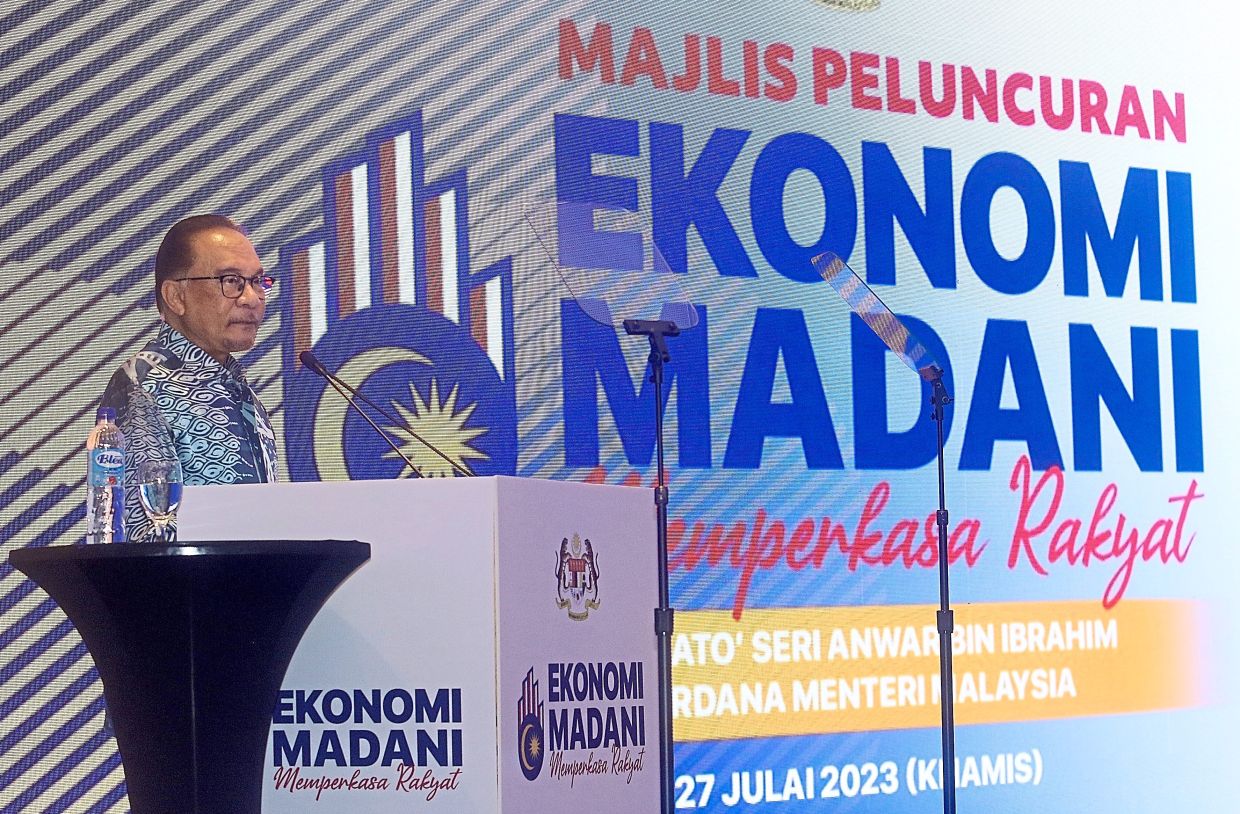
Having achieved political stability and a stable government, he says Anwar has set the direction for the economy with the rollout of the Madani Economy framework and accompanying medium to long-term plans such as the Mid-Term Review of the 12th Malaysia Plan (12MP), the New Industrial Master Plan (NIMP) and the National Energy Transition Roadmap (NETR).
“With that in mind, restoring the country’s fiscal health would be a crucial confidence booster for FDI and DDI.
“Fiscal strengthening will complement the Prime Minister’s drive to restore trust, good governance and integrity which are among the fundamental factors driving investment decisions,” he opines.

Building on that point, SERC’s Lee points out that Putrajaya has to rebuild fiscal strength not only to buffer against future shocks, but also to reassure investors on the country’s financial health, especially on its commitment to reduce deficit as well as to contain debt and liabilities.
The rebuilding of its fiscal health will lend confidence to investors to flock to Malaysia, backed by a better investment climate, coupled with a stable political environment, he says, while envisioning that the rollout of various plans is expected to provide catalysts drawing in foreign investors in high-growth and high-value industries.
Meanwhile, Coface’s Barre concurs with Yeah – and Anwar – that fiscal tightening could improve the risk perception of an emerging country such as Malaysia, by reassuring investors about the sustainability of the country’s public finances.
Echoing Yeah’s point, she says the consolidation is particularly important after the drastic deterioration of the public deficit during the lockdowns and the subsequent drastic rise in the public debt-to-GDP ratio.
She says, “The current context of high US interest rates and geopolitical uncertainty, which increases investors’ risk aversion, also exacerbate the need for greater confidence to attract investment.”
While fiscal stability is certainly one key factor for investors to consider, the strength and outlook of the economy take precedence when it comes to capturing investor attention, quips IG International’s Chen, looking at the issue from a wider angle.
She believes the way the government goes about attempting to strike a delicate balance between these aspects will be closely observed in 2024 and will largely determine the flow of investments into the country, while backing the education and tourism sectors to see significant strides in the year ahead.

In summing up Budget 2024 from a big picture standpoint, Tradeview Capital’s chief investment officer Nixon Wong says while the budget did not disclose intricate details, it aligns with earlier economic plans such as the NETR, NIMP and 12MP.
“These initiatives prioritise long-term economic stability over short-term gains, aiming to attract both FDI and DDI, because reducing debt and maintaining fiscal discipline is important in terms of our sovereign credit rating, fundraising ability, debt cost and even currency strength,” he stresses.
Wong says the lowering of debt increases the country’s reserves; highlighting that a short-term expansionary budget and spending beyond its means is a recipe for disaster for any developing economy.
Already a subscriber? Log in
Get 20% OFF The Star Digital Access
Cancel anytime. Ad-free. Unlimited access with perks.