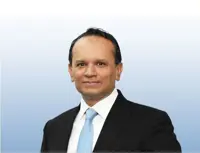
PETALING JAYA: Islamic financial technology (fintech) holds immense potential to serve consumers that are unbanked, uninvested and uninsured, according to Malayan Banking Bhd
(Maybank) chairman Tan Sri Zamzamzairani Mohd Isa.
Speaking during Maybank Islamic’s Global Connect Forum yesterday, Zamzamzairani said fintech can provide integrated solutions to support the Islamic principles of charitable contribution.
These include zakat (tithe), waqf (endowment) or sadaqah (alm), where the innovative integration of these Islamic redistributive mechanisms can become a significant enabler for Islamic social finance.
"Recent research conducted by Maybank Islamic and IslamicMarkets.com in February 2022, among leading Islamic Finance professionals, revealed that nearly 90% of respondents indicated that fintech has already accelerated the digitisation of Islamic finance products and made them more accessible globally while redefining client experiences.
"This goes to prove that despite Islamic fintech is still in its early stages of progress, there are commendable views on it having great potential of exponential growth if a conducive ecosystem is achieved," he said.
Zamzamzairani pointed out that fintech has demonstrated a great deal of innovation in financial services.
It has also contributed to the growth and improvement in many aspects of businesses, including Islamic finance.
With the advancement and enhancement of Islamic fintech, Zamzamzaraini said this has cleared the door for the production of syariah-compliant products and services.
"Financial institutions are now presented with more opportunities to strengthen their infrastructure and product offerings to their customers," according to him.
He further said that Islamic finance is one of the fastest-growing sectors in the global financial industry, growing at a rate of 15% to 25% per year currently.
In addition, Islamic financial institutions manage assets worth over US$2.2 trillion (RM9.3 trillion) globally.
Quoting global data provider Refinitiv, he said the Islamic finance industry is projected to reach US$4.94 trillion (RM20.8 trillion) in 2025. Amid such strong growth performance and prospects, Zamzamzairani discussed how Islamic finance can help create a progressive, inclusive and sustainable impact on the world.
"I believe the answer lies in Islamic finance as its core principle of chanelling funding to the real economy by promoting risk-sharing, avoiding excessive speculations, and limiting debt to the value of assets.
"Sustainability is well entrenched in the doctrine of Maqasid Al-Syariah or the objectives of syariah, which emphasises sustainable developments to promote welfare and prevent harm, not only to humankind but also the environment," he said.
Referring to a joint-study by Maybank Islamic and Schroders about two years ago, Zamzamzaraini noted that it was found that the underlying principles of sustainable investment and syariah investing are closely aligned.
"Given such background, it is pivotal that industry players and regulators continue to play their respective roles to ensure that the industry remains on its impressive growth trajectory while becoming more innovative in its products and services and promoting inclusiveness," he added.
Commenting on Maybank’s sustainability commitment, Zamzamzairani said the group will be mobilising nearly US$12bil (RM50.5bil) in sustainable finance by 2025.
"We are also continuously working to reduce our own carbon footprint with a plan to reach a carbon neutral position for Scope 1 and 2 emissions by 2030 and a net-zero carbon position by 2050," he said.
Already a subscriber? Log in
Get 20% OFF The Star Digital Access
Cancel anytime. Ad-free. Unlimited access with perks.