PETALING JAYA: The digitalisation of government services would serve to curb leakages, fraud and corruption within the public sector, according to Finance Minister Tengku Datuk Seri Zafrul Abdul Aziz.
He said that by moving the traditional government services online, it will reduce direct contact points between citizens and public officials, and hence minimise chances for corruption to occur.
In addition, the digitalisation efforts would also modernise public service delivery, enhance efficiency and expedite direct government assistance to ensure inclusiveness, accessibility, transparency and accountability.
“So far, direct aids have been done mostly on a cashless basis, where applications and payments for Bantuan Prihatin Rakyat and Geran Khas Prihatin are made electronically and online.
“In the near future, under MyDigital, the Finance Ministry will ensure payments for all government services by 2022 are made on a cashless basis.“This will lead to higher transactional security, better coordination, enhanced communication on anti-corruption initiatives and greater ease of sharing information, ” Tengku Zafrul said.
He was speaking at the Malaysian Institute of Accountants (MIA) International Accountants Conference 2021 held virtually yesterday. In his remarks, Tengku Zafrul expressed his appreciation to MIA, among others, for its advocacy on sustainability and the environment, social and governance (ESG) principles.
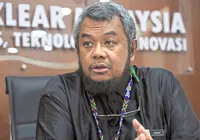
Meanwhile, in a separate panel session that featured economists Mohd Afzanizam Abdul Rashid(pic below) and Prof Jomo Kwame Sundaram, the topic of taxation in the post-pandemic world was discussed.
Jomo said the government should begin discussing greater tax reforms and the introduction of new taxes.
“Unfortunately, in countries like Malaysia, there has been very little public discussion about how to improve taxation.
“There are two major challenges, one is to have much greater tax collection.
“We have a huge problem there because we have many leakages and other problems with the system.
“There needs to be a unified tax system in Malaysia. Why do you have a customs authority that is completely unintegrated with the Inland Revenue authority?
“The other challenge is the progressiveness of the taxation system. We need a far more comprehensive, equitable and progressive view in reforming the system, ” he said.
Jomo (pic below) pointed out that there is a possibility for the government to generate additional revenue by imposing windfall and other capital gains taxes, although he said the tax proceeds “won’t be very much”.
Meanwhile, Mohd Afzanizam said the Covid-19 pandemic had accentuated the level of inequality in society, making it more difficult for the government to prescribe a new taxation system.
“Nevertheless, this crisis has opened up opportunities for the policy makers to rethink what are the best means to not just raise revenues, but also to redistribute wealth between the rich and the poor.
“Obviously, taxation is one of the mechanisms but the philanthropy economy such as donations or in the case of Islamic economy, waqf (endowment), is something that we need to look at more seriously at the moment, ” said Mohd Afzanizam.
Already a subscriber? Log in
Get 20% OFF The Star Digital Access
Cancel anytime. Ad-free. Unlimited access with perks.