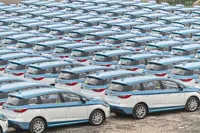
Insight - The latest electric car hurdle: What if you can’t resell it?


There is, of course, the Tesla Inc caveat. Elon Musk’s company has a resale programme that gives buyers a bit of assurance that someone will buy their cars in the future. But most companies can’t afford that, especially as they try to make electric vehicles more affordable while their margins are shrinking

WOULD YOU still buy an electric car if you knew you wouldn’t be able to resell it in the future? That’s the latest hurdle potential buyers are contending with, and it’s bound to become a big driver of demand.

The expenses of owning an electric vehicle have always stood in the way of mass adoption, even in China, which has an extensive subsidy programme.

Starting from the cost of the battery to how far a charge will take drivers, not to mention the shortage of points where they can plug in, there’s a lot to grapple with before green cars can overtake those powered by internal combustion engines.

Much of the anxiety stems from batteries – the price, technology, density, and where to charge them. Manufacturers have worked for years to bring down the price on a per kilowatt-hour basis.

Technology has improved, with different materials helping cars run longer and further, thus needing less charge. The chemistry has become more stable.

In May, for instance, Svolt Energy Technology Co, owned by the parent of China’s Great Wall Motor Co, launched the world’s first battery that doesn’t use the controversial yet once-essential cobalt.

It costs less than the mainstream competition and has higher density, meaning more energy is packed into the same volume.

So the good news is, battery prices are dropping.

That also means that the cost of electric vehicles is coming down (though the good ones still aren’t that affordable), since batteries typically account for 50% to 60% of their value.

But therein lies the trap: As the technology evolves and drives prices of new vehicles lower, existing owners are taking a disproportionate beating in the secondhand market.

The average resale value of electric vehicles and plug-in hybrids is less than 40% of the original purchase price, versus 50% to 70% on conventional cars.

Goldman Sachs Group Inc analysts note that consumer concerns about the quality and reliability of “old batteries appear to weigh on used cars’ prices.” That doesn’t really help make the case for current new buyers, either.

Then there are underlying demand trends. Sales of all cars were falling even before Covid-19. The market for batteries has been inching lower across the US, China and Europe. Installations fell around 30% in June from the previous year in the world’s largest auto market, China.

Driven by regulatory pressures, vehicle manufacturers are tying up with and taking big stakes in battery makers to push forward ways to make greener cars.

But confidence to buy them hasn’t picked up in most countries, despite subsidies in some shape or form to encourage sales. Meanwhile, the auto market in China is maturing and that has changed preferences, too.

Post-pandemic, the last thing consumers will want to buy is an asset that depreciates faster and is more expensive than its main competition, in this case, cars with internal combustion engines.

Purchases are being delayed until automakers drop their prices for electric cars in China.

It’s unclear whether Beijing can shore up vehicle demand via subsidies in a big way as it has in the past, though some local authorities have extended rebates and tax incentives to boost short-term sales in recent months.

The central government is trying a different tack, announcing a Green Mobility Initiative to push for electric buses in public infrastructure.

Growth in batteries has been driven less by passenger cars than by installation in buses. In the Covid-19 era, it’s less clear if consumers (those with a choice) will want to hop on public buses to commute.

There is, of course, the Tesla Inc caveat. Elon Musk’s company has a resale programme that gives buyers a bit of assurance that someone will buy their cars in the future.

But most companies can’t afford that, especially as they try to make electric vehicles more affordable while their margins are shrinking.

Buying an electric car is a lot tougher than it sounds, and will stay that way until consumers can justify the hole in their wallets. — Bloomberg

Views expressed here are the writer’s own.

By ANJANI TRIVEDI

Get 20% OFF The Star Digital Access

Monthly Plan

RM 13.90/month

RM 11.12/month

Billed as RM 11.12 for the 1st month, RM 13.90 thereafter.

Best Value

Annual Plan

RM 12.33/month

RM 9.87/month

Billed as RM 118.40 for the 1st year, RM 148 thereafter.

Follow us on our official WhatsApp channel for breaking news alerts and key updates!
electric car , resale , Tesla , battery , post-pandemic ,

Next In Business News

SMEs' strong 2025 performance reflects resilience amid global uncertainties
Komarkcorp to sell Cheras factory for RM40mil
Bina Puri posts RM107.9mil loss on impairments, high financing costs
F&N says price hikes only as last resort amid manageable cost pressures
Oxford Innotech secures RM8.8mil semiconductor orders
Kumpulan Jetson uncovers governance lapses in forensic review, weighs legal action
E&O, Majestic Gen to acquire prime Jalan Kia Peng site for high-rise homes
Ringgit ends week marginally higher against US dollar
Genting Plantations raises RM200mil via first sukuk issuance
WCT to acquire remaining 30% stake in Jelas Puri for RM140mil

Others Also Read