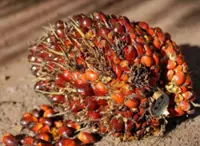
PARIS: A ban on palm oil due to fears it may cause deforestation could displace rather than halt global biodiversity losses as it would likely increase output of other oil crops to meet rising vegetable oil demand, an international survey showed on Tuesday.
Palm oil has been at the heart of heated debate in recent years, notably in the European Union where the Parliament has suggested banning its use in transport fuels altogether, raising outcry in top world producers Indonesia and Malaysia.
An EU deal was adopted earlier this month to phase out of its use by 2030.
The report released by the International Union for Conservation of Nature (IUCN) acknowledged palm oil was eating into tropical forests and stressed that because palm trees were grown in the species-rich tropics, its production could have catastrophic effects on global biodiversity.
The Switzerland-based IUCN, a group of governments, conservation organisations and scientists, said palm oil production was threatening over 190 species, with orangutans, gibbons and tigers among those suffering severe harm.
Areas into which palm oil could potentially expand are home to more than half of the world's threatened mammals, and almost two-thirds of all threatened birds, the report found.
But if other oil crops - which require up to nine times as much land to produce than palm oil - were to replace palm oil the damage could shift to ecosystems such as the South American tropical forests and savannahs, IUCN said.
"Palm oil is decimating South East Asia's rich diversity of species as it eats into swathes of tropical forest," report lead author and Chair of IUCN's Oil Palm Task Force Erik Meijaard said in a statement.
"But if it is replaced by much larger areas of rapeseed, soy or sunflower fields, different natural ecosystems and species may suffer."
The report was released on the sidelines of the European conference of the Roundtable on Sustainable Palm Oil (RSPO) in Paris.
Certified palm oil had so far proven to be only marginally better in preventing deforestation than its non-certified equivalent, the report said. It noted, however, that the approach was relatively new and held potential for improvement.
The organisation also called on governments to protect forests in all vegetable oil producing countries and limit demand for non-food uses of palm oil such as biofuels.
The IUCN report comes in response to a 2016 resolution adopted by its government and non-governmental members, and aims to provide a constructive path to improving sustainability in the palm oil industry, it said.
It only looks at palm oil's impacts on biodiversity, not its social or economic impacts, which should be addressed next year. - Reuters
Already a subscriber? Log in
Play, subscribe and stand a chance to win prizes worth over RM39,000! T&C applies.
Cancel anytime. Ad-free. Unlimited access with perks.