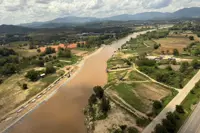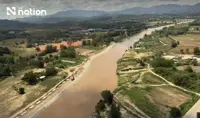
Authorities have found dangerous levels of arsenic and lead in shellfish and other species in rivers contaminated by suspected mining pollution from neighbouring Myanmar, an official said.
The findings, from nearly two years of testing, prompted authorities to urge residents to avoid eating 10 species including shellfish and river snails.
The warning came earlier this week, but with no details of the contamination levels found and testing processes.
An official from Thailand’s fisheries department, speaking on condition of anonymity as they were not authorised to talk to media, said that over 500 samples were taken from five rivers, and 18 had heavy metals at levels over safety limits.
The details came as Thai officials held talks in Bangkok to try to address growing public fears about river contamination from mining operations in war-torn Myanmar.
Heavy metals including mercury, lead, cadmium and arsenic were found at levels exceeding safety standards in 10 species, the fisheries department official said.
In some, arsenic was detected at nearly four times the permitted limit and lead at nearly six times the limit.
The affected species include freshwater shrimp, river snails, freshwater mussels and horse mussels, as well as local fish that feed on them, the official said.
The official said the tests involved samples from the Mekong and Salween rivers, which flow through Thailand and Myanmar, and three other rivers in Thailand’s north, the Sai, Kok and Ruak.
No contamination was found in farmed aquatic species, the official added.
Local residents in Thailand’s north and northeast have for months complained about river contamination from mines in Myanmar, but the issue has gathered growing public attention in recent weeks.
Tap water supplies to 14 villages in Mae Sai district near the Myanmar border were suspended this month after officials found arsenic levels in the local waterworks to be 30 times higher than safe limits.
Campaigners, experts and politicians trace the pollution back to mining in Myanmar, where the long-running civil war has led to unregulated exploitation of natural resources.
In a bid to spur action, residents this week prepared traditional dishes with locally-caught food from affected areas and invited politicians, attempting to highlight the risks they now face.
There are fears contamination could spread further down the Mekong, which supports millions of people across several countries.
“Fish are harder to find and even if you find, people won’t buy it,” said Saengwaree Suvirakan, a farmer from Chiang Mai, who joined a protest in Bangkok this week. — AFP