



An elite university in eastern China has spent more than 30 million yuan (US$4.6 million) installing a smart classroom system to track students’ “head-raising rate” – an indicator intended to reflect their attentiveness during lectures – and link it to their academic scores.
Nanjing University, in Jiangsu province, came under fire after some students shared on social media that the smart system would go into operation in the first week of November, Haibao News reported.
The system, which has multiple cameras installed in each classroom, tracks attendance, tardiness and students’ head-raising rates.
Students were told by their teachers that the data collected would affect their assessment scores, and that those who performed poorly in class could even lose their eligibility to sit exams.
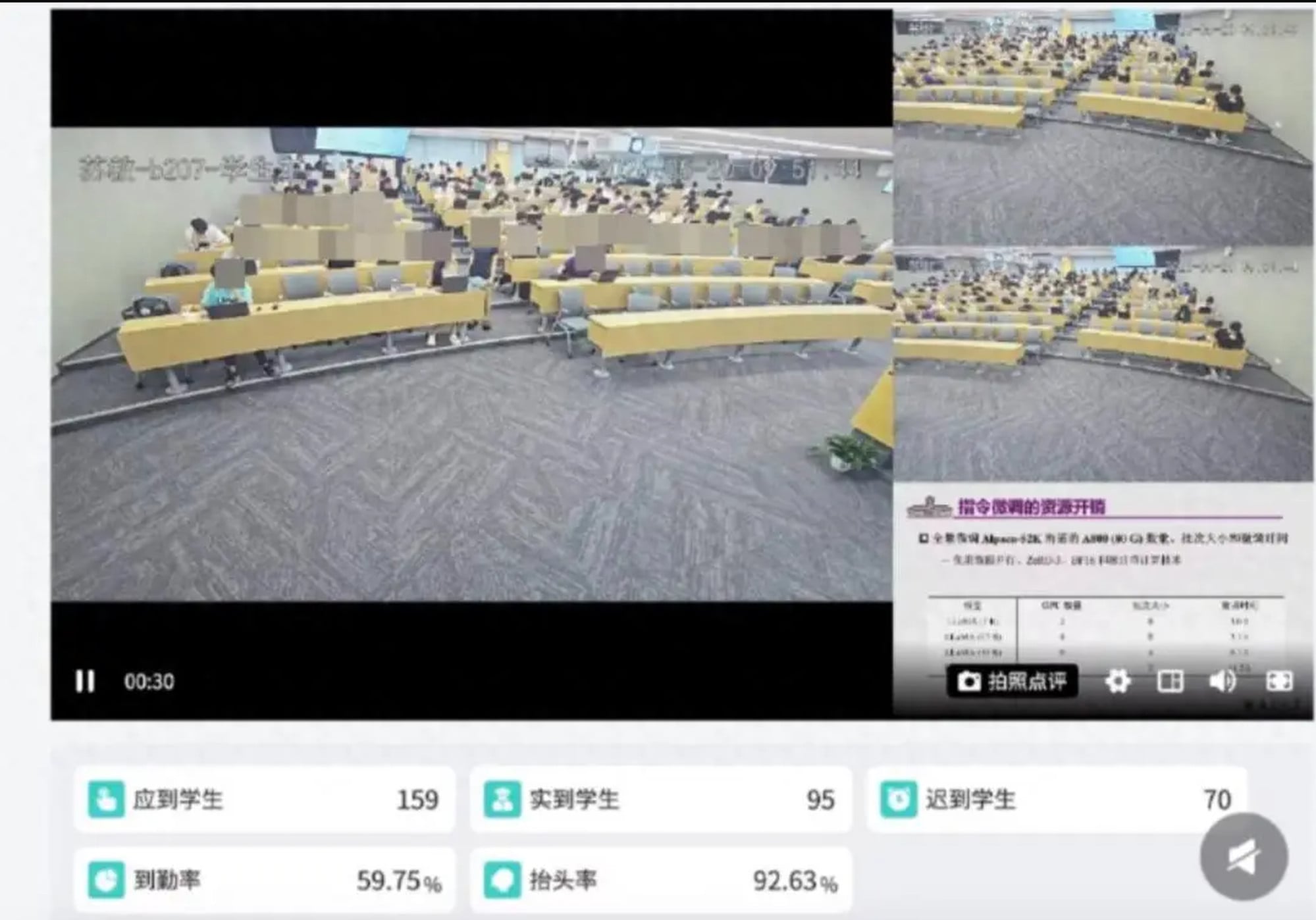
The system was installed in 113 classrooms during the summer holiday. The project, which cost 31.52 million yuan (US$4.7 million), includes facial checking and recognition, people counting, and the tracking of head-raising rates, according to its tender document.
The news drew significant attention online in China, as Nanjing University is among the country’s top 10 higher education institutions.
Students’ concerns and dissatisfaction grew, with some saying they feared their privacy would be infringed and their facial data collected by the university and the technology company involved.
Amid intense public pressure, the university said in a statement on November 4 that the smart classroom system would not be used to track head-raising rates, as teaching and learning methods in today’s classrooms are diverse.
The university also pledged that, without authorisation, the system would not collect biometric data or recognise faces.
Xiong Bingqi, director of the 21st Century Education Research Institute, told the SCMP that even if students raised their heads in class, it did not necessarily mean they were following the lecturer’s line of thought.
“If the lecture content is not engaging and the school uses high technology to force students to raise their heads and listen, or to sit in the front rows, it will not actually improve teaching outcomes,” Xiong said.
“It is simply formalism in management,” he added.
Nanjing University is not the first Chinese university to install a smart system to supervise and monitor classroom activities.
In 2024, Hangzhou Normal University in eastern China’s Zhejiang province installed a classroom-monitoring platform to capture and analyse information about classroom interactions.

China University of Mining and Technology in Jiangsu province said last year that its smart classroom platform could not only track attendance and analyse students’ “classroom status”, but also transcribe speech in real time and identify sensitive words.
A report published in June by the education news portal cernet.edu.cn said a teacher at an unnamed Chinese university received a poor teaching assessment after the classroom AI system recorded students lowering their heads to use their phones a combined 300 times.
It turned out that the students had been checking materials on their devices to prepare for group discussions.
One student in the class was labelled as having an “attention disorder” after being filmed with his head lowered throughout the lesson. In fact, he had been taking notes. -- SOUTH CHINA MORNING POST
