
HANOI: Nguyen Thuy Quynh, 47, saw an opportunity in the education sector 20 years ago when she was working as an interpreter and translator, having graduated from Hanoi University with a major in English.
Vietnam had been pursuing an open-door policy of economic reform, and with the influx of foreign investment, the country was desperately in need of an English-speaking workforce.
Quynh and her husband decided to open an English-language centre in their home town of Ninh Binh, near Hanoi. Two decades later, the business is thriving, enrolling hundreds of students each year. It has provided her family and employees with steady incomes, and helped her send her three sons overseas to study.
The interpreter-turned-manager told The Straits Times that she draws between 50 million (S$2,500) and 60 million dong every month from the business, making her family “definitely middle class”. That includes a monthly salary of 20 million dong for managing the centre – a far cry from the early days, when she paid herself nothing.
Her monthly earnings are well above Vietnam’s national median income of roughly 7 million dong a month, and nearly five times the average urban salary of 10.6 million dong.
Quynh and her husband started the business with a few hundred dollars they managed to scrape together, and recruited teachers from among her university mates. The language centre broke even within 12 months, and profits have grown steadily since.
“Mind you, there are millions like us in Vietnam,” Quynh told The Straits Times. “Làm giàu, which literally means making rich, or becoming richer, is the buzzword nowadays.”
Vietnam’s economy is booming, attracting investment and creating a growing middle class – projected to make up 26% of the country’s 102 million population in 2026, up from 13% in 2023. But much of that growth is driven by foreign companies and concentrated in a few sectors, raising questions about how widely the benefits of growth are being shared, and whether domestic businesses can capture more of the value.
The changing face of Vietnam
Quynh’s journey to middle class reflects a much broader transformation in Vietnam, where four decades of economic reform have helped turn one of the world’s poorer countries into one of South-east Asia’s fastest-growing economies.
Sweeping economic reforms known as Doi Moi, introduced in 1986, opened up the country to foreign investment and private enterprise after years of war, economic hardship and widespread poverty.
By the end of 2026, the International Monetary Fund projects that Vietnam’s average economic output per person will exceed that of Indonesia, ASsean’s largest economy. This would put Vietnam in fifth place, behind Singapore, Brunei, Malaysia and Thailand.
Yet the benefits of this rapid expansion have not been felt equally. Economists say wages have struggled to keep pace with the cost of living, putting pressure on household purchasing power.
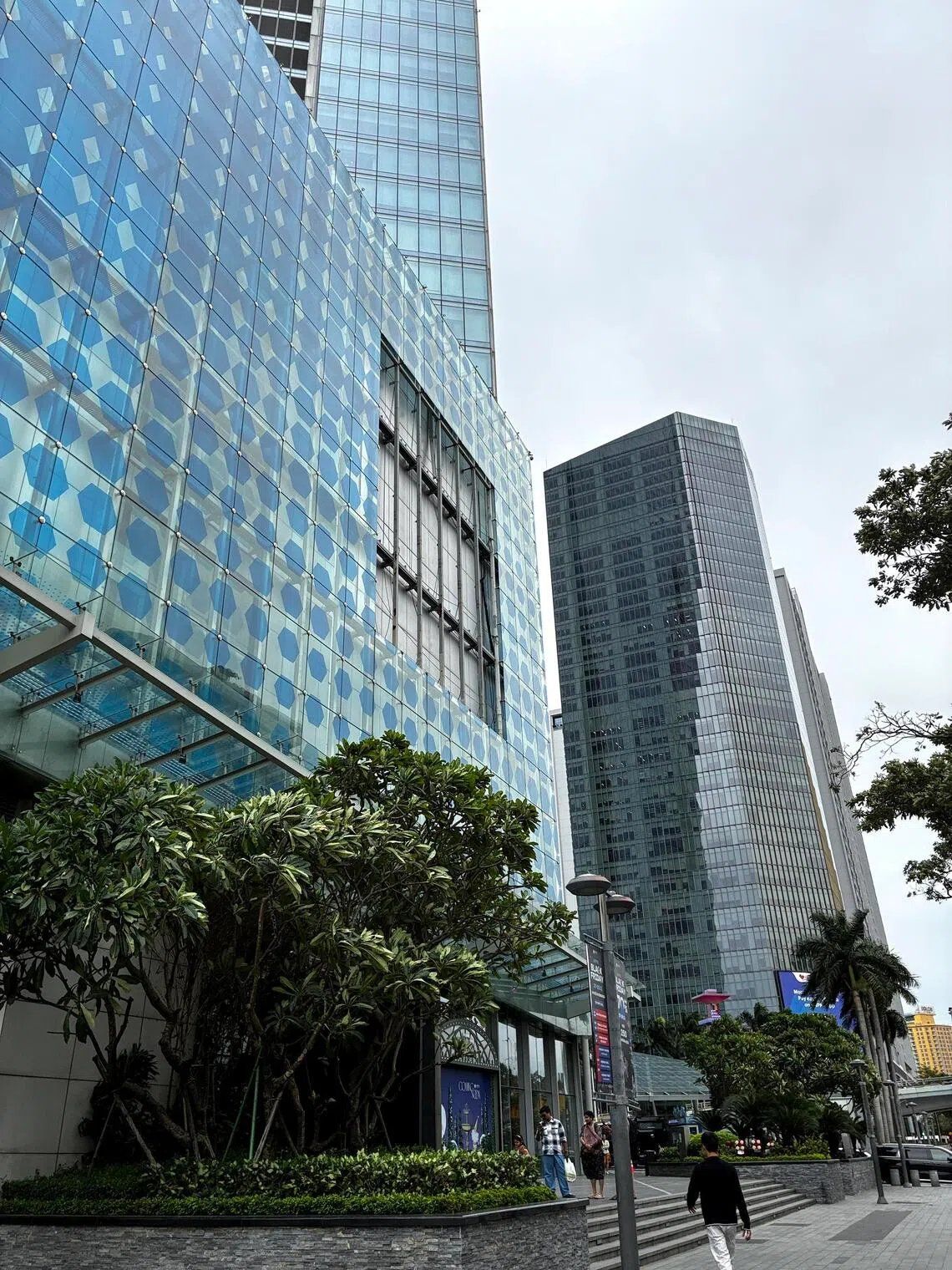
In the bustling Ngoc Ha neighbourhood north-west of Hanoi, a metro station is taking shape right next to a luxury housing complex that also houses a shopping mall. Across the street stands the Lotte Centre, a 65-storey skyscraper whose observation deck offers spectacular bird’s eye views of Hanoi’s skyline.
Just a few hundred metres away, builders are busy working on another high-end apartment complex which, despite being months away from completion, is already selling for more than 190 million dong per square metre.
According to real-estate firm CBRE, that asking price sits firmly in Hanoi’s high-end tier – roughly double the city’s current average for new apartments, and nearly five times the roughly 40 million dong per square metre recorded five years ago. While the figure is a striking illustration of the growing purchasing power of Vietnam’s affluent consumers, it also raises questions about housing affordability.
Three decades of economic transformation
In the past 35 years or so, Vietnam’s gross domestic product (GDP) per capita has surged more than 40-fold – climbing from roughly US$120 (S$155) in 1990, when it was among the poorest countries in the world, to more than US$5,200 in 2026, according to the International Monetary Fund (IMF). The leap underscores just how far the country has come from being one of Asia’s poorest economies.
The Fund projects Vietnam’s GDP per capita to rise 8.9 per cent in 2026 to US$5,259, overtaking Indonesia’s US$5,153 to rank fifth in Asean behind Singapore, Brunei, Malaysia and Thailand.
Vietnam’s GDP grew on-year by 9.95 per cent in the third quarter and 9.01 per cent over the first nine months of this year, according to the National Statistics Office. The Vietnamese government has officially set a target of at least 10% for full-year 2026, while the IMF has projected real GDP growth at 8.4%.
“The fact that Vietnam’s economy is expanding is not surprising,” said Jonathan London, a former senior economic adviser for the United Nations Development Programme in Vietnam, pointing to the government’s push to stimulate growth through heavy spending on infrastructure and real estate.
Meanwhile, Michael Kokalari, chief economist at Vinacapital, a Vietnam-based investment and wealth management group, sees public infrastructure spending rising about 50% this year from 2025 levels, equivalent to roughly 6% of Vietnam’s GDP.
Equally vital is foreign direct investment (FDI), drawn by competitive wages, a skilled workforce, political stability, proximity to Asian supply chains and free trade agreements, he said.
“The amount of money flowing into the country is incredible, and it’s all voluntary,” Kokalari told ST, noting that companies are choosing Vietnam for its commercial fundamentals rather than regulatory mandates.
In the first nine months of 2026, registered FDI increased 76.4 per cent on year to US$50.36 billion, with Singapore as the top investor, according to the Finance Ministry.
Following the classic East Asian export-manufacturing model of Japan, South Korea and Taiwan, Vietnam “has successfully transitioned from low-value items like garments and furniture to high-tech goods, which now account for nearly 50% of total exports”, Kokalari said.
Driven by tax incentives, industrial parks and anchor tech giants like Samsung and Apple suppliers, the shift spans smartphones, computers and electronic components – though economists have noted that much of the high-value production remains foreign-owned, with local firms focused mainly on assembly.
Competing with Thailand
Pavida Pananond, a professor of international business at Thammasat University in Bangkok, Thailand, said Vietnam’s next challenge is to ensure that more of the economic value generated by foreign investment stays within the country.
“FDI alone cannot deliver lasting prosperity if the value is not captured within the country,” she said.
“There is likely to be a limit to the current pace of growth unless Vietnamese firms move up the value chain and become drivers of economic dynamism in their own right.”
The Vietnamese government has set an ambitious target of at least 10% annual GDP growth between 2026 and 2030, with GDP per capita reaching approximately US$8,500 by 2030 – which would be around Thailand’s current level.
The targets reflect Vietnam’s ambition to close the economic gap with more developed regional neighbours, particularly Thailand, which has traditionally had a higher income per capita.
“The rivalry (between the two Asean neighbours) is real,” Pavida told ST. “Vietnam has already overtaken Thailand on many measures, particularly growth and exports.”
“Thailand may still be ahead in industrial depth and the breadth of its local supplier base... but Hanoi is catching up fast, thanks to its push on infrastructure, FDI incentives, trade networks and domestic institutional reform.”
Kokalari noted that, unlike Thailand, whose demographic dividend peaked around 2015, Vietnam enjoys positive demographic tailwinds that are expected to support GDP growth for another decade.
“Thailand has a demographic problem that it won’t escape for the next 10 to 20 years. Vietnam’s demographics continue to be very positive. In fact, Vietnam and India are really the only two countries where demographics are kind of a plus to GDP growth every year.” By demographics, he was referring to the accelerated economic growth that can occur when a country’s working-age population (typically ages 15 to 64) grows larger than its dependent population (children and older adults).
“Looking at the talents, the raw material, and how smart and how left-brain capable people are here, I am extremely optimistic,” he said, adding: “The thing to focus on is the higher education system, in particular training more engineers and focusing on science and technology.”
Challenges and risks
London, who is currently associate professor of political economy at Leiden University in the Netherlands, noted that Vietnam’s development strategy hinges on boosting productivity through new technologies and scientific innovation.
However, whether Vietnam will succeed in overhauling its economy – and how far it gets – remains “substantially unclear”, he said.
Another concern is whether Vietnam’s impressive economic growth is translating into comparable gains for local businesses and ordinary workers.
Economist Bui Ngoc Son, a former senior official at the state-funded Institute of Vietnam and World Economy, pointed out that headline GDP figures can mask how little of the value generated by foreign factories actually stays in domestic hands.
While foreign investment drives exports and domestic capital flows heavily into property and infrastructure, other sectors have seen fewer breakthroughs, he added.
As a result, wages for many salaried workers – particularly in the public sector – have struggled to keep pace with rising living costs.
“Before 2008, a bowl of pho cost 5,000 dong. At that time, the salary for someone in my position as a government official was 2.8 million dong,” Son recalled. “Today, that salary has only risen to about 9 million dong, but a bowl of pho now costs 40,000 dong. That’s an eightfold increase, whereas the salary has increased by only three times.”
To close that gap, the government must invest in higher-value industries and strengthen domestic production capabilities, he said, “so that people can make cars, trains and semiconductors instead of simply assembling products for foreign companies, such as those from China”.
The biggest shortcoming, in his view, is the lack of policies to nurture supporting industries – the local suppliers of components, materials and services that feed into larger manufacturing operations – leaving Vietnam at risk of remaining an assembly and transshipment hub rather than moving up the value chain.
Quynh remains optimistic about Vietnam’s economy and her business prospects.
“Of course, I am lucky because there is always demand for foreign languages,” she told ST. “I know the difficulties that some small businesses are facing because of rising property prices and falling consumer demand.
“But the trend is upwards, I believe in it.” - The Straits Times/ANN