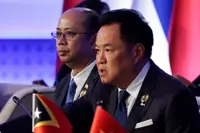
Prime Minister Anutin Charnvirakul has insisted that his government is ready to listen to demands from Generation Z protesters calling for its resignation, while dismissing concerns that the demonstrations could escalate into unrest similar to youth-led movements in other countries.
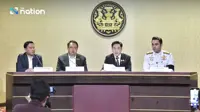
Speaking to reporters yesterday, Anutin, who also serves as interior minister, said the government respected the public’s constitutional right to express opinions and stage demonstrations, provided such activities remained within the law.
The comments came amid protests by young people expressing dissatisfaction with the government’s handling of several issues and demanding political change.
Anutin stressed that the government was not ignoring the protesters and had mechanisms in place to receive, report and assess their demands.
He said relevant officials would examine the proposals to determine which could realistically be implemented and identify the agencies responsible for taking further action.
“The government is ready to listen to every demand, as long as people are exercising their constitutional rights within the law,” he said.
Anutin emphasised that the process went beyond simply acknowledging the protesters’ concerns, assuring the public that officials would report the issues raised and consider possible solutions.
Where proposals were found to be feasible, they would be forwarded to the appropriate government agencies for implementation, he added.
Asked whether the government had assessed the possibility of Gen Z demonstrations escalating in a similar manner to youth-led protest movements in other countries, Anutin said, “No.”
Reporters then asked whether he had personally reviewed the protesters’ speeches and specific demands, and he said he expected to receive a report on the matter.
However, when pressed on whether any of the protesters’ proposals could actually be implemented, the PM declined to provide a direct answer.
He merely nodded, thanked reporters and walked away, bringing the interview to an end.
Anutin’s remarks left unanswered which, if any, of the protesters’ demands the government would be prepared to adopt.
On Friday, students and young activists gathered at Bangkok’s Democracy Monument, demanding education reform, greater youth participation in policymaking and action from Anutin’s government.
Organisers insisted the demonstration was independent of political parties.
The rally, organised by student networks including Studem Network and Free Thai Youth, coincided with World Children’s Day and was held under the theme, “Wear cat ears to chase out Noo”.
The slogan plays on the nickname of Anutin, who is widely known as “Noo”, meaning mouse or rat in Thai.
Protesters began gathering at around 3pm, with some wearing school or university uniforms and cat-ear headbands as a symbolic gesture.
Participants set up a cordoned-off speaking area near McDonald’s in Ratchadamnoen Avenue, where speakers criticised Thailand’s education system and the government’s performance.
Demonstrators also created placards highlighting educational inequality and other social concerns.
Teerapat, a representative of the student and youth network, said the demonstration was inspired by World Children’s Day and the growing wave of Gen Z-led protests worldwide.
He argued that Thailand’s education system remained deeply unequal, with access to quality secondary and university education often dependent on financial circumstances.
Many young people, he noted, were forced to take out student loans before entering the workforce, despite uncertain employment prospects after graduation.
He also criticised the limited opportunities for students to influence school policies and questioned the drafting of the proposed National Education Act, raising concerns about the involvement of individuals who had also helped draft the 2017 Constitution.
Beyond education, protesters called for an end to compulsory military conscription and discrimination based on race or nationality.
Teerapat criticised nationalist sentiment surrounding the Thai-Cambodian conflict, arguing that tensions had caused economic and social harm rather than benefiting either country.
He stressed that migrant workers contributed to Thailand and should not be treated as threats to the country.
Addressing accusations that political parties were orchestrating the demonstration, Teerapat firmly rejected claims of outside political control.
“We are not slaves to political parties. Political parties are supposed to serve the people,” he said. — The Nation/ANN