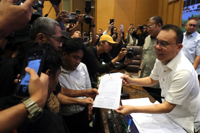
JAKARTA: (Bernama) Indonesia’s Parliament passed the Asset Forfeiture Law Related to Corruption and Other Criminal Offences on Thursday (Nov 19), allowing authorities to recover proceeds from corruption and other serious crimes, in certain circumstances even without a criminal conviction.
The legislation passed during a plenary session chaired by House of Representatives (DPR) Speaker Puan Maharani, after the government formally endorsed it on behalf of President Prabowo Subianto.
House Commission III chairman Habiburokhman said the law (Undang-Undang Perampasan Aset Terkait Tindak Pidana Korupsi dan Tindak Pidana Lainnya), first proposed 18 years ago, marked a shift in law enforcement towards recovering losses suffered by the state and victims, rather than focusing solely on imprisoning offenders.
"The paradigm of the Asset Forfeiture Law is not merely about imprisoning offenders, but also about recovering losses suffered by the state and victims,” he said while presenting Commission III’s report during the parliamentary plenary session, which was broadcast live on the DPR’s official YouTube channel.
The legislation had faced years of delays despite Prabowo’s endorsement in May 2025 and public pressure for its passage. This included an August demonstration that preceded a parliamentary pledge to approve the bill by Dec 15.
Habiburokhman said the legislation would address cases in which perpetrators of fraudulent investment schemes opted for imprisonment while retaining trillions of rupiah obtained from victims, leaving the stolen funds unrecovered.
He said the legislation primarily targeted corruption but also covered drug-related offences, terrorism, human trafficking, arms smuggling and large-scale fraud, including fraudulent investment schemes and Hajj and Umrah travel scams.
"We have received input from the public on what would happen if the Asset Forfeiture Law were used by those in power to eliminate their political opponents or by law enforcement officers to extort citizens. We have strengthened oversight protocols to make the law very difficult to abuse,” he said.
Meanwhile, Administrative and Bureaucratic Reform Minister Rini Widyantini, representing Prabowo, said existing asset forfeiture provisions were scattered across different laws, while efforts to recover criminal proceeds remained hampered by procedural obstacles and reliance on criminal convictions.
"The state’s responsibility to recover losses resulting from criminal offences and promote public welfare is carried out through effective, fair and professional law enforcement mechanisms to ensure that proceeds of crime can be returned to the state and rightful victims,” she said while delivering the President’s final remarks on the bill during the plenary session.
According to state agency Antara, Articles 6 and 7 of the law allow authorities to seek the forfeiture of assets worth at least Rp1 billion without a criminal conviction under specified circumstances, including when an offender has died, fled, suffers from a permanent illness, or cannot be identified or located.
The law will take effect 12 months after its promulgation. Its implementation is subject to the establishment of an asset management agency and an independent supervisory body. It will apply only to offences committed after it comes into force. - Bernama