Singers from 11 nations will compete in the first Asia edition of Eurovision, the televised contest known for its lavish outfits, soaring vocals, geopolitics and the tantalising possibility of global stardom.
A K-pop star and a Bhutanese singer on his first trip abroad are among the contestants performing live at the Eurovision Song Contest Asia in Bangkok today, potentially watched by millions on TV and online.
Many of the Asia entries had never heard of the contest but understood the Bangkok show offers a huge platform, broadcasts live in participating countries and several others as well as on YouTube.
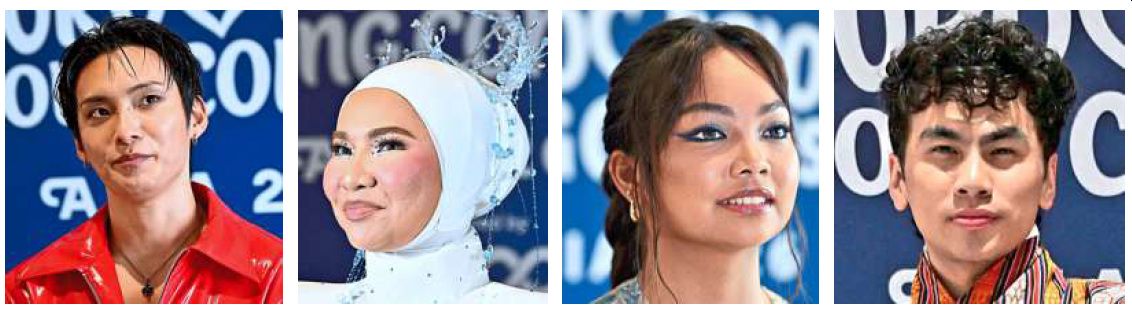
“I’m not a star, but I want to be. I want more fame and a bigger stage,” said Junhee, the South Korean entry bringing K-pop energy in shiny red trousers and a matching jacket exposing his bare chest.
Malaysia’s Aina Abdul cites one-time Eurovision winner Celine Dion as one of her musical inspirations, and says it was “about time” the show came to Asia.
“We are music enthusiasts; we want to be noticed. And we feel like Eurovision is the best platform for us,” she said, showing off her lavish blue-and-white dress for today, which took 600 hours of work to make.
Aina is already a star in Malaysia, known for her powerful vocals and extravagant outfits, but those fans cannot vote for her performance in Bangkok.
A quirk of the contest is that viewers cannot vote for the candidate from their own country – meaning friendly nations often back each other.
“I hope they are strategic enough so that even though they’re voting for someone else, I can still win!” she said, laughing.
Unlike the long-running Eurovision show, which is organised by national public broadcasters, the inaugural Asia contest is being run by commercial TV stations – and many chose national representatives who already had an established fan base.
For 19-year-old Carmelle from the Philippines, the contest is the latest chapter in a TV and singing career that began when she was a child.
Sobra-Sobra (“Too Much”) is an upbeat song about women’s empowerment, where she declares that anyone who says she is too much for them, is not enough for her.
“This is how Filipina women are: strong, fierce, independent,” she said.
Bhutan’s Nyendra, a 24-year-old singer-songwriter who had never before left his home country, admitted that “nobody knows me”.
But he hopes to show off the culture of his tiny nation of 800,000 people, including by wearing handmade traditional national dress on stage.
Winning, he said, “would mean the entire world to us, not only for me, but for the entire country.” — AFP