



For people with diabetes and serious foot wounds, few words are more frightening than “amputation.” A wound that seems minor at first can quickly become dangerous as infection spreads, tissue is damaged and healing slows.
But Dr. Raymond Rony Pav, director of the 24-Hour Family and Surgery Clinic, says amputation should never be considered without carefully assessing the patient and whether the limb can be saved.
Drawing on his experience in orthopaedics and plastic and reconstructive surgery, Dr. Raymond focuses on complex wounds, particularly diabetic foot ulcers. His aim is to preserve as much healthy tissue and limb function as possible.
“Diabetic patients with chronic wounds need a comprehensive approach. The problem may involve not only the skin, but also infection, tissue damage and poor circulation,” he said.
The clinic initially treated minor wounds before seeing patients with more serious conditions. Some arrive with wounds so severe that they risk losing a limb, Dr. Raymond said.
In such cases, the team first assesses the cause of the wound, the severity of the infection and the condition of the surrounding tissue before deciding on treatment.
“Our goal is to save as much of the limb as possible so the patient can still use it and live a normal life,” he said.
Treatment may include identifying the infection, prescribing appropriate antibiotics and providing wound care in stages. Damaged or unhealthy tissue is removed when needed, often after the infection has been brought under control and the wound shows signs of improvement. Tissue with the potential to recover is preserved where possible, while further care supports the growth of new tissue.
The clinic also offers Advanced Oxygen Wound Therapy, which uses high-concentration oxygen as part of wound care. It may be used for diabetic foot ulcers, chronic and post-surgical wounds, pressure ulcers and certain injuries.
Dr. Raymond stressed that oxygen therapy is not suitable for every wound or every patient. Treatment decisions depend on factors including infection, blood supply, tissue damage and blood-sugar control.
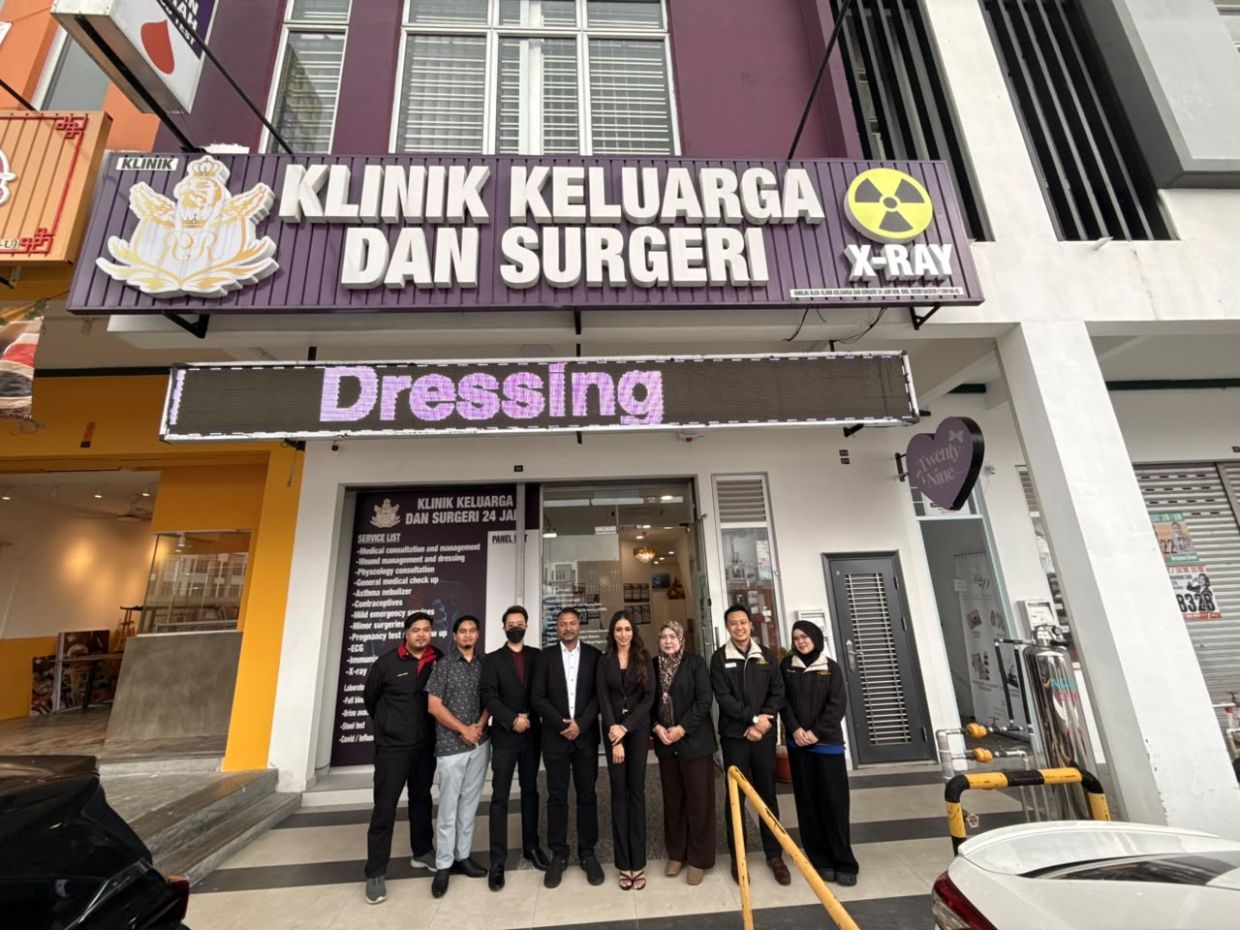
Dr. Raymond’s commitment to helping patients grew from his own experience of financial hardship. Growing up in a family with limited means, he saw how difficult it could be for people with fewer resources to access proper healthcare. That experience helped inspire him to pursue medicine.
He began his career as a medical officer at Sultan Ismail Hospital, where he gained experience in orthopaedics and treated cases involving fractures, cancer, tissue injuries and musculoskeletal conditions. He later pursued experience in plastic and reconstructive surgery at Sultanah Aminah Hospital, building skills in tissue recovery and complex wound management.
In 2014, he established the 24-Hour Family and Surgery Clinic to widen access to treatment, including for patients unable to afford care at private hospitals. He said his wife and mother-in-law provided significant financial support during the clinic’s early years.
The clinic now has two branches in Johor. Its services include medication management and blood-sugar control, as well as regular foot examinations and prompt treatment for injuries.
