
The villagers who first spotted the five baby orang utan in a casuarina forest in India in early September were puzzled by their reddish hair and unfamiliar faces.
The three males and two females, aged six to eight months, were left on a plantation in eastern India’s Odisha, over 2,700km from their native rainforests in Borneo and Sumatra, evidence of a growing illicit trade of apes being trafficked into India.
They are now at an Indian zoo, where keepers reportedly have been playing classical music to soothe them.
Wild orang utan are native only to the islands of Borneo and Sumatra, where they sustain rainforests by spreading seeds across vast areas, allowing trees to regenerate and store carbon that would otherwise contribute to global warming.
The species is critically endangered, threatened by severe habitat loss. There are about 119,500 orang utan left in the wild, according to conservation organisation World Wildlife Fund.
The global illegal wildlife trade is estimated to be worth US$34bil (RM138.8bil) annually, according to a 2026 study by National University of Singapore researchers, and India is emerging as an important market.
Experts say seizures reflect a fraction of a booming trade in exotic or non-native animals sold to wealthy Indian collectors.
India’s wildlife laws were mainly designed to protect native species such as elephants, rhinoceroses and tigers from being trafficked overseas.
Gaps in controls on imported animals complicate efforts to trace the origins of exotic wildlife.
In 2022, two juvenile Sumatran orang utan were found in boxes at a checkpoint between the northeastern states of Assam and Mizoram. Another was rescued in Mizoram in 2023, and a young orang utan was found in an apartment near Mumbai in November 2024.
At least 23 gibbons were seized at Indian airports in 2025, according to an analysis by nonprofit Wildlife Trust of India.
In May, Egyptian authorities seized three India-bound, sedated baby chimpanzees.
“India has become the number one destination for the live trade of primates,” said Sinan Serhadli, a wildlife trafficking expert at the Orang utan Information Centre in Indonesia’s North Sumatra province.
Wealthy collectors who prize rare animals as “status symbols” are driving the trade in trafficked animals from South-East Asia, a regional hub for trade in species from elsewhere, said Uttara Mendiratta, a wildlife trafficking researcher in India.
Expanding tourism has led to more direct flights to India through cities like Bangkok and Kuala Lumpur, giving traffickers routes that are faster, albeit riskier, than overland border crossings.
“The profit margins are so high that they can afford to lose a few (animals) and still make a profit,” Mendiratta said.
Questions also surround legal trade. Most commercial trade in orang utan is banned, but exceptions exist for captive-bred animals.
India imported 41 orang utan between 2021 and 2024, according to CITES, the global treaty regulating trade in endangered wildlife.
Sinan Serhadli, a wildlife trafficking expert at Indonesia’s Orang utan Information Centre, questioned whether the animals were legitimately bred in captivity.
“It just shows the loopholes. And corruption as well,” he said.
The CITES Secretariat declined to comment, saying the matter was under review.
Concerned about diseases spreading from animals to people during the Covid-19 pandemic, India allowed people to register their exotic animals in 2020 without proving their origins.
They can report births, deaths and breeding of non-native species through an online portal. But the government lacks enough staff and expertise to adequately inspect collections and identify global species.
The system also leaves room for trafficked animals to be misrepresented as registered ones, Mendiratta said.
India tightened its wildlife laws in 2022, giving authorities clearer powers to seize illegally-traded exotic animals and prosecute traffickers. But by then, it already had “opened the floodgates,” she said.
India’s exotic pet trade “sits at the crossroads of biodiversity loss, unbridled community demand and organised criminal activity,” said a 2026 report by Humane World for Animals India.
Indonesia’s Ministry of Forestry said it was taking “active steps” to bring home the five baby orang utan found in Odisha, sending experts to verify their origins and assess their health.
Their mothers were likely killed, traumatising infants that normally would depend on them for up to nine years.
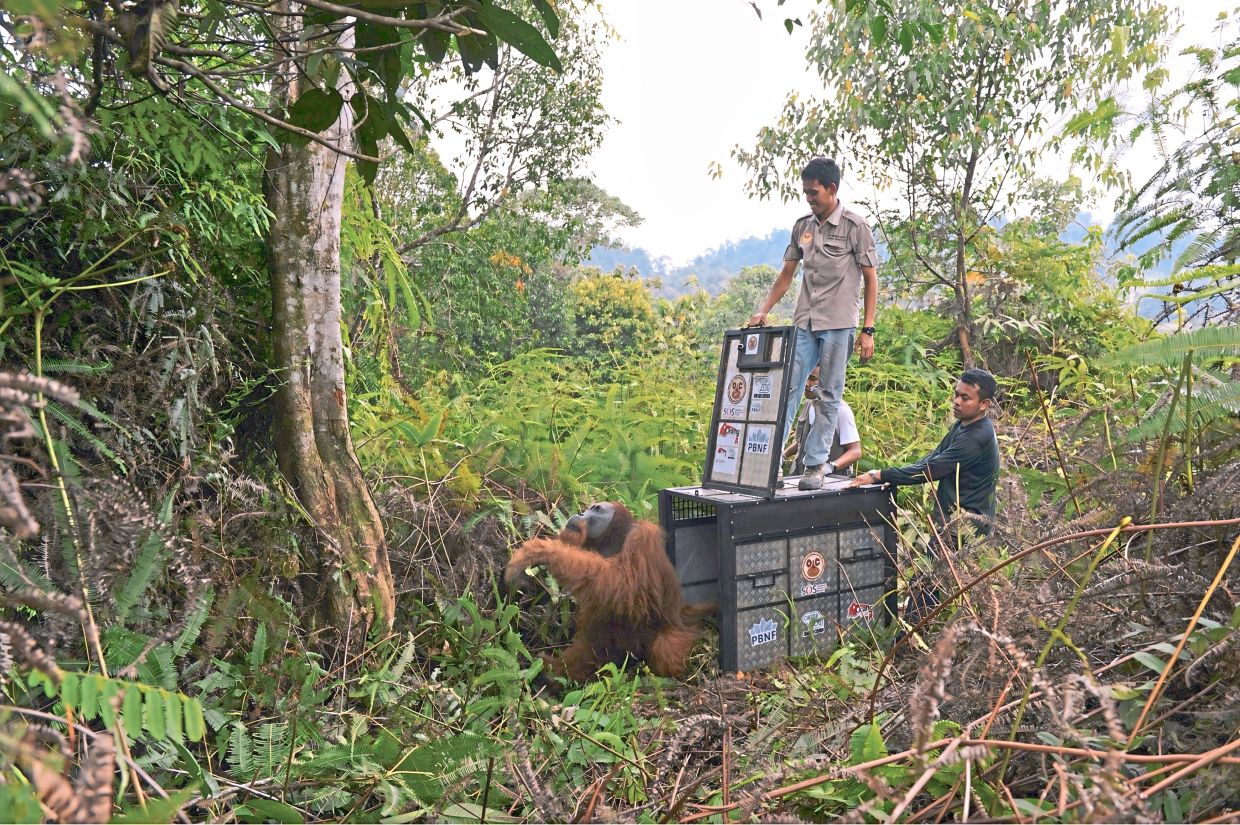
Conservationists have successfully returned orang utan to Indonesia from Thailand, but so far only one has been repatriated from India.
When one orang utan was transferred last year to a private wildlife facility known as Vantara, run by billionaire Mukesh Ambani’s family, India’s federal wildlife officials and India’s CITES authority were not informed, a federal wildlife official to New Delhi wrote in a report.
Officials concerned over the orang utan’s care at a local public zoo ordered it transferred to Vantara, which describes itself as a wildlife rescue and rehabilitation center.
The orang utan was treated for a respiratory infection and pneumonia before it was returned to Indonesia on Oct 19 after 19 months at the private facility.
Vantara, a 1,416ha wildlife facility in western India, has over 150,000 animals and more than 2,000 different species, and has faced international scrutiny over its animal acquisitions.
In November 2025, CITES questioned shipments to Vantara that included snow leopards from Germany, a bonobo said to have been bred in Iraq and a gorilla reportedly from Haiti. The primates are not native to those countries.
India’s Supreme Court cleared Vantara of wildlife trafficking and animal mistreatment allegations in 2025.
In September, 27 wildlife conservation and animal welfare organisations issued a letter urging the facility to end imports of wild animals, raising concerns about endangered species and animal welfare.
The groups said they had “never encountered anything comparable to the scale and diversity” of Vantara’s imports, citing more than 60,000 animals acquired in a short period.
One controversial acquisition, according to Vantara’s 2024-25 inventory, is a Tapanuli orang utan, the world’s rarest great ape.
Recognised as a distinct species only in 2017, it is only found in a small area in Sumatra, Indonesia, where 716 remain in the wild.
“The Tapanuli orang utan is hovering just above extinction,” said Serhadli, whose organisation is one of the few that works with the species.
The one at Vantara would be the only Tapanuli orang utan in captivity.
CITES trade data shows that the animal left Indonesia in 2024 and arrived in India via the United Arab Emirates.
“That can’t happen legally,” Serhadli said.
Indonesia’s Ministry of Forestry said it was taking “seriously” reports that a Tapanuli orang utan might be outside the country.
It said it couldn’t confirm the animal’s species, origins or how it got to India.
An investigation would require checking permits and transfer records, along with scientific testing, the ministry said.
Neither Vantara nor Indonesia’s CITES authority responded to AP’s requests for comment. — AP