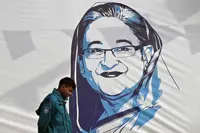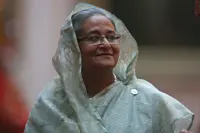
DHAKA: Bangladesh's ousted leader Sheikh Hasina has vowed to return in December from self-imposed exile in India, where she has been in hiding since fleeing the uprising that toppled her government.
The 79-year-old former prime minister faces a death sentence for crimes against humanity over the deadly crackdown on 2024 protests that ended her 15-year rule.
Bangladesh's government challenged her on Tuesday (Nov 10) to seek extradition from India if she was genuinely determined to return.
Her pledge has divided Bangladesh, with supporters of her banned Awami League party awaiting her return, while opponents warn it could trigger fresh instability.
- Why did Hasina leave? -
Hasina fled Bangladesh on August 5, 2024, as thousands stormed her palace, capping months of protests against her increasingly authoritarian government.
During her rule, critics accused her of jailing political rivals, imposing harsh anti-press laws and overseeing widespread human rights abuses.
She flew to longtime ally India, where she has remained ever since, only occasionally addressing news conferences by telephone, her voice sounding frail.
In November 2025, a Dhaka court sentenced her in absentia to death for crimes against humanity over the crackdown.
Hasina, who was assigned a state-appointed lawyer, called the trial a "jurisprudential joke".
She also faces a string of other charges, including corruption allegations.
- Why would she return? -
Hasina, the daughter of Bangladesh's founding leader, has told AFP she is compelled to return because "fear cannot decide" her "duty to the people".
Her defiance may be less a death wish than a bid to remain politically relevant, maintain her supporters' loyalty and keep alive a party that once dominated Bangladesh but is now banned.
Some Awami League supporters believe she will come.
A party loyalist, speaking to AFP on condition of anonymity, compared the current situation to Hasina's return in 1981 after the assassination of her father and most of her family in a military coup.
"Sheikh Hasina returned home in 1981 after losing her entire family in a bloody coup, didn't she?" the loyalist said.
Analysts say the pledge may be rhetoric designed to rally the banned party's supporters.
"It is a ploy to rally her party workers and keep them politically energised," said Mohammad Jalal Uddin Sikder, a political science professor at Dhaka's North South University. "I don't think she is going to return."
- How would authorities treat her? -
The prosecutor who secured Hasina's death sentence, Md Aminul Islam, said she had missed the deadline to appeal against it, and that she will "face the execution of the verdict" if she returns.
Hasina has said she is "fully aware" she faces hanging, but is not under pressure from India to return.
Bangladesh's foreign ministry has sought her extradition from India, which said the request was under review and that the "issue will be dealt with accordingly".
While Hasina's lawyers requested this week to renew her passport, Bangladeshi Supreme Court lawyer Ahsanul Karim said it was not needed for her to be able to enter the country.
"Sheikh Hasina is a Bangladeshi citizen and she can enter Bangladesh through whatever means available to her -- but as soon as she enters Bangladesh, she will be arrested," he said.
The president has the power to pardon her or commute her death sentence. Bangladesh last carried out a hanging in 2023, according to Amnesty International.
- What could her return trigger? -
Hasina's supporters insist that "millions" of party workers would protect her, one loyalist told AFP.
Her pledge to return comes as the country faces worsening law-and-order problems, including a string of petrol bomb attacks and arson incidents.
Sikder, the North South University professor, said the incidents which police blamed on the Awami League were an attempt to signal that the party remained active and "to make the government feel its presence".
"It is a message from the party's top leadership to its grassroots workers that they have not vanished yet," he added.
Mamun Al Mostofa, a Dhaka University political science professor, warned that excluding major political forces could drive them towards more disruptive tactics to stay relevant.
If the government "wants to keep one of the major political forces in Bangladesh out of formal political space, then the cornered party or parties would try to maintain their relevance through activities that create more noise," he said.
"Eventually, politics would become more confrontational." - AFP